

GIVE THE PERFECT GIFT
Erin Mills Town Centre Gift Cards are the perfect choice for your gift giving needs.Purchase gift cards at kiosks near the food court or centre court, at Guest Services, or click below to purchase online.PURCHASE HEREHome
Jewish Lore in Manichaean Cosmogony: Studies in the Book of Giants Traditions
Indigo
Loading Inventory...
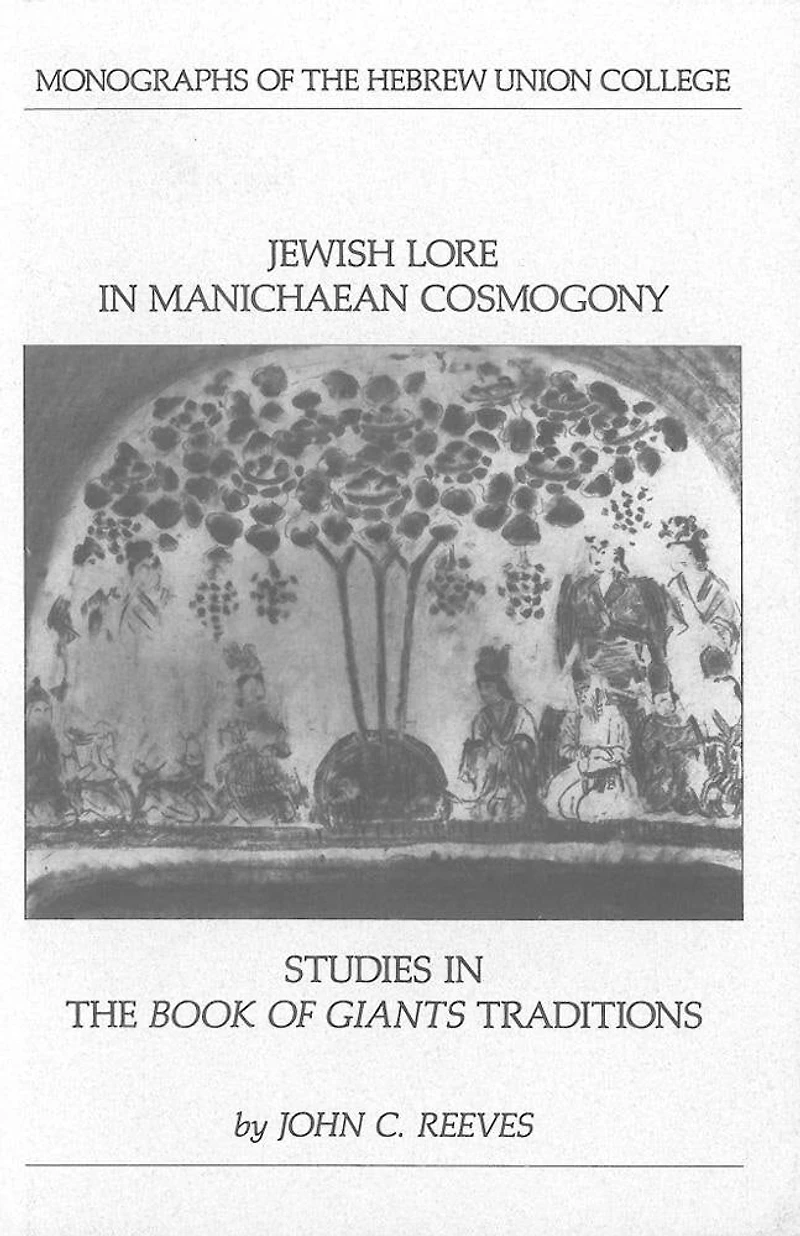
Jewish Lore in Manichaean Cosmogony: Studies in the Book of Giants Traditions
Current price: $44.50

Jewish Lore in Manichaean Cosmogony: Studies in the Book of Giants Traditions
Current price: $44.50
Loading Inventory...
Size: Paperback
*Product information may vary - to confirm product availability, pricing, shipping and return information please contact Indigo
A work entitled the "Book of Giants" figures in every list of the Manichaean "canon" preserved from antiquity. Both the nature of this work and the intellectual baggage of the third-century Persian prophet to whom it is ascribed remained unknown to scholars until 1943, when fragments of several Middle Iranian versions of the Book of Giants were published by W. B. Henning. Twenty-eight years later, at Qumran, J. T. Milik discovered several copies of a fragmentary Aramaic work which is unquestionably the precursor of the later Manichaean recension. One other important work, Mani's "autobiography," the so-called Cologne Mani Codex, was brought to scholarly attention in 1970 with evidence that Mani spent his youth among the Elchasaites, a Judeo-Christian sect that observed the Sabbath, strict dietary laws, and rigorous purification practices. Although leading Orientalists of the nineteenth and twentieth centuries have consistently stressed the Iranian component in Mani's thought, Reeves argues, in the light of evidence drawn from the above-mentioned discoveries and from a rich panorama of other textual sources, that the fundamental structure of Manichaean cosmogony is ultimately indebted to Jewish exegetical expansions of Genesis 6:1-4. Reeves begins with an examination of the ancient testimonies about the contents of Mani's Book of Giants. Then, using documents from Second Temple Judaism, classical Gnostic literature, Christian and Muslim heresiological reports, Syriac texts, and Manichaean writings, he provides a detailed analysis of both the Qumran and Manichaean rescensions of the work, demonstrating additional interdependencies and suggesting new narrative arrangements. He addresses a series of quotations from an unnamed Manichaean source found in a paschal homily of the sixth-century Monophysite patriarch Severus of Antioch and a narrative from Thoeodore bar Konai. In sum, Reeves demonstrates that the motifs of Jewish Enochic literature, in particular those of the story of the Watchers and Giants, form the skeletal structure of Mani's cosmological teachings, and that Chapters 1 to 11 of Genesis fertilized Near Eastern thought, even to the borders of India and China.
A work entitled the "Book of Giants" figures in every list of the Manichaean "canon" preserved from antiquity. Both the nature of this work and the intellectual baggage of the third-century Persian prophet to whom it is ascribed remained unknown to scholars until 1943, when fragments of several Middle Iranian versions of the Book of Giants were published by W. B. Henning. Twenty-eight years later, at Qumran, J. T. Milik discovered several copies of a fragmentary Aramaic work which is unquestionably the precursor of the later Manichaean recension. One other important work, Mani's "autobiography," the so-called Cologne Mani Codex, was brought to scholarly attention in 1970 with evidence that Mani spent his youth among the Elchasaites, a Judeo-Christian sect that observed the Sabbath, strict dietary laws, and rigorous purification practices. Although leading Orientalists of the nineteenth and twentieth centuries have consistently stressed the Iranian component in Mani's thought, Reeves argues, in the light of evidence drawn from the above-mentioned discoveries and from a rich panorama of other textual sources, that the fundamental structure of Manichaean cosmogony is ultimately indebted to Jewish exegetical expansions of Genesis 6:1-4. Reeves begins with an examination of the ancient testimonies about the contents of Mani's Book of Giants. Then, using documents from Second Temple Judaism, classical Gnostic literature, Christian and Muslim heresiological reports, Syriac texts, and Manichaean writings, he provides a detailed analysis of both the Qumran and Manichaean rescensions of the work, demonstrating additional interdependencies and suggesting new narrative arrangements. He addresses a series of quotations from an unnamed Manichaean source found in a paschal homily of the sixth-century Monophysite patriarch Severus of Antioch and a narrative from Thoeodore bar Konai. In sum, Reeves demonstrates that the motifs of Jewish Enochic literature, in particular those of the story of the Watchers and Giants, form the skeletal structure of Mani's cosmological teachings, and that Chapters 1 to 11 of Genesis fertilized Near Eastern thought, even to the borders of India and China.
You May Also Like
![Archaia, or, Studies of the Cosmogony and Natural History of the Hebrew Scriptures [microform]](https://cdn.mall.adeptmind.ai/https%253A%252F%252Fcdn.shopify.com%252Fs%252Ffiles%252F1%252F0655%252F8980%252F5233%252Ffiles%252F1_1607d511-ebb8-4f17-8951-eedf3c63987b.jpg_medium.webp)












More About Indigo at Erin Mills Town Centre
The largest book retailer in Canada also offers toys, music, home décor, gifts and lifestyle products. What's Inside...Books, Magazines, CD’s and DVD’s, Toys and Gifts, Home Accents, Electronics, Baby’s and Children’s Section, Bath and Body, Kitchen and Bedroom, Stationary Located outside in the exterior plaza.
5015 Glen Erin Dr, Mississauga, ON L5M 0R7, Canada
Find Indigo at Erin Mills Town Centre in Mississauga ON
Visit Indigo at Erin Mills Town Centre in Mississauga ON