

GIVE THE PERFECT GIFT
Erin Mills Town Centre Gift Cards are the perfect choice for your gift giving needs.Purchase gift cards at kiosks near the food court or centre court, at Guest Services, or click below to purchase online.PURCHASE HEREHome
Jim Shaughnessy Essential Witness: Sixty Years Of Railroad Photography
Indigo
Loading Inventory...
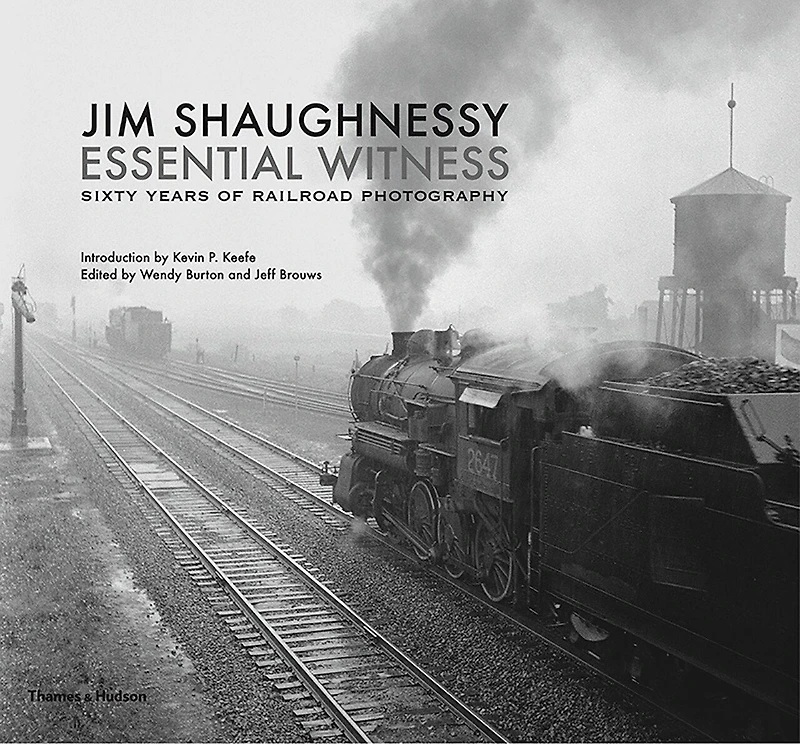
Jim Shaughnessy Essential Witness: Sixty Years Of Railroad Photography
Current price: $79.00

Jim Shaughnessy Essential Witness: Sixty Years Of Railroad Photography
Current price: $79.00
Loading Inventory...
Size: Hardcover
*Product information may vary - to confirm product availability, pricing, shipping and return information please contact Indigo
A comprehensive survey of master railroad photographer Jim Shaughnessy’s images of the railroad in North America in the transitional era from steam locomotives to diesel- powered engines
Jim Shaughnessy is an essential witness to six decades of change in North American railroading, from the late 1940s into the twenty-first century. His photographic achievement is one of the pinnacles of railroad photography as a genre, which he, along with others of his generation, raised to the level of art, worthy of consideration beyond the world of trains and the interest of rail fans.
The early years of his career coincided with the dramatic shift in the railroad industry from the steam locomotive to the diesel engine. During those transition years of the 1940s and 1950s, Shaughnessy was there to record every nuance and every detail with uncommon insight and unrelenting dedication. Shaughnessy loved steam, but he also embraced diesel. It was a period of transition, and it would only happen once, and he made the most of it, for he understood that he was a witness to history.
Born and raised in Troy, New York, a city with a deep industrial heritage rooted in iron and steel, Shaughnessy began by documenting the railroad scene in the Northeastern United States. His interests and travels also took him to other areas of the country to document the Rio Grande narrow gauge in Colorado and the Union Pacific Big Boys in Wyoming, and into Canada and Mexico as well.
Shaughnessy distinguished himself from the previous generation of railroad photographers by thinking more photographically and exploring the creative potential of the medium, challenging the conservative vision that had dominated railroad photography through to mid-century. This led him to see beyond the trains themselves to visually interpret the industrial and cultural landscape through which they moved. And so he documented the railroad environment, set within village, town, and city as well as rural and wilderness landscapes. He not only photographed the trains and locomotives, but contextualized the railroad by depicting the personnel, the infrastructure, and architecture, documenting for posterity the workers behind the machines that operated in the depots, roundhouses, and back shops. He captured a sense of place and time in astutely observed moments during both day and night in all seasons. Particularly striking are his images of trains at night—as author and historian Lucius Beebe once described Shaughnessy’s work, “He was master in the massive effects of black and white.”
Drawn from a lifetime’s work and an archive of some 60,000 images, the principal focus of this revealing new book is on the decades of the 1950s and 1960s, perhaps the most dynamic era of North American railroading.
A comprehensive survey of master railroad photographer Jim Shaughnessy’s images of the railroad in North America in the transitional era from steam locomotives to diesel- powered engines
Jim Shaughnessy is an essential witness to six decades of change in North American railroading, from the late 1940s into the twenty-first century. His photographic achievement is one of the pinnacles of railroad photography as a genre, which he, along with others of his generation, raised to the level of art, worthy of consideration beyond the world of trains and the interest of rail fans.
The early years of his career coincided with the dramatic shift in the railroad industry from the steam locomotive to the diesel engine. During those transition years of the 1940s and 1950s, Shaughnessy was there to record every nuance and every detail with uncommon insight and unrelenting dedication. Shaughnessy loved steam, but he also embraced diesel. It was a period of transition, and it would only happen once, and he made the most of it, for he understood that he was a witness to history.
Born and raised in Troy, New York, a city with a deep industrial heritage rooted in iron and steel, Shaughnessy began by documenting the railroad scene in the Northeastern United States. His interests and travels also took him to other areas of the country to document the Rio Grande narrow gauge in Colorado and the Union Pacific Big Boys in Wyoming, and into Canada and Mexico as well.
Shaughnessy distinguished himself from the previous generation of railroad photographers by thinking more photographically and exploring the creative potential of the medium, challenging the conservative vision that had dominated railroad photography through to mid-century. This led him to see beyond the trains themselves to visually interpret the industrial and cultural landscape through which they moved. And so he documented the railroad environment, set within village, town, and city as well as rural and wilderness landscapes. He not only photographed the trains and locomotives, but contextualized the railroad by depicting the personnel, the infrastructure, and architecture, documenting for posterity the workers behind the machines that operated in the depots, roundhouses, and back shops. He captured a sense of place and time in astutely observed moments during both day and night in all seasons. Particularly striking are his images of trains at night—as author and historian Lucius Beebe once described Shaughnessy’s work, “He was master in the massive effects of black and white.”
Drawn from a lifetime’s work and an archive of some 60,000 images, the principal focus of this revealing new book is on the decades of the 1950s and 1960s, perhaps the most dynamic era of North American railroading.
You May Also Like












More About Indigo at Erin Mills Town Centre
The largest book retailer in Canada also offers toys, music, home décor, gifts and lifestyle products. What's Inside...Books, Magazines, CD’s and DVD’s, Toys and Gifts, Home Accents, Electronics, Baby’s and Children’s Section, Bath and Body, Kitchen and Bedroom, Stationary Located outside in the exterior plaza.
5015 Glen Erin Dr, Mississauga, ON L5M 0R7, Canada
Find Indigo at Erin Mills Town Centre in Mississauga ON
Visit Indigo at Erin Mills Town Centre in Mississauga ON