

GIVE THE PERFECT GIFT
Erin Mills Town Centre Gift Cards are the perfect choice for your gift giving needs.Purchase gift cards at kiosks near the food court or centre court, at Guest Services, or click below to purchase online.PURCHASE HEREHome
Justification, Evaluation and Critique the Study of Organizations: Contributions from French Pragmatist Sociology
Indigo
Loading Inventory...
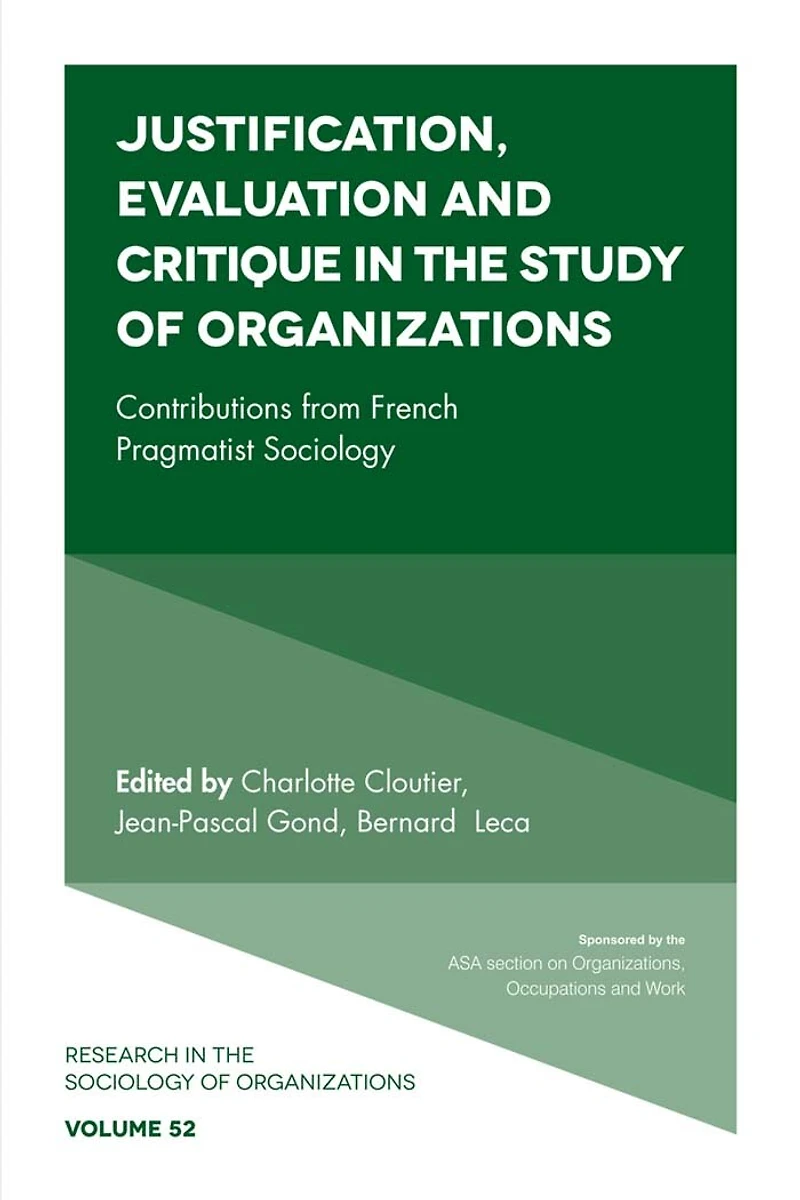
Justification, Evaluation and Critique the Study of Organizations: Contributions from French Pragmatist Sociology
Current price: $247.99

Justification, Evaluation and Critique the Study of Organizations: Contributions from French Pragmatist Sociology
Current price: $247.99
Loading Inventory...
Size: Hardcover
*Product information may vary - to confirm product availability, pricing, shipping and return information please contact Indigo
The papers included in the volume explore how mobilizing Boltanski and Thévenot’s EW framework helps address questions regarding the premises and dynamics of agreement and disagreement in coordinated action, both within and across organizations, and by so doing, help advance our understanding of organizational processes more generally. The book is organized into four sections, each with contributions that address one of the four core theoretical objectives around which the volume is structured (1) to clarify how individuals manage the contradictions and compromises inherent to organizational pluralism; (2) to look at organizations critically by unpacking the roles of rhetoric and justification in the practice of critique; (3) to reconsider valuation and evaluation in organizations; and (4) to push the boundaries of the EW framework. These four objectives provide a scaffolding that helps further embed the framework in our contemporary thinking about organizations.
The papers included in the volume explore how mobilizing Boltanski and Thévenot’s EW framework helps address questions regarding the premises and dynamics of agreement and disagreement in coordinated action, both within and across organizations, and by so doing, help advance our understanding of organizational processes more generally. The book is organized into four sections, each with contributions that address one of the four core theoretical objectives around which the volume is structured (1) to clarify how individuals manage the contradictions and compromises inherent to organizational pluralism; (2) to look at organizations critically by unpacking the roles of rhetoric and justification in the practice of critique; (3) to reconsider valuation and evaluation in organizations; and (4) to push the boundaries of the EW framework. These four objectives provide a scaffolding that helps further embed the framework in our contemporary thinking about organizations.
You May Also Like











More About Indigo at Erin Mills Town Centre
The largest book retailer in Canada also offers toys, music, home décor, gifts and lifestyle products. What's Inside...Books, Magazines, CD’s and DVD’s, Toys and Gifts, Home Accents, Electronics, Baby’s and Children’s Section, Bath and Body, Kitchen and Bedroom, Stationary Located outside in the exterior plaza.
5015 Glen Erin Dr, Mississauga, ON L5M 0R7, Canada
Find Indigo at Erin Mills Town Centre in Mississauga ON
Visit Indigo at Erin Mills Town Centre in Mississauga ON