

GIVE THE PERFECT GIFT
Erin Mills Town Centre Gift Cards are the perfect choice for your gift giving needs.Purchase gift cards at kiosks near the food court or centre court, at Guest Services, or click below to purchase online.PURCHASE HEREHome
Kata Containers: VM‑Isolated Containers for High‑Trust Kubernetes Workloads
Indigo
Loading Inventory...
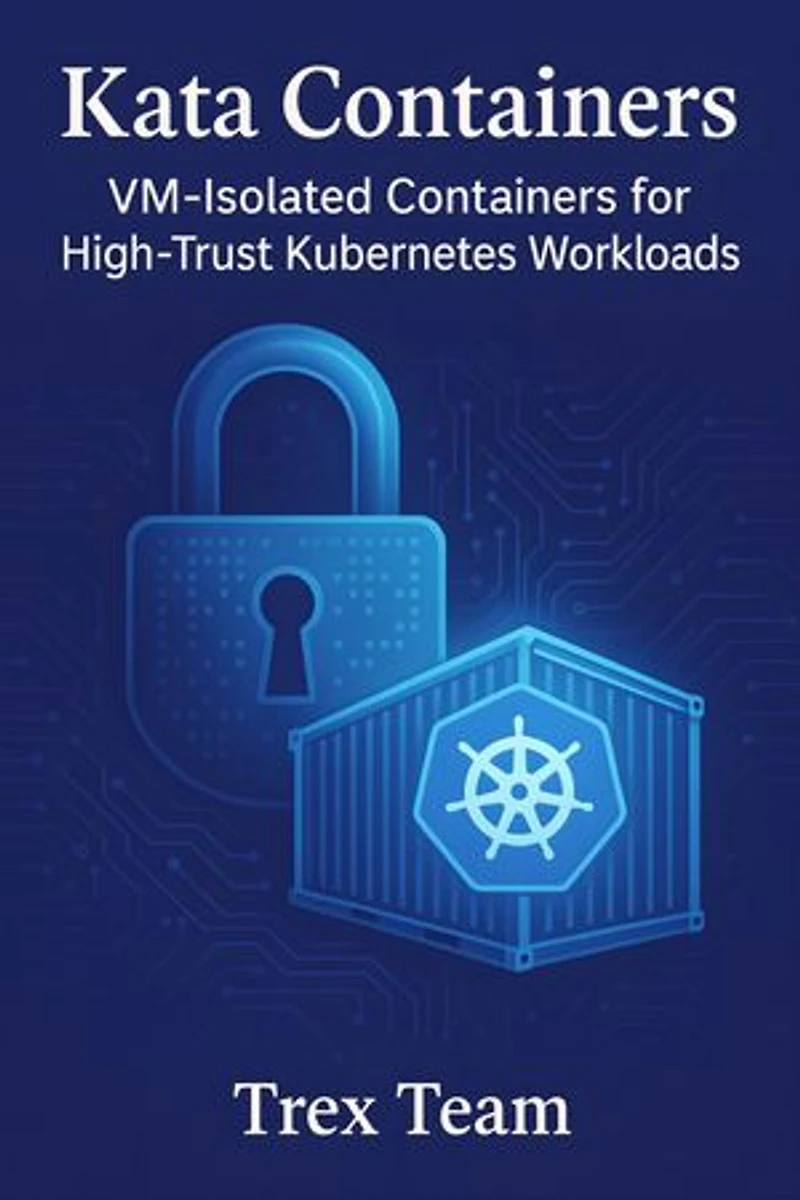
Kata Containers: VM‑Isolated Containers for High‑Trust Kubernetes Workloads
Current price: $13.56

Kata Containers: VM‑Isolated Containers for High‑Trust Kubernetes Workloads
Current price: $13.56
Loading Inventory...
Size: Kobo eBook
*Product information may vary - to confirm product availability, pricing, shipping and return information please contact Indigo
"Kata Containers: VM‑Isolated Containers for High‑Trust Kubernetes Workloads"
When your cluster runs untrusted code, sensitive data pipelines, or multi-tenant platforms, “containers share a kernel” stops being an implementation detail and becomes a risk you have to own. This book is for experienced Kubernetes operators, platform engineers, and security-minded SREs who want VM-grade isolation without abandoning OCI images, familiar Kubernetes workflows, or day-two operability. It rebuilds your mental model from shared-kernel containers to VM-isolated pods so you can reason precisely about boundaries, failure domains, and production constraints.
You’ll learn Kata’s runtime architecture end-to-end—from CRI calls and shim v2 state, to VMM boot, in-guest agent semantics, and the control/data planes that determine how I/O, networking, and mounts behave across the host/guest boundary. The book shows how Pod-to-VM mapping affects multi-container pods, resource accounting, and scheduling; how to threat-model container→guest vs guest→host escape narratives; and how to harden both host and guest surfaces. You’ll also get practical decision frameworks for choosing QEMU vs Cloud Hypervisor vs Firecracker, engineering kernels and rootfs/initrd artifacts, and controlling the artifact supply chain with versioning, signing, and safe rollouts.
A strong working knowledge of Kubernetes, CRI/containerd or CRI-O, and basic Linux/OCI concepts is assumed. The emphasis is on operationally correct deployment at scale: RuntimeClass and node handler patterns, upgrade playbooks, observability-driven
"Kata Containers: VM‑Isolated Containers for High‑Trust Kubernetes Workloads"
When your cluster runs untrusted code, sensitive data pipelines, or multi-tenant platforms, “containers share a kernel” stops being an implementation detail and becomes a risk you have to own. This book is for experienced Kubernetes operators, platform engineers, and security-minded SREs who want VM-grade isolation without abandoning OCI images, familiar Kubernetes workflows, or day-two operability. It rebuilds your mental model from shared-kernel containers to VM-isolated pods so you can reason precisely about boundaries, failure domains, and production constraints.
You’ll learn Kata’s runtime architecture end-to-end—from CRI calls and shim v2 state, to VMM boot, in-guest agent semantics, and the control/data planes that determine how I/O, networking, and mounts behave across the host/guest boundary. The book shows how Pod-to-VM mapping affects multi-container pods, resource accounting, and scheduling; how to threat-model container→guest vs guest→host escape narratives; and how to harden both host and guest surfaces. You’ll also get practical decision frameworks for choosing QEMU vs Cloud Hypervisor vs Firecracker, engineering kernels and rootfs/initrd artifacts, and controlling the artifact supply chain with versioning, signing, and safe rollouts.
A strong working knowledge of Kubernetes, CRI/containerd or CRI-O, and basic Linux/OCI concepts is assumed. The emphasis is on operationally correct deployment at scale: RuntimeClass and node handler patterns, upgrade playbooks, observability-driven
You May Also Like







More About Indigo at Erin Mills Town Centre
The largest book retailer in Canada also offers toys, music, home décor, gifts and lifestyle products. What's Inside...Books, Magazines, CD’s and DVD’s, Toys and Gifts, Home Accents, Electronics, Baby’s and Children’s Section, Bath and Body, Kitchen and Bedroom, Stationary Located outside in the exterior plaza.
5015 Glen Erin Dr, Mississauga, ON L5M 0R7, Canada
Find Indigo at Erin Mills Town Centre in Mississauga ON
Visit Indigo at Erin Mills Town Centre in Mississauga ON