

GIVE THE PERFECT GIFT
Erin Mills Town Centre Gift Cards are the perfect choice for your gift giving needs.Purchase gift cards at kiosks near the food court or centre court, at Guest Services, or click below to purchase online.PURCHASE HEREHome
Kintsugi Mind
Indigo
Loading Inventory...
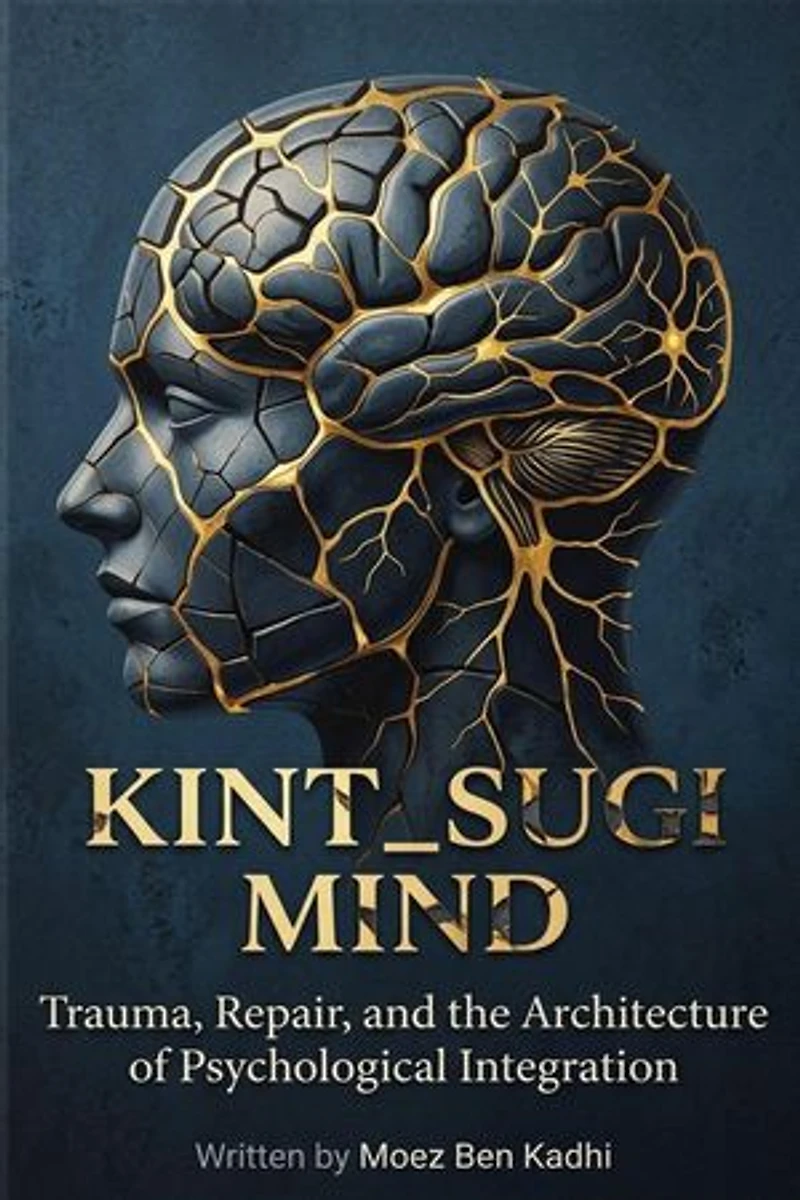
Kintsugi Mind
Current price: $8.99

Kintsugi Mind
Current price: $8.99
Loading Inventory...
Size: Kobo eBook
*Product information may vary - to confirm product availability, pricing, shipping and return information please contact Indigo
There is a persistent assumption in modern psychology and in everyday language that healing means restoration. To heal, in this view, is to return to a prior condition, to recover what was lost, to repair what was broken, and to re-establish continuity with an earlier, supposedly intact version of the self. This assumption is both comforting and fundamentally incomplete.
Human experience does not function as a reversible system.
Once an event has been encoded into memory, once it has altered perception, expectation, and emotional architecture, the psyche does not return to its former configuration. What we call "healing" is not restoration in the strict sense, but reorganization. The mind does not erase its fractures; it integrates them.
This manuscript is built upon a different premise: that psychological injury, when processed and integrated, does not merely weaken the structure of the self, it becomes part of its structure. The fracture is not an anomaly to be hidden or corrected. It is a formative event that reshapes the system's architecture.
The concept of Kintsugi , the Japanese art of repairing broken ceramics with lacquer mixed with gold, is often misinterpreted as an aesthetic metaphor. In its original logic, however, it is not decorative. It is epistemological. The repaired object does not pretend to be unbroken. Instead, it reveals its history as part of its identity. The break is not concealed; it is stabilized and transformed into a visible structural element.
This work extends that principle into the domain of psychological science.
There is a persistent assumption in modern psychology and in everyday language that healing means restoration. To heal, in this view, is to return to a prior condition, to recover what was lost, to repair what was broken, and to re-establish continuity with an earlier, supposedly intact version of the self. This assumption is both comforting and fundamentally incomplete.
Human experience does not function as a reversible system.
Once an event has been encoded into memory, once it has altered perception, expectation, and emotional architecture, the psyche does not return to its former configuration. What we call "healing" is not restoration in the strict sense, but reorganization. The mind does not erase its fractures; it integrates them.
This manuscript is built upon a different premise: that psychological injury, when processed and integrated, does not merely weaken the structure of the self, it becomes part of its structure. The fracture is not an anomaly to be hidden or corrected. It is a formative event that reshapes the system's architecture.
The concept of Kintsugi , the Japanese art of repairing broken ceramics with lacquer mixed with gold, is often misinterpreted as an aesthetic metaphor. In its original logic, however, it is not decorative. It is epistemological. The repaired object does not pretend to be unbroken. Instead, it reveals its history as part of its identity. The break is not concealed; it is stabilized and transformed into a visible structural element.
This work extends that principle into the domain of psychological science.
You May Also Like









More About Indigo at Erin Mills Town Centre
The largest book retailer in Canada also offers toys, music, home décor, gifts and lifestyle products. What's Inside...Books, Magazines, CD’s and DVD’s, Toys and Gifts, Home Accents, Electronics, Baby’s and Children’s Section, Bath and Body, Kitchen and Bedroom, Stationary Located outside in the exterior plaza.
5015 Glen Erin Dr, Mississauga, ON L5M 0R7, Canada
Find Indigo at Erin Mills Town Centre in Mississauga ON
Visit Indigo at Erin Mills Town Centre in Mississauga ON