

GIVE THE PERFECT GIFT
Erin Mills Town Centre Gift Cards are the perfect choice for your gift giving needs.Purchase gift cards at kiosks near the food court or centre court, at Guest Services, or click below to purchase online.PURCHASE HEREHome
Landscapes and Landforms of the Horn of Africa: Eritrea, Djibouti, Somalia
Indigo
Loading Inventory...
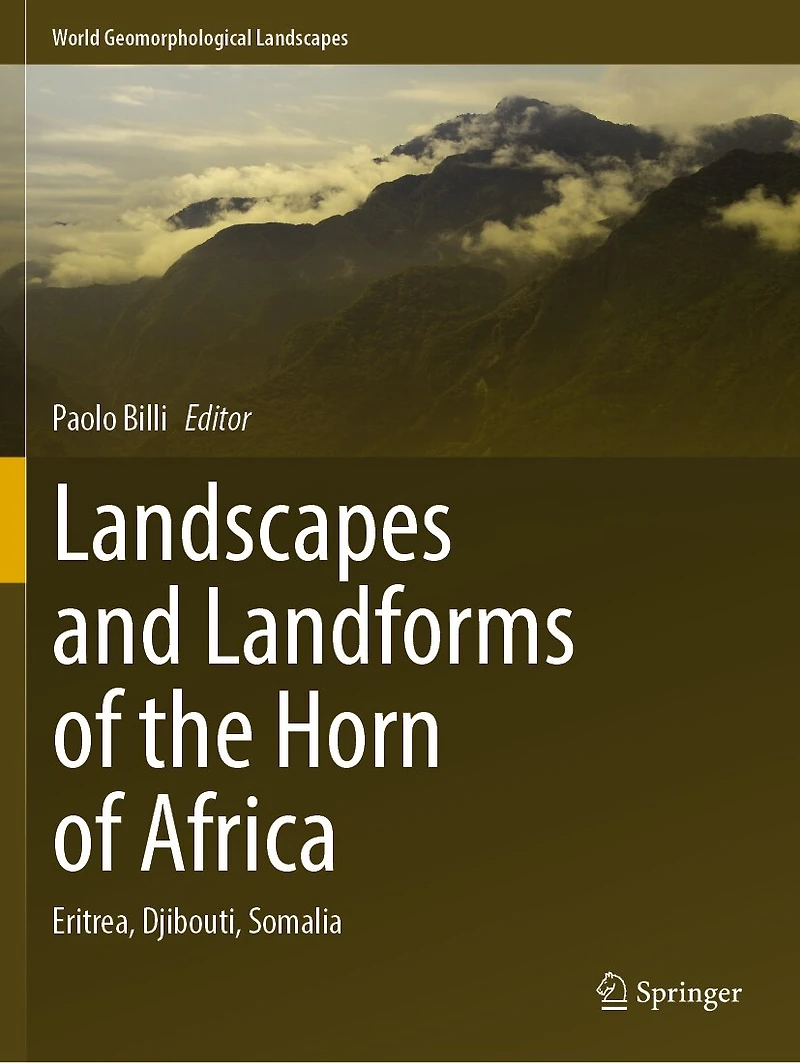
Landscapes and Landforms of the Horn of Africa: Eritrea, Djibouti, Somalia
Current price: $248.50

Landscapes and Landforms of the Horn of Africa: Eritrea, Djibouti, Somalia
Current price: $248.50
Loading Inventory...
Size: Paperback
*Product information may vary - to confirm product availability, pricing, shipping and return information please contact Indigo
This book focuses on regions for which until now the geomorphology was very poorly studied and relatively unknown. Nevertheless, the landforms and landscapes of the Horn of Africa are highly attractive, diverse and in a few cases unique, since they span very different environments, from highland plateaus and mountains to lowlands (even below sea level) and coastlines with a high degree of diversity and from monsoon to arid climate conditions.
The main topics addressed in the book include the links between the geological evolution and the current large scale geomorphology of the Horn of Africa; the large differences between the highlands and lowlands climate, river hydrology and their variation through time within a climate change perspective. This part of the world was home of the very first hominids. The landscape in which they lived and evolved throughout the Pleistocene is described in comparison with the arid and inhospitable, though immensely scenic, environment of today.
Perennial and ephemeral rivers with very different morphology, processes, and hydrology drain the area, and, in combination with the past and recent uplift, substantially contributed to provide the region with peculiar landscapes and landforms. Long lasting weathering and erosion processes result in a typical inselberg landscape such as the Bur region, or the currently exposed flatland of old peneplain surfaces. Their changes through time, induced by both natural and anthropogenic factors, are addressed by a couple of case studies. Though the region has few inhabitants, they had to struggle to find their livelihood in a land that offers poor resources. This resulted in landscape change and land degradation. Examples of human impact on the landscape are presented at different scales.
This book provides readers interested in geography and geomorphology with essential scientific and educational information on the Landscapes and Landforms of Eritrea, Djibouti and Somalia through simple, though scientifically, rigorous texts illustrated with several color maps and photos. One main prerogative of this book is therefore to give an insight into a region of the world where, for geographical and historical constraints, geomorphological investigation was very limited, thus enriching its intrinsic informative value.
This book focuses on regions for which until now the geomorphology was very poorly studied and relatively unknown. Nevertheless, the landforms and landscapes of the Horn of Africa are highly attractive, diverse and in a few cases unique, since they span very different environments, from highland plateaus and mountains to lowlands (even below sea level) and coastlines with a high degree of diversity and from monsoon to arid climate conditions.
The main topics addressed in the book include the links between the geological evolution and the current large scale geomorphology of the Horn of Africa; the large differences between the highlands and lowlands climate, river hydrology and their variation through time within a climate change perspective. This part of the world was home of the very first hominids. The landscape in which they lived and evolved throughout the Pleistocene is described in comparison with the arid and inhospitable, though immensely scenic, environment of today.
Perennial and ephemeral rivers with very different morphology, processes, and hydrology drain the area, and, in combination with the past and recent uplift, substantially contributed to provide the region with peculiar landscapes and landforms. Long lasting weathering and erosion processes result in a typical inselberg landscape such as the Bur region, or the currently exposed flatland of old peneplain surfaces. Their changes through time, induced by both natural and anthropogenic factors, are addressed by a couple of case studies. Though the region has few inhabitants, they had to struggle to find their livelihood in a land that offers poor resources. This resulted in landscape change and land degradation. Examples of human impact on the landscape are presented at different scales.
This book provides readers interested in geography and geomorphology with essential scientific and educational information on the Landscapes and Landforms of Eritrea, Djibouti and Somalia through simple, though scientifically, rigorous texts illustrated with several color maps and photos. One main prerogative of this book is therefore to give an insight into a region of the world where, for geographical and historical constraints, geomorphological investigation was very limited, thus enriching its intrinsic informative value.
You May Also Like








More About Indigo at Erin Mills Town Centre
The largest book retailer in Canada also offers toys, music, home décor, gifts and lifestyle products. What's Inside...Books, Magazines, CD’s and DVD’s, Toys and Gifts, Home Accents, Electronics, Baby’s and Children’s Section, Bath and Body, Kitchen and Bedroom, Stationary Located outside in the exterior plaza.
5015 Glen Erin Dr, Mississauga, ON L5M 0R7, Canada
Find Indigo at Erin Mills Town Centre in Mississauga ON
Visit Indigo at Erin Mills Town Centre in Mississauga ON