

GIVE THE PERFECT GIFT
Erin Mills Town Centre Gift Cards are the perfect choice for your gift giving needs.Purchase gift cards at kiosks near the food court or centre court, at Guest Services, or click below to purchase online.PURCHASE HEREHome
Late Roman Bronze Coinage - An attribution guide for poorly preserved coins
Indigo
Loading Inventory...
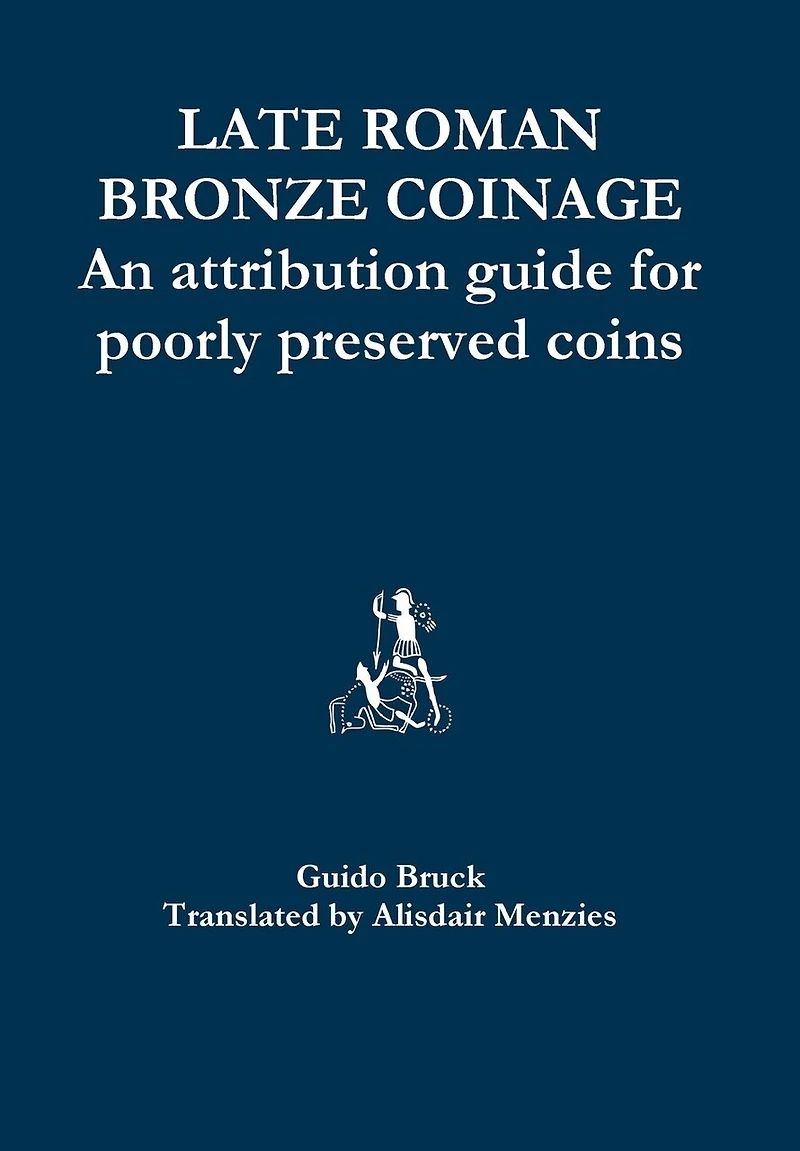
Late Roman Bronze Coinage - An attribution guide for poorly preserved coins
Current price: $60.95

Late Roman Bronze Coinage - An attribution guide for poorly preserved coins
Current price: $60.95
Loading Inventory...
Size: Hardcover
*Product information may vary - to confirm product availability, pricing, shipping and return information please contact Indigo
In the course of the fourth century, millions of bronze coins were struck in the Roman Empire: an area extending from modern Britain to Egypt. The iconography present in these modest remnants of a distant past provides a fascinating insight into the realities, hopes and desires not only of the common people, but also of those who ruled over them. It is possible to identify with a remarkable degree of precision where, when and by whom coins of this period were struck. Traditional numismatic works rely heavily on a textual description and assume that one has a perfectly preserved specimen. Perhaps unsurprisingly, given their age, the majority of coins encountered are worn or incomplete, making identification difficult. However, as demonstrated by this work, a closer study of their composition and iconography yields more than enough information to identify all but the most poorly preserved specimens. Translation of Die spätrömische Kupferprägung - Ein Bestimmungsbuch für schlecht erhaltene Münzen (1961).
In the course of the fourth century, millions of bronze coins were struck in the Roman Empire: an area extending from modern Britain to Egypt. The iconography present in these modest remnants of a distant past provides a fascinating insight into the realities, hopes and desires not only of the common people, but also of those who ruled over them. It is possible to identify with a remarkable degree of precision where, when and by whom coins of this period were struck. Traditional numismatic works rely heavily on a textual description and assume that one has a perfectly preserved specimen. Perhaps unsurprisingly, given their age, the majority of coins encountered are worn or incomplete, making identification difficult. However, as demonstrated by this work, a closer study of their composition and iconography yields more than enough information to identify all but the most poorly preserved specimens. Translation of Die spätrömische Kupferprägung - Ein Bestimmungsbuch für schlecht erhaltene Münzen (1961).
You May Also Like








More About Indigo at Erin Mills Town Centre
The largest book retailer in Canada also offers toys, music, home décor, gifts and lifestyle products. What's Inside...Books, Magazines, CD’s and DVD’s, Toys and Gifts, Home Accents, Electronics, Baby’s and Children’s Section, Bath and Body, Kitchen and Bedroom, Stationary Located outside in the exterior plaza.
5015 Glen Erin Dr, Mississauga, ON L5M 0R7, Canada
Find Indigo at Erin Mills Town Centre in Mississauga ON
Visit Indigo at Erin Mills Town Centre in Mississauga ON