

GIVE THE PERFECT GIFT
Erin Mills Town Centre Gift Cards are the perfect choice for your gift giving needs.Purchase gift cards at kiosks near the food court or centre court, at Guest Services, or click below to purchase online.PURCHASE HEREHome
LATER: The Neurophysiology of Decision-Making
Indigo
Loading Inventory...
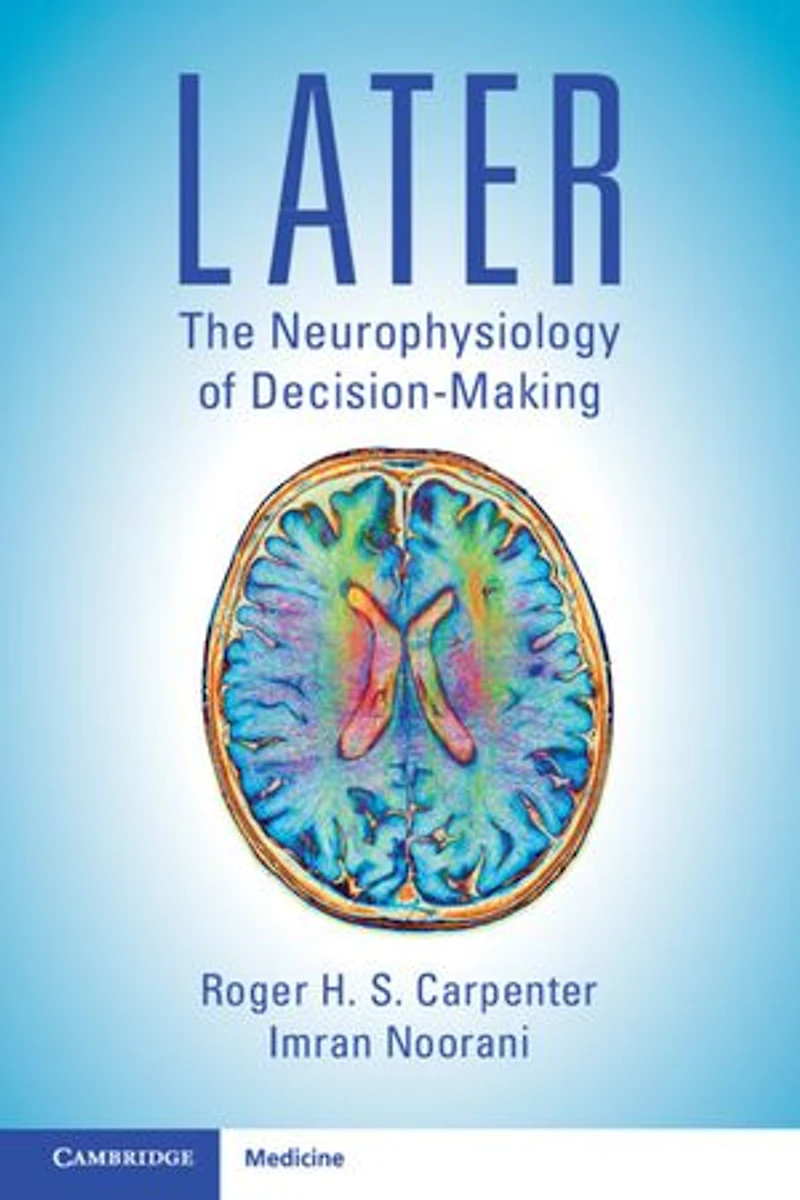
LATER: The Neurophysiology of Decision-Making
Current price: $57.59
Original price: $71.95

LATER: The Neurophysiology of Decision-Making
Current price: $57.59
Original price: $71.95
Loading Inventory...
Size: Kobo eBook
*Product information may vary - to confirm product availability, pricing, shipping and return information please contact Indigo
Why is deciding to do something sometimes so slow and difficult? How do we make decisions when lacking key information? When making decisions, the higher areas of the brain deliberately suppress lower areas capable of generating much faster but ill-considered responses while they develop ones that are more sophisticated, based on what can be gained in return. In this engaging book, the authors explore the increasingly popular neural model that may explain these mechanisms: the linear approach to threshold ergodic rate (LATER). Presenting a detailed description of the neurophysiological processes involved in decision-making and how these link to the LATER model, this is the first major resource covering the applications in describing human behaviour. With over 100 illustrations and a thorough discussion of the mathematics supporting the model, this is a rigorous yet accessible resource for psychologists, cognitive neuroscientists and neurophysiologists interested in decision-making.
Why is deciding to do something sometimes so slow and difficult? How do we make decisions when lacking key information? When making decisions, the higher areas of the brain deliberately suppress lower areas capable of generating much faster but ill-considered responses while they develop ones that are more sophisticated, based on what can be gained in return. In this engaging book, the authors explore the increasingly popular neural model that may explain these mechanisms: the linear approach to threshold ergodic rate (LATER). Presenting a detailed description of the neurophysiological processes involved in decision-making and how these link to the LATER model, this is the first major resource covering the applications in describing human behaviour. With over 100 illustrations and a thorough discussion of the mathematics supporting the model, this is a rigorous yet accessible resource for psychologists, cognitive neuroscientists and neurophysiologists interested in decision-making.
You May Also Like












More About Indigo at Erin Mills Town Centre
The largest book retailer in Canada also offers toys, music, home décor, gifts and lifestyle products. What's Inside...Books, Magazines, CD’s and DVD’s, Toys and Gifts, Home Accents, Electronics, Baby’s and Children’s Section, Bath and Body, Kitchen and Bedroom, Stationary Located outside in the exterior plaza.
5015 Glen Erin Dr, Mississauga, ON L5M 0R7, Canada
Find Indigo at Erin Mills Town Centre in Mississauga ON
Visit Indigo at Erin Mills Town Centre in Mississauga ON