

GIVE THE PERFECT GIFT
Erin Mills Town Centre Gift Cards are the perfect choice for your gift giving needs.Purchase gift cards at kiosks near the food court or centre court, at Guest Services, or click below to purchase online.PURCHASE HEREHome
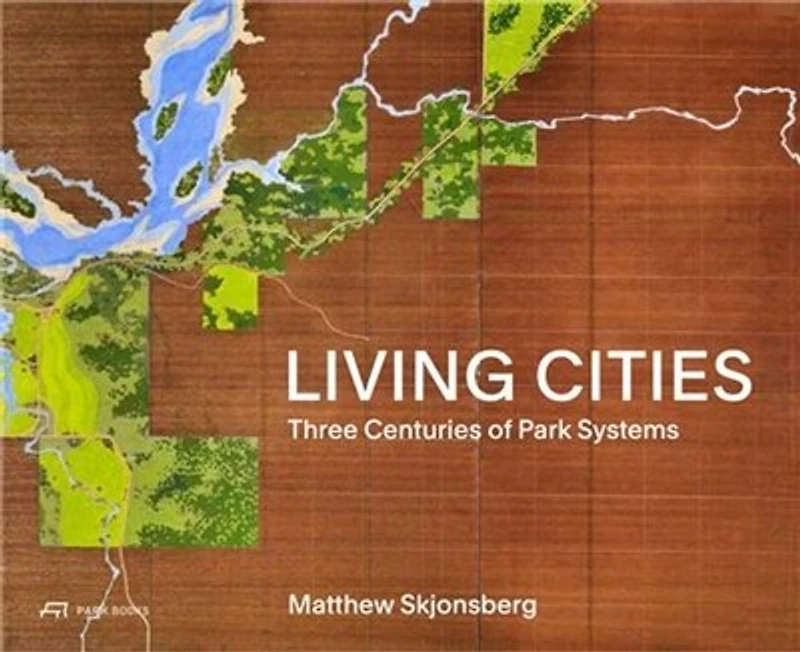
Living Cities: Three Centuries of Park Systems
Indigo
Loading Inventory...
Living Cities: Three Centuries of Park Systems
Current price: $84.50

Living Cities: Three Centuries of Park Systems
Current price: $84.50
Loading Inventory...
Size: Hardcover
*Product information may vary - to confirm product availability, pricing, shipping and return information please contact Indigo
A celebration of park systems as central to communities around the world.
The creation of park systems is a historically proven method to stabilize communities and cultivate healthy ecological habitats in country dwellings as well as in dense urban areas. Park systems ensure clean soil, water, and air for all. Moreover, they offer intergenerational and inclusive recreational opportunities along ecological corridors. Between 1900 and 1950, civic design—a practice in urban and landscape planning explicitly oriented towards the common good—experienced a heyday. Park systems were successfully used as “green armatures” hosting public facilities such as playgrounds, schools, administrative buildings, hospitals, and gardens.
Living Cities offers a chronological survey of civic design based on more than thirty park systems on five continents. The examples range from Johann Wolfgang von Goethe's Park an der Ilm in Weimar (1778) and John Nash’s Regent Street in London (1806) to Chicago’s park system (1850), Albert Bodmer and Maurice Braillard’s plans for Geneva (1936), and Frank Lloyd Wright’s Taliesin Valley (1947), as well as to contemporary and future projects in Addis Ababa, Madrid, Medellín, New York, and Seoul. This book demonstrates the ecological and social impact of park systems and highlights the diverse challenges that communities face when implementing such projects. At the same time, it encourages a reevaluation of civic design as an intergenerational practice of urban design.
A celebration of park systems as central to communities around the world.
The creation of park systems is a historically proven method to stabilize communities and cultivate healthy ecological habitats in country dwellings as well as in dense urban areas. Park systems ensure clean soil, water, and air for all. Moreover, they offer intergenerational and inclusive recreational opportunities along ecological corridors. Between 1900 and 1950, civic design—a practice in urban and landscape planning explicitly oriented towards the common good—experienced a heyday. Park systems were successfully used as “green armatures” hosting public facilities such as playgrounds, schools, administrative buildings, hospitals, and gardens.
Living Cities offers a chronological survey of civic design based on more than thirty park systems on five continents. The examples range from Johann Wolfgang von Goethe's Park an der Ilm in Weimar (1778) and John Nash’s Regent Street in London (1806) to Chicago’s park system (1850), Albert Bodmer and Maurice Braillard’s plans for Geneva (1936), and Frank Lloyd Wright’s Taliesin Valley (1947), as well as to contemporary and future projects in Addis Ababa, Madrid, Medellín, New York, and Seoul. This book demonstrates the ecological and social impact of park systems and highlights the diverse challenges that communities face when implementing such projects. At the same time, it encourages a reevaluation of civic design as an intergenerational practice of urban design.
You May Also Like










More About Indigo at Erin Mills Town Centre
The largest book retailer in Canada also offers toys, music, home décor, gifts and lifestyle products. What's Inside...Books, Magazines, CD’s and DVD’s, Toys and Gifts, Home Accents, Electronics, Baby’s and Children’s Section, Bath and Body, Kitchen and Bedroom, Stationary Located outside in the exterior plaza.
5015 Glen Erin Dr, Mississauga, ON L5M 0R7, Canada
Find Indigo at Erin Mills Town Centre in Mississauga ON
Visit Indigo at Erin Mills Town Centre in Mississauga ON