

GIVE THE PERFECT GIFT
Erin Mills Town Centre Gift Cards are the perfect choice for your gift giving needs.Purchase gift cards at kiosks near the food court or centre court, at Guest Services, or click below to purchase online.PURCHASE HEREHome
Lost at Sea: The Real Costs of AUKUS; Australian Foreign Affairs 27
Indigo
Loading Inventory...
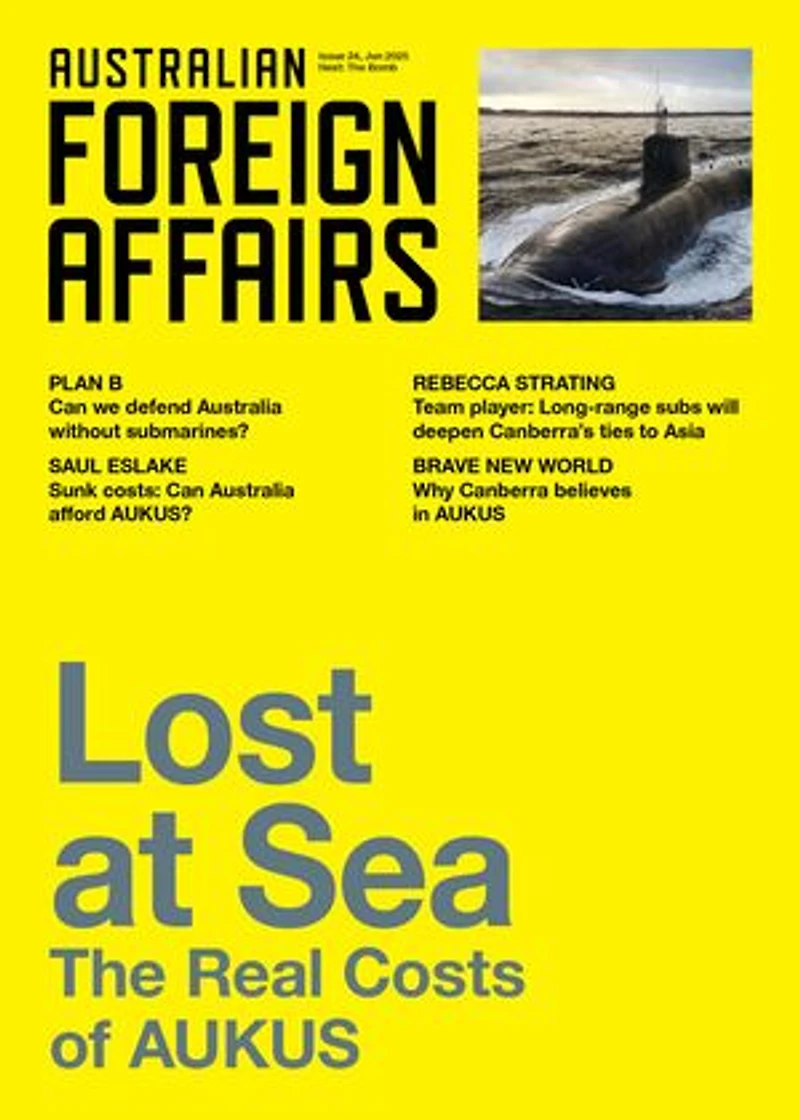
Lost at Sea: The Real Costs of AUKUS; Australian Foreign Affairs 27
Current price: $10.99

Lost at Sea: The Real Costs of AUKUS; Australian Foreign Affairs 27
Current price: $10.99
Loading Inventory...
Size: Kobo eBook
*Product information may vary - to confirm product availability, pricing, shipping and return information please contact Indigo
“If deterrence fails – and war erupts – how does Australia intend to use its nuclear-powered submarines? They might expand Australia's choices, but they might also entrench it in operations Canberra would otherwise seek to avoid.” Bec Strating
The twenty-seventh issue of Australian Foreign Affairs explores the costs, risks and potential benefits of Australia's plan to buy, build and operate a fleet of nuclear-powered submarines.
Lost at Sea looks at the ways in which the AUKUS undertaking is set to reshape the nation's military, economy, diplomacy and foreign relations – and at the consequences and alternatives if the project does not go according to plan.
David Kilcullen asks whether, and how, Australia could defend itself if the AUKUS submarines do not materialise.
Peter Khalil looks at the capabilities nuclear-powered submarines offer and their potential to expand Australia's strategic options.
Bec Strating explores what AUKUS says about Australia's ambitions within our region.
Saul Eslake questions whether the massive AUKUS expenditure will produce meaningful economic benefits for Australia.
Yee-Fui Ng analyses the legal risks and obligations Australia has accepted through the AUKUS treaties.
PLUS Joel Backwell on Indonesia, Gorana Grgić on Europe's future and Natalie Sambhi on South-East Asia, and correspondence on AFA26's "Weapons of Choice" from John Kunkel, Naoise McDonagh and Shiro Armstrong.
“If deterrence fails – and war erupts – how does Australia intend to use its nuclear-powered submarines? They might expand Australia's choices, but they might also entrench it in operations Canberra would otherwise seek to avoid.” Bec Strating
The twenty-seventh issue of Australian Foreign Affairs explores the costs, risks and potential benefits of Australia's plan to buy, build and operate a fleet of nuclear-powered submarines.
Lost at Sea looks at the ways in which the AUKUS undertaking is set to reshape the nation's military, economy, diplomacy and foreign relations – and at the consequences and alternatives if the project does not go according to plan.
David Kilcullen asks whether, and how, Australia could defend itself if the AUKUS submarines do not materialise.
Peter Khalil looks at the capabilities nuclear-powered submarines offer and their potential to expand Australia's strategic options.
Bec Strating explores what AUKUS says about Australia's ambitions within our region.
Saul Eslake questions whether the massive AUKUS expenditure will produce meaningful economic benefits for Australia.
Yee-Fui Ng analyses the legal risks and obligations Australia has accepted through the AUKUS treaties.
PLUS Joel Backwell on Indonesia, Gorana Grgić on Europe's future and Natalie Sambhi on South-East Asia, and correspondence on AFA26's "Weapons of Choice" from John Kunkel, Naoise McDonagh and Shiro Armstrong.
You May Also Like

![Papers Relating To Foreign Affairs: Diplomatic Correspondence, Etc., Etc.]](https://cdn.mall.adeptmind.ai/https%253A%252F%252Fcdn.shopify.com%252Fs%252Ffiles%252F1%252F0655%252F8980%252F5233%252Ffiles%252F1_4ea4ea1a-a311-4d84-8185-3d47d984a48c.jpg_medium.webp)







More About Indigo at Erin Mills Town Centre
The largest book retailer in Canada also offers toys, music, home décor, gifts and lifestyle products. What's Inside...Books, Magazines, CD’s and DVD’s, Toys and Gifts, Home Accents, Electronics, Baby’s and Children’s Section, Bath and Body, Kitchen and Bedroom, Stationary Located outside in the exterior plaza.
5015 Glen Erin Dr, Mississauga, ON L5M 0R7, Canada
Find Indigo at Erin Mills Town Centre in Mississauga ON
Visit Indigo at Erin Mills Town Centre in Mississauga ON