

GIVE THE PERFECT GIFT
Erin Mills Town Centre Gift Cards are the perfect choice for your gift giving needs.Purchase gift cards at kiosks near the food court or centre court, at Guest Services, or click below to purchase online.PURCHASE HEREHome
Loyola's Greater Narrative: the Architecture of "Spiritual Exercises" Golden Age and Enlightenment Literature
Indigo
Loading Inventory...
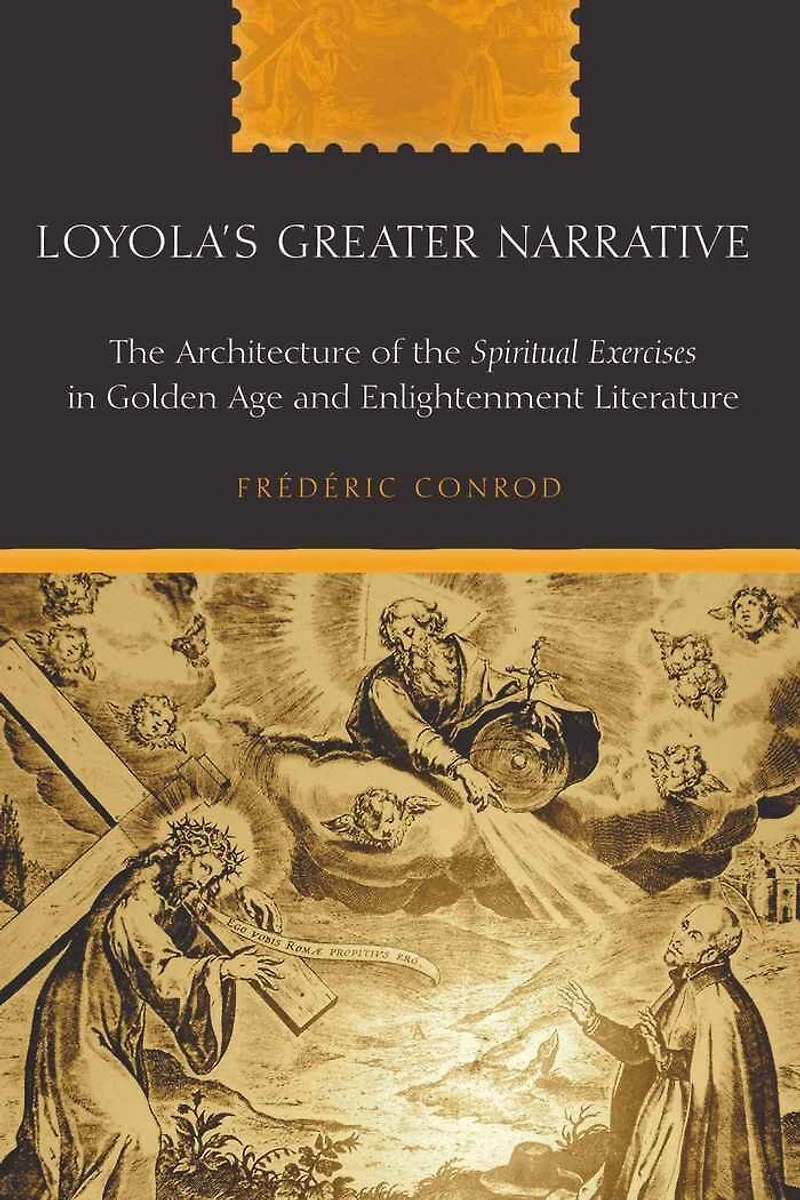
Loyola's Greater Narrative: the Architecture of "Spiritual Exercises" Golden Age and Enlightenment Literature
Current price: $116.95

Loyola's Greater Narrative: the Architecture of "Spiritual Exercises" Golden Age and Enlightenment Literature
Current price: $116.95
Loading Inventory...
Size: Hardcover (2008 A)
*Product information may vary - to confirm product availability, pricing, shipping and return information please contact Indigo
The Baroque imagination has its roots in Ignatius of Loyola’s Spiritual Exercises (1547), which defined for the Counter-Reformation era the parameters in which Catholic believers must confront the Enemy and the temporal corruption he embodies in order to enter a state of grace and obtain salvation. Through complex interactions of different imaginative functions, Loyola’s text is able to superpose a variety of simultaneous narrative levels. In order to reformulate the greater narrative (the Magisterium) of the Roman faith beyond what is revealed in Scripture, the Spiritual Exercises require their exercitant to become an active participant in this narrative through constant visual contact with orders of corruption, that is, spaces in which virtue can be confronted with physical decay and sin. Through these spaces Counter-Reformation Rome (La Roma Ignaziana) would redefine the economy of salvation and diffuse the visual dynamics of the Spiritual Exercises throughout the Catholic world. In their writings, Spanish Golden Age authors Miguel de Cervantes and Baltasar Gracin use the rising modernity of the novel to transform Loyola’s notion of orders of corruption by adapting it to the secular world. Their encoded criticism of Loyolan imagination contributed to the epistemological crisis that marks the Baroque age, but also prepared the way for the crucial debates that would take place during the Enlightenment (such as the deconstruction of the Catholic greater narrative reflected in Loyola). This book concludes with a discussion of the eventual negation of Loyolan imagination in the novels of the Marquis de Sade, which undermine the Roman faith by parodying the Baroque forms of spiritual visual experience and negate the Loyolan projection into orders of corruption.
The Baroque imagination has its roots in Ignatius of Loyola’s Spiritual Exercises (1547), which defined for the Counter-Reformation era the parameters in which Catholic believers must confront the Enemy and the temporal corruption he embodies in order to enter a state of grace and obtain salvation. Through complex interactions of different imaginative functions, Loyola’s text is able to superpose a variety of simultaneous narrative levels. In order to reformulate the greater narrative (the Magisterium) of the Roman faith beyond what is revealed in Scripture, the Spiritual Exercises require their exercitant to become an active participant in this narrative through constant visual contact with orders of corruption, that is, spaces in which virtue can be confronted with physical decay and sin. Through these spaces Counter-Reformation Rome (La Roma Ignaziana) would redefine the economy of salvation and diffuse the visual dynamics of the Spiritual Exercises throughout the Catholic world. In their writings, Spanish Golden Age authors Miguel de Cervantes and Baltasar Gracin use the rising modernity of the novel to transform Loyola’s notion of orders of corruption by adapting it to the secular world. Their encoded criticism of Loyolan imagination contributed to the epistemological crisis that marks the Baroque age, but also prepared the way for the crucial debates that would take place during the Enlightenment (such as the deconstruction of the Catholic greater narrative reflected in Loyola). This book concludes with a discussion of the eventual negation of Loyolan imagination in the novels of the Marquis de Sade, which undermine the Roman faith by parodying the Baroque forms of spiritual visual experience and negate the Loyolan projection into orders of corruption.
You May Also Like








More About Indigo at Erin Mills Town Centre
The largest book retailer in Canada also offers toys, music, home décor, gifts and lifestyle products. What's Inside...Books, Magazines, CD’s and DVD’s, Toys and Gifts, Home Accents, Electronics, Baby’s and Children’s Section, Bath and Body, Kitchen and Bedroom, Stationary Located outside in the exterior plaza.
5015 Glen Erin Dr, Mississauga, ON L5M 0R7, Canada
Find Indigo at Erin Mills Town Centre in Mississauga ON
Visit Indigo at Erin Mills Town Centre in Mississauga ON