

GIVE THE PERFECT GIFT
Erin Mills Town Centre Gift Cards are the perfect choice for your gift giving needs.Purchase gift cards at kiosks near the food court or centre court, at Guest Services, or click below to purchase online.PURCHASE HEREHome
Machine Learning for Tabular Data: XGBoost, Deep Learning, and AI
Indigo
Loading Inventory...
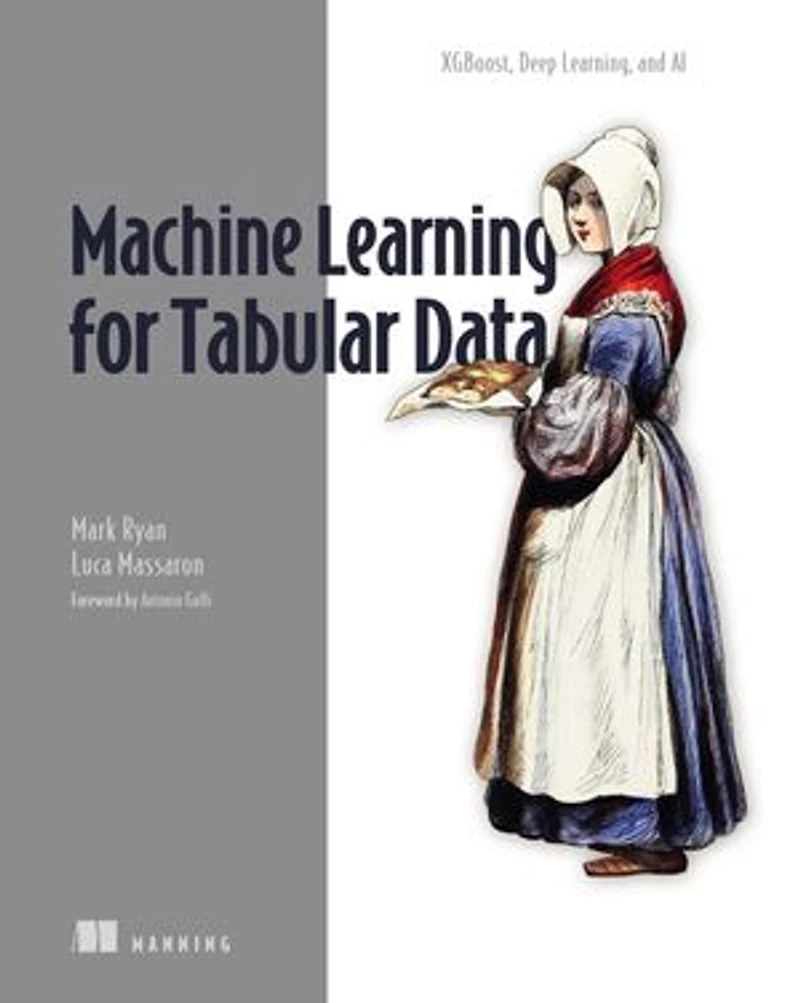
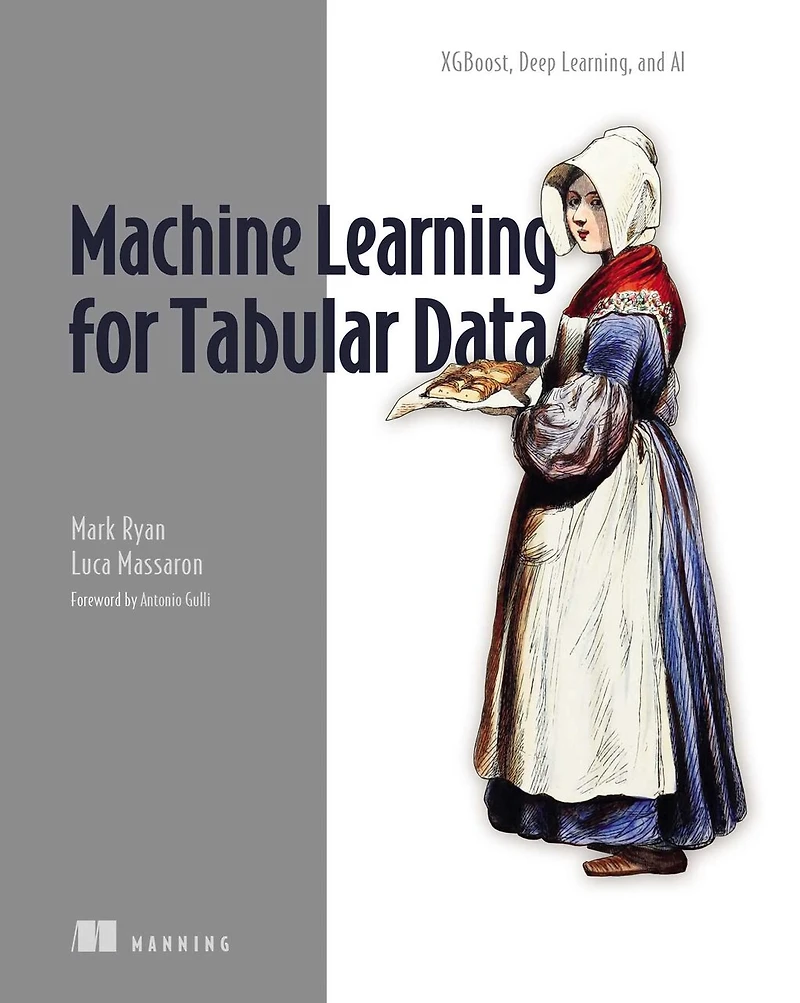
Machine Learning for Tabular Data: XGBoost, Deep Learning, and AI
Current price: $77.99

Machine Learning for Tabular Data: XGBoost, Deep Learning, and AI
Current price: $77.99
Loading Inventory...
Size: Kobo eBook
*Product information may vary - to confirm product availability, pricing, shipping and return information please contact Indigo
Business runs on tabular data in databases, spreadsheets, and logs. Crunch that data using deep learning, gradient boosting, and other machine learning techniques.
Machine Learning for Tabular Data teaches you to train insightful machine learning models on common tabular business data sources such as spreadsheets, databases, and logs. You’ll discover how to use XGBoost and LightGBM on tabular data, optimize deep learning libraries like TensorFlow and PyTorch for tabular data, and use cloud tools like Vertex AI to create an automated MLOps pipeline.
Machine Learning for Tabular Data will teach you how to:
• Pick the right machine learning approach for your data
• Apply deep learning to tabular data
• Deploy tabular machine learning locally and in the cloud
• Pipelines to automatically train and maintain a model
Machine Learning for Tabular Data covers classic machine learning techniques like gradient boosting, and more contemporary deep learning approaches. By the time you’re finished, you’ll be equipped with the skills to apply machine learning to the kinds of data you work with every day.
Foreword by Antonio Gulli .
Purchase of the print book includes a free eBook in PDF and ePub formats from Manning Publications.
About the technology
Machine learning can accelerate everyday business chores like account reconciliation, demand forecasting, and customer service automation—not to mention more exotic challenges like fraud detection, predictive maintenance, and personalized marketing. This book shows you how to unlock the vital information stored in spreadsheets, ledgers, databases and other tabular data sources using gradient boosting, deep learning, and generative AI.
About the book
Machine Learning for Tabular Data delivers practical ML techniques to upgrade every stage of the business data analysis pipeline. In it, you’ll explore examples like using XGBoost and Keras to predict short-term rental prices, deploying a local ML model with Python and Flask, and streamlining workflows using large language models (LLMs). Along the way, you’ll learn to make your models both more powerful and more explainable.
What's inside
• Master XGBoost
• Apply deep learning to tabular data
• Deploy models locally and in the cloud
• Build pipelines to train and maintain models
About the reader
For readers experienced with Python and the basics of machine learning.
About the author
Mark Ryan is the AI Lead of the Developer Knowledge Platform at Google. A three-time Kaggle Grandmaster, Luca Massaron is a Google Developer Expert (GDE) in machine learning and AI. He has published 17 other books.
Table of Contents
Part 1
1 Understanding tabular data
2 Exploring tabular datasets
3 Machine learning vs. deep learning
Part 2
4 Classical algorithms for tabular data
5 Decision trees and gradient boosting
6 Advanced feature processing methods
7 An end-to-end example using XGBoost
Part 3
8 Getting started with deep learning with tabular data
9 Deep learning best practices
10 Model deployment
11 Building a machine learning pipeline
12 Blending gradient boosting and deep learning
A Hyperparameters for classical machine learning models
B K-nearest neighbors and support vector machines
Business runs on tabular data in databases, spreadsheets, and logs. Crunch that data using deep learning, gradient boosting, and other machine learning techniques.
Machine Learning for Tabular Data teaches you to train insightful machine learning models on common tabular business data sources such as spreadsheets, databases, and logs. You’ll discover how to use XGBoost and LightGBM on tabular data, optimize deep learning libraries like TensorFlow and PyTorch for tabular data, and use cloud tools like Vertex AI to create an automated MLOps pipeline.
Machine Learning for Tabular Data will teach you how to:
• Pick the right machine learning approach for your data
• Apply deep learning to tabular data
• Deploy tabular machine learning locally and in the cloud
• Pipelines to automatically train and maintain a model
Machine Learning for Tabular Data covers classic machine learning techniques like gradient boosting, and more contemporary deep learning approaches. By the time you’re finished, you’ll be equipped with the skills to apply machine learning to the kinds of data you work with every day.
Foreword by Antonio Gulli .
Purchase of the print book includes a free eBook in PDF and ePub formats from Manning Publications.
About the technology
Machine learning can accelerate everyday business chores like account reconciliation, demand forecasting, and customer service automation—not to mention more exotic challenges like fraud detection, predictive maintenance, and personalized marketing. This book shows you how to unlock the vital information stored in spreadsheets, ledgers, databases and other tabular data sources using gradient boosting, deep learning, and generative AI.
About the book
Machine Learning for Tabular Data delivers practical ML techniques to upgrade every stage of the business data analysis pipeline. In it, you’ll explore examples like using XGBoost and Keras to predict short-term rental prices, deploying a local ML model with Python and Flask, and streamlining workflows using large language models (LLMs). Along the way, you’ll learn to make your models both more powerful and more explainable.
What's inside
• Master XGBoost
• Apply deep learning to tabular data
• Deploy models locally and in the cloud
• Build pipelines to train and maintain models
About the reader
For readers experienced with Python and the basics of machine learning.
About the author
Mark Ryan is the AI Lead of the Developer Knowledge Platform at Google. A three-time Kaggle Grandmaster, Luca Massaron is a Google Developer Expert (GDE) in machine learning and AI. He has published 17 other books.
Table of Contents
Part 1
1 Understanding tabular data
2 Exploring tabular datasets
3 Machine learning vs. deep learning
Part 2
4 Classical algorithms for tabular data
5 Decision trees and gradient boosting
6 Advanced feature processing methods
7 An end-to-end example using XGBoost
Part 3
8 Getting started with deep learning with tabular data
9 Deep learning best practices
10 Model deployment
11 Building a machine learning pipeline
12 Blending gradient boosting and deep learning
A Hyperparameters for classical machine learning models
B K-nearest neighbors and support vector machines
You May Also Like








More About Indigo at Erin Mills Town Centre
The largest book retailer in Canada also offers toys, music, home décor, gifts and lifestyle products. What's Inside...Books, Magazines, CD’s and DVD’s, Toys and Gifts, Home Accents, Electronics, Baby’s and Children’s Section, Bath and Body, Kitchen and Bedroom, Stationary Located outside in the exterior plaza.
5015 Glen Erin Dr, Mississauga, ON L5M 0R7, Canada
Find Indigo at Erin Mills Town Centre in Mississauga ON
Visit Indigo at Erin Mills Town Centre in Mississauga ON