

GIVE THE PERFECT GIFT
Erin Mills Town Centre Gift Cards are the perfect choice for your gift giving needs.Purchase gift cards at kiosks near the food court or centre court, at Guest Services, or click below to purchase online.PURCHASE HEREHome
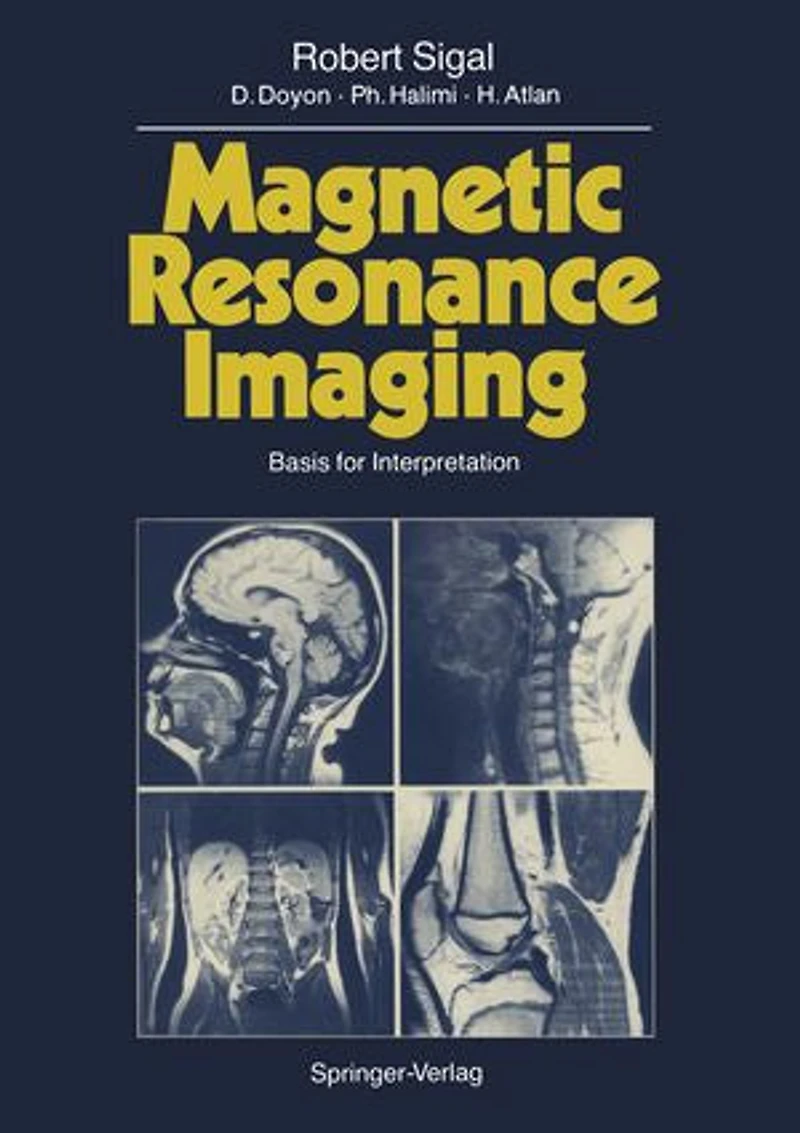
Magnetic Resonance Imaging: Basis for Interpretation
Indigo
Loading Inventory...
Magnetic Resonance Imaging: Basis for Interpretation
Current price: $64.49
Original price: $80.62

Magnetic Resonance Imaging: Basis for Interpretation
Current price: $64.49
Original price: $80.62
Loading Inventory...
Size: Kobo eBook
*Product information may vary - to confirm product availability, pricing, shipping and return information please contact Indigo
Magnetic Resonance Imaging (MRI) is a rapidly evolving technique which is having a significant impact on medical imaging. Only a few years ago, al- though Nuclear Magnetic Resonance (NMR) was well known as an important analytical technique in the field of chemical analysis, it was effectively un- known in medical circles. Following the initial work of PAUL LAUTERBUR and RAYMOND DAMADIAN in the early 1970s demonstrating that it was possible to use NMR to produce im- ages, progress in the medical fields was relatively slow. Recently, however, with the availability of commercial systems, progress has been very rapid, with increasing acceptance of MRI as a basic imaging technique, and the develop- ment of exciting new applications. MRI is a relatively complex technique. First, the image depends on many more intrinsic and extrinsic parameters than it does of in techniques like X-ra- diography and computed tomography, and secondly, the intrinsic parameters such as T1 and T2 are conceptually complex, involving ideas not usually de- scribed in traditional medical imaging courses. In order to produce good MR images efficiently, and to obtain the maximum information from them, it is necessary to appreciate, if not to fully understand, these parameters. Further- more, knowledge of how the image is produced helps in appreciating the ori- gin of the artifacts sometimes found in MRI due to effects like patient motion and fluid flow.
Magnetic Resonance Imaging (MRI) is a rapidly evolving technique which is having a significant impact on medical imaging. Only a few years ago, al- though Nuclear Magnetic Resonance (NMR) was well known as an important analytical technique in the field of chemical analysis, it was effectively un- known in medical circles. Following the initial work of PAUL LAUTERBUR and RAYMOND DAMADIAN in the early 1970s demonstrating that it was possible to use NMR to produce im- ages, progress in the medical fields was relatively slow. Recently, however, with the availability of commercial systems, progress has been very rapid, with increasing acceptance of MRI as a basic imaging technique, and the develop- ment of exciting new applications. MRI is a relatively complex technique. First, the image depends on many more intrinsic and extrinsic parameters than it does of in techniques like X-ra- diography and computed tomography, and secondly, the intrinsic parameters such as T1 and T2 are conceptually complex, involving ideas not usually de- scribed in traditional medical imaging courses. In order to produce good MR images efficiently, and to obtain the maximum information from them, it is necessary to appreciate, if not to fully understand, these parameters. Further- more, knowledge of how the image is produced helps in appreciating the ori- gin of the artifacts sometimes found in MRI due to effects like patient motion and fluid flow.
You May Also Like









More About Indigo at Erin Mills Town Centre
The largest book retailer in Canada also offers toys, music, home décor, gifts and lifestyle products. What's Inside...Books, Magazines, CD’s and DVD’s, Toys and Gifts, Home Accents, Electronics, Baby’s and Children’s Section, Bath and Body, Kitchen and Bedroom, Stationary Located outside in the exterior plaza.
5015 Glen Erin Dr, Mississauga, ON L5M 0R7, Canada
Find Indigo at Erin Mills Town Centre in Mississauga ON
Visit Indigo at Erin Mills Town Centre in Mississauga ON