

GIVE THE PERFECT GIFT
Erin Mills Town Centre Gift Cards are the perfect choice for your gift giving needs.Purchase gift cards at kiosks near the food court or centre court, at Guest Services, or click below to purchase online.PURCHASE HEREHome
Marxism and Form by Fredric Jameson, Paperback | Indigo Chapters
Indigo
Loading Inventory...
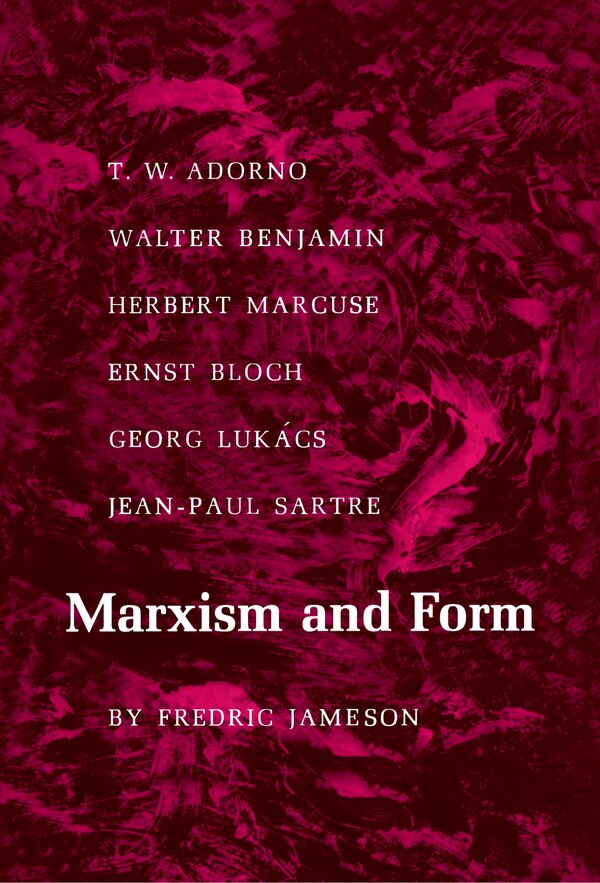
Marxism and Form by Fredric Jameson, Paperback | Indigo Chapters
By Fredric Jameson
Current price: $61.00

By Fredric Jameson
Marxism and Form by Fredric Jameson, Paperback | Indigo Chapters
Current price: $61.00
Loading Inventory...
Size: 25.4 x 215.9 x 20
*Product information may vary - to confirm product availability, pricing, shipping and return information please contact Indigo
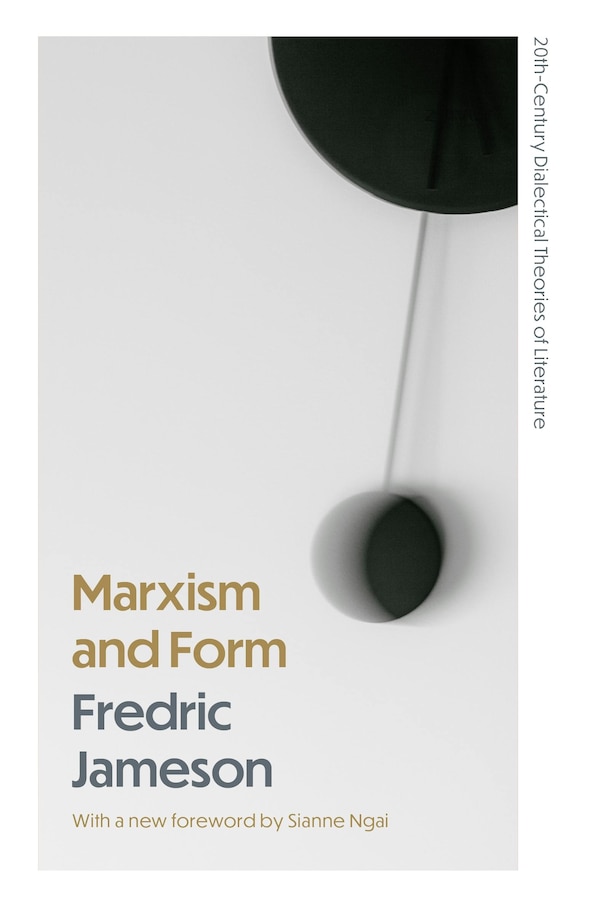
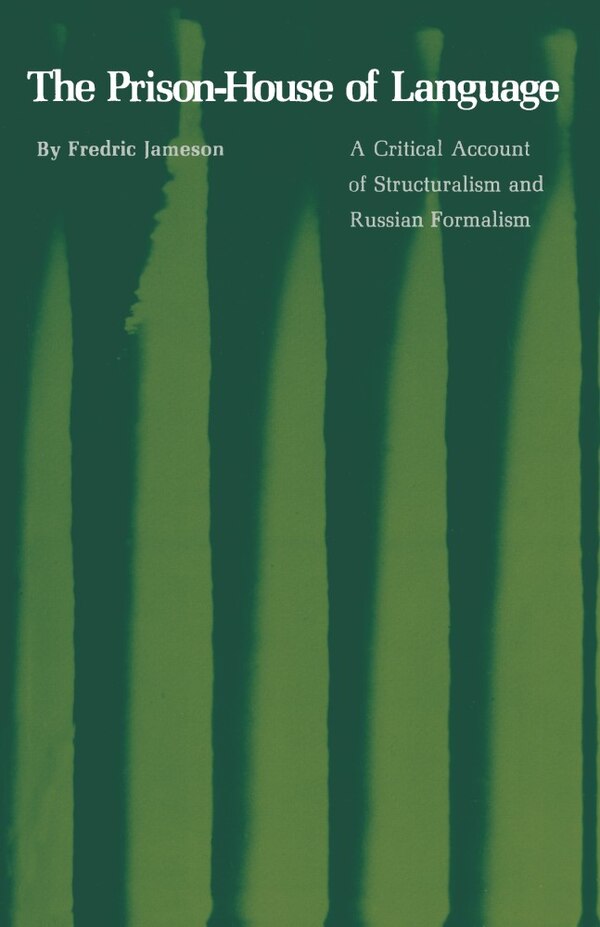
For more than thirty years, Fredric Jameson has been one of the most productive, wide-ranging, and distinctive literary theorists in the United States and the Anglophone world. Marxism and Form provided a pioneering account of the work of the major European Marxist theorists-T. W. Adorno, Walter Benjamin, Herbert Marcuse, Ernst Bloch, Georg Lukács, and Jean-Paul Sartre-work that was, at the time, largely neglected in the English-speaking world. Through penetrating readings of each theorist, Jameson developed a critical mode of engagement that has had tremendous in. uence. He provided a framework for analyzing the connection between art and the historical circumstances of its making-in particular, how cultural artifacts distort, repress, or transform their circumstances through the abstractions of aesthetic form. Jameson's presentation of the critical thought of this Hegelian Marxism provided a stark alternative to the Anglo-American tradition of empiricism and humanism. It would later provide a compelling alternative to poststructuralism and deconstruction as they became dominant methodologies in aesthetic criticism. One year after Marxism and Form, Princeton published Jameson's The Prison-House of Language (1972), which provided a thorough historical and philosophical description of formalism and structuralism. Both books remain central to Jameson's main intellectual legacy: describing and extending a tradition of Western Marxism in cultural theory and literary interpretation. | Marxism and Form by Fredric Jameson, Paperback | Indigo Chapters
For more than thirty years, Fredric Jameson has been one of the most productive, wide-ranging, and distinctive literary theorists in the United States and the Anglophone world. Marxism and Form provided a pioneering account of the work of the major European Marxist theorists-T. W. Adorno, Walter Benjamin, Herbert Marcuse, Ernst Bloch, Georg Lukács, and Jean-Paul Sartre-work that was, at the time, largely neglected in the English-speaking world. Through penetrating readings of each theorist, Jameson developed a critical mode of engagement that has had tremendous in. uence. He provided a framework for analyzing the connection between art and the historical circumstances of its making-in particular, how cultural artifacts distort, repress, or transform their circumstances through the abstractions of aesthetic form. Jameson's presentation of the critical thought of this Hegelian Marxism provided a stark alternative to the Anglo-American tradition of empiricism and humanism. It would later provide a compelling alternative to poststructuralism and deconstruction as they became dominant methodologies in aesthetic criticism. One year after Marxism and Form, Princeton published Jameson's The Prison-House of Language (1972), which provided a thorough historical and philosophical description of formalism and structuralism. Both books remain central to Jameson's main intellectual legacy: describing and extending a tradition of Western Marxism in cultural theory and literary interpretation. | Marxism and Form by Fredric Jameson, Paperback | Indigo Chapters
You May Also Like









More About Indigo at Erin Mills Town Centre
The largest book retailer in Canada also offers toys, music, home décor, gifts and lifestyle products. What's Inside...Books, Magazines, CD’s and DVD’s, Toys and Gifts, Home Accents, Electronics, Baby’s and Children’s Section, Bath and Body, Kitchen and Bedroom, Stationary Located outside in the exterior plaza.
5015 Glen Erin Dr, Mississauga, ON L5M 0R7, Canada
Find Indigo at Erin Mills Town Centre in Mississauga ON
Visit Indigo at Erin Mills Town Centre in Mississauga ON