

GIVE THE PERFECT GIFT
Erin Mills Town Centre Gift Cards are the perfect choice for your gift giving needs.Purchase gift cards at kiosks near the food court or centre court, at Guest Services, or click below to purchase online.PURCHASE HEREHome
Materials Science Static High Magnetic Fields
Indigo
Loading Inventory...
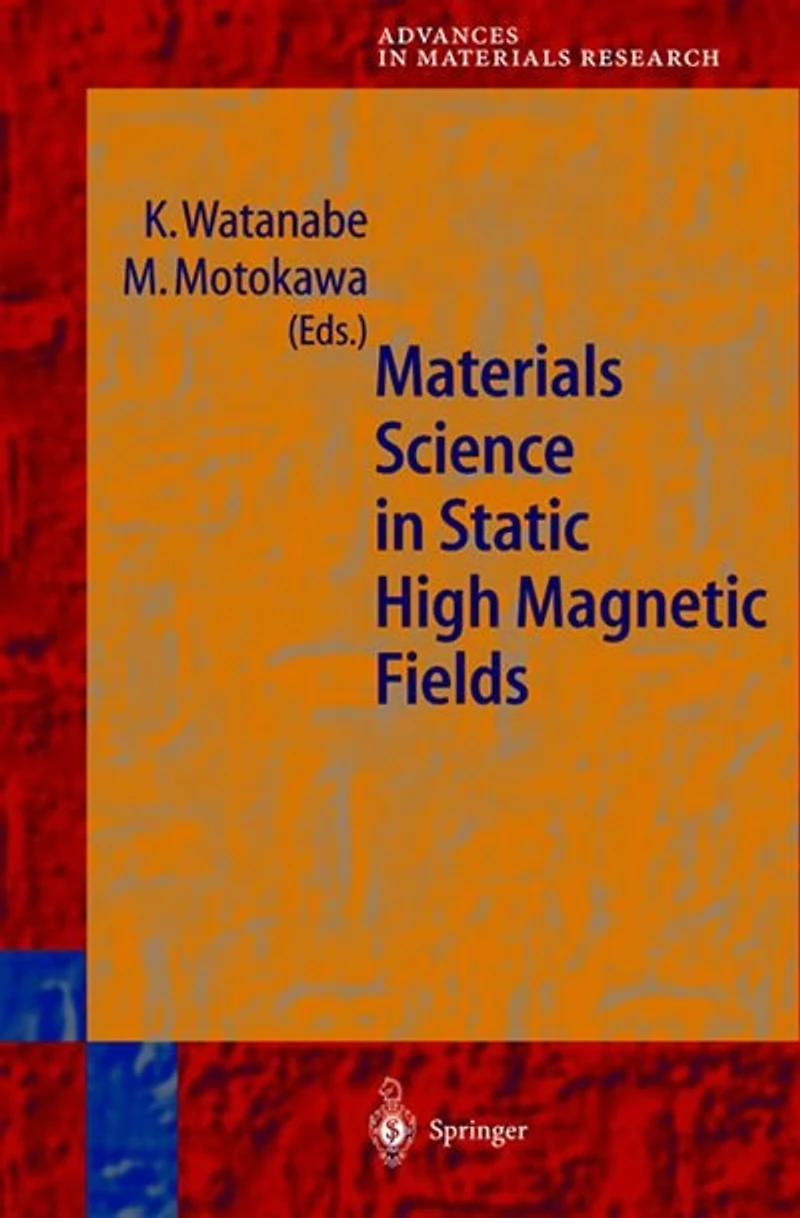
Materials Science Static High Magnetic Fields
Current price: $142.95

Materials Science Static High Magnetic Fields
Current price: $142.95
Loading Inventory...
Size: Hardcover
*Product information may vary - to confirm product availability, pricing, shipping and return information please contact Indigo
There is no strict definition of the term "High Magnetic Field". It has been proposed to use this term for magnetic fields that are technically difficult to generate and therefore need special equipment or large resources. Static fields above 20 T are apparently high magnetic fields in this sense, but in the case of pulsed field 40 T is easy to obtain and any field lower than this approximate limit should not be considered as "high". When a static field is used for materials processing, even 10 T is considered as "high" because the long-term use of a conventional superconducting magnet is difficult. Recently, there has been much technical progress in producing high mag netic fields, both pulsed and static; in large part this is due to the devel opment of new materials. Complicated poly-helix coils are now replaced by simple Bitter coils made with plates of CuAg alloy with high strength and high conductivity; these are used in both water-cooled and hybrid magnets (now up to 45 Tat NHMFL, the US National High Magnetic Field Labora tory at Tallahassee, Florida). By using CuAg wire, a nondestructive pulsed field record of 80 T has been achieved at Osaka University. For daily use in experiments, 70-75 T should soon become available. Major facilities for static high fields worldwide are planning to generate fields over 40 T by increasing the electric power. On the other hand, the use of static high magnetic fields is expanding.
There is no strict definition of the term "High Magnetic Field". It has been proposed to use this term for magnetic fields that are technically difficult to generate and therefore need special equipment or large resources. Static fields above 20 T are apparently high magnetic fields in this sense, but in the case of pulsed field 40 T is easy to obtain and any field lower than this approximate limit should not be considered as "high". When a static field is used for materials processing, even 10 T is considered as "high" because the long-term use of a conventional superconducting magnet is difficult. Recently, there has been much technical progress in producing high mag netic fields, both pulsed and static; in large part this is due to the devel opment of new materials. Complicated poly-helix coils are now replaced by simple Bitter coils made with plates of CuAg alloy with high strength and high conductivity; these are used in both water-cooled and hybrid magnets (now up to 45 Tat NHMFL, the US National High Magnetic Field Labora tory at Tallahassee, Florida). By using CuAg wire, a nondestructive pulsed field record of 80 T has been achieved at Osaka University. For daily use in experiments, 70-75 T should soon become available. Major facilities for static high fields worldwide are planning to generate fields over 40 T by increasing the electric power. On the other hand, the use of static high magnetic fields is expanding.
You May Also Like









More About Indigo at Erin Mills Town Centre
The largest book retailer in Canada also offers toys, music, home décor, gifts and lifestyle products. What's Inside...Books, Magazines, CD’s and DVD’s, Toys and Gifts, Home Accents, Electronics, Baby’s and Children’s Section, Bath and Body, Kitchen and Bedroom, Stationary Located outside in the exterior plaza.
5015 Glen Erin Dr, Mississauga, ON L5M 0R7, Canada
Find Indigo at Erin Mills Town Centre in Mississauga ON
Visit Indigo at Erin Mills Town Centre in Mississauga ON