

GIVE THE PERFECT GIFT
Erin Mills Town Centre Gift Cards are the perfect choice for your gift giving needs.Purchase gift cards at kiosks near the food court or centre court, at Guest Services, or click below to purchase online.PURCHASE HEREHome
Mathematical Economics: Prelude To The Neoclassical Model
Indigo
Loading Inventory...
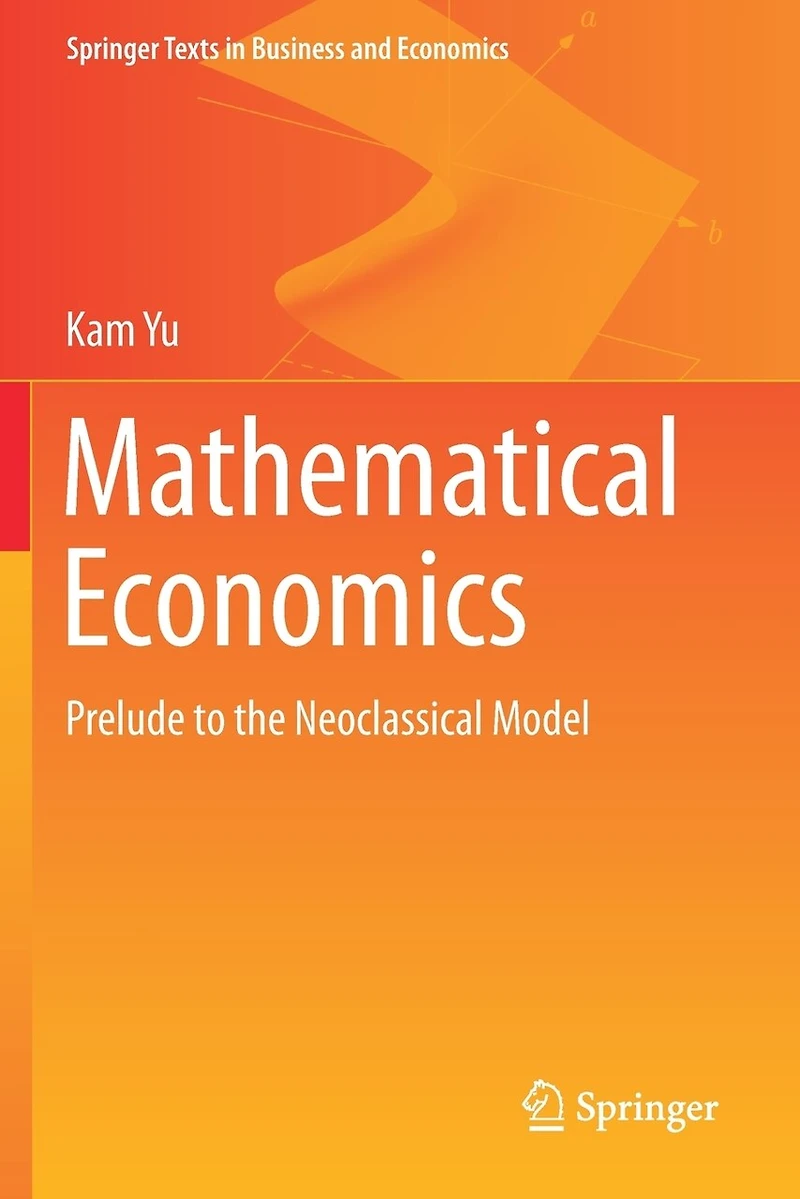
Mathematical Economics: Prelude To The Neoclassical Model
Current price: $87.95

Mathematical Economics: Prelude To The Neoclassical Model
Current price: $87.95
Loading Inventory...
Size: Paperback
*Product information may vary - to confirm product availability, pricing, shipping and return information please contact Indigo
This textbook provides a one-semester introduction to mathematical economics for first year graduate and senior undergraduate students. Intended to fill the gap between typical liberal arts curriculum and the rigorous mathematical modeling of graduate study in economics, this text provides a concise introduction to the mathematics needed for core microeconomics, macroeconomics, and econometrics courses. Chapters 1 through 5 builds students' skills in formal proof, axiomatic treatment of linear algebra, and elementary vector differentiation. Chapters 6 and 7 present the basic tools needed for microeconomic analysis. Chapter 8 provides a quick introduction to (or review of) probability theory. Chapter 9 introduces dynamic modeling, applicable in advanced macroeconomics courses. The materials assume prerequisites in undergraduate calculus and linear algebra. Each chapter includes in-text exercises and a solutions manual, making this text ideal for self-study.
This textbook provides a one-semester introduction to mathematical economics for first year graduate and senior undergraduate students. Intended to fill the gap between typical liberal arts curriculum and the rigorous mathematical modeling of graduate study in economics, this text provides a concise introduction to the mathematics needed for core microeconomics, macroeconomics, and econometrics courses. Chapters 1 through 5 builds students' skills in formal proof, axiomatic treatment of linear algebra, and elementary vector differentiation. Chapters 6 and 7 present the basic tools needed for microeconomic analysis. Chapter 8 provides a quick introduction to (or review of) probability theory. Chapter 9 introduces dynamic modeling, applicable in advanced macroeconomics courses. The materials assume prerequisites in undergraduate calculus and linear algebra. Each chapter includes in-text exercises and a solutions manual, making this text ideal for self-study.
You May Also Like










More About Indigo at Erin Mills Town Centre
The largest book retailer in Canada also offers toys, music, home décor, gifts and lifestyle products. What's Inside...Books, Magazines, CD’s and DVD’s, Toys and Gifts, Home Accents, Electronics, Baby’s and Children’s Section, Bath and Body, Kitchen and Bedroom, Stationary Located outside in the exterior plaza.
5015 Glen Erin Dr, Mississauga, ON L5M 0R7, Canada
Find Indigo at Erin Mills Town Centre in Mississauga ON
Visit Indigo at Erin Mills Town Centre in Mississauga ON