

GIVE THE PERFECT GIFT
Erin Mills Town Centre Gift Cards are the perfect choice for your gift giving needs.Purchase gift cards at kiosks near the food court or centre court, at Guest Services, or click below to purchase online.PURCHASE HEREHome
Mathematical Rigour and Informal Proof
Indigo
Loading Inventory...
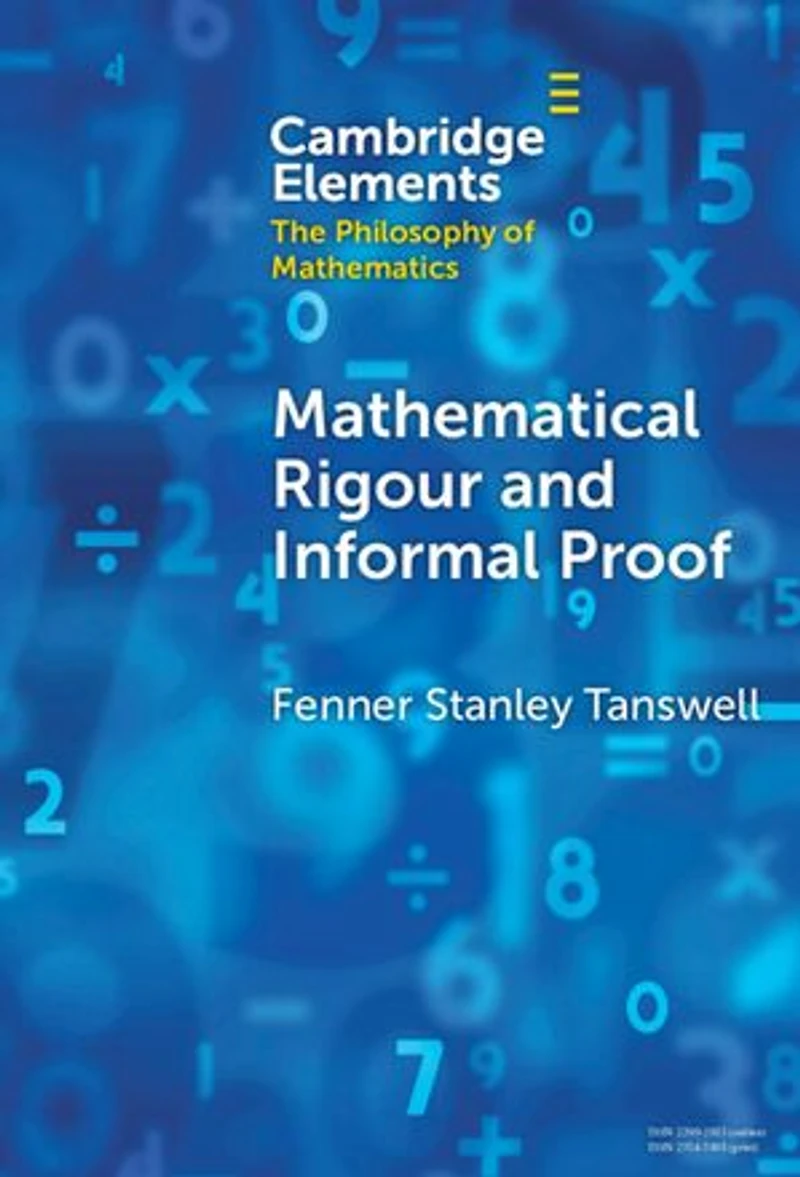
Mathematical Rigour and Informal Proof
Current price: $23.19
Original price: $28.95

Mathematical Rigour and Informal Proof
Current price: $23.19
Original price: $28.95
Loading Inventory...
Size: Kobo eBook
*Product information may vary - to confirm product availability, pricing, shipping and return information please contact Indigo
This Element looks at the contemporary debate on the nature of mathematical rigour and informal proofs as found in mathematical practice. The central argument is for rigour pluralism: that multiple different models of informal proof are good at accounting for different features and functions of the concept of rigour. To illustrate this pluralism, the Element surveys some of the main options in the literature: the 'standard view' that rigour is just formal, logical rigour; the models of proofs as arguments and dialogues; the recipe model of proofs as guiding actions and activities; and the idea of mathematical rigour as an intellectual virtue. The strengths and weaknesses of each are assessed, thereby providing an accessible and empirically-informed introduction to the key issues and ideas found in the current discussion.
This Element looks at the contemporary debate on the nature of mathematical rigour and informal proofs as found in mathematical practice. The central argument is for rigour pluralism: that multiple different models of informal proof are good at accounting for different features and functions of the concept of rigour. To illustrate this pluralism, the Element surveys some of the main options in the literature: the 'standard view' that rigour is just formal, logical rigour; the models of proofs as arguments and dialogues; the recipe model of proofs as guiding actions and activities; and the idea of mathematical rigour as an intellectual virtue. The strengths and weaknesses of each are assessed, thereby providing an accessible and empirically-informed introduction to the key issues and ideas found in the current discussion.
You May Also Like







More About Indigo at Erin Mills Town Centre
The largest book retailer in Canada also offers toys, music, home décor, gifts and lifestyle products. What's Inside...Books, Magazines, CD’s and DVD’s, Toys and Gifts, Home Accents, Electronics, Baby’s and Children’s Section, Bath and Body, Kitchen and Bedroom, Stationary Located outside in the exterior plaza.
5015 Glen Erin Dr, Mississauga, ON L5M 0R7, Canada
Find Indigo at Erin Mills Town Centre in Mississauga ON
Visit Indigo at Erin Mills Town Centre in Mississauga ON