

GIVE THE PERFECT GIFT
Erin Mills Town Centre Gift Cards are the perfect choice for your gift giving needs.Purchase gift cards at kiosks near the food court or centre court, at Guest Services, or click below to purchase online.PURCHASE HEREHome
Mathematics and Plausible Reasoning
Indigo
Loading Inventory...
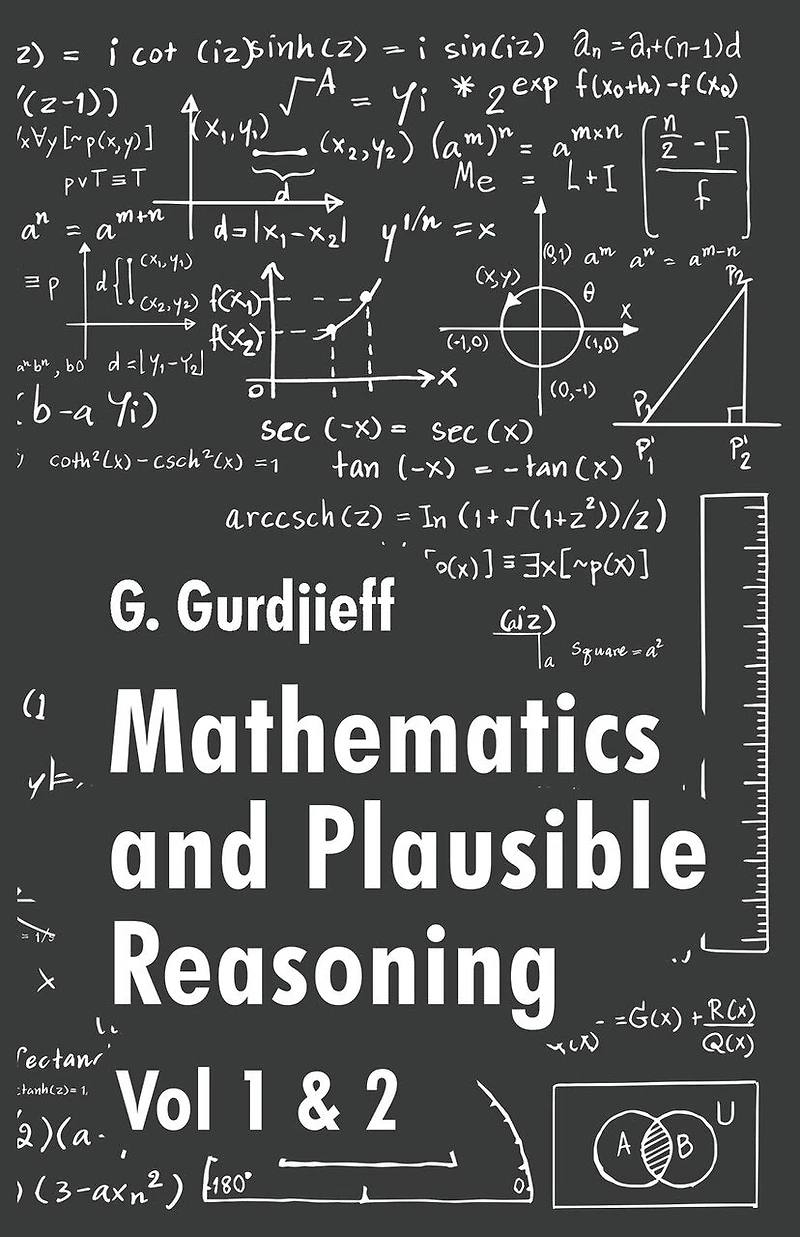
Mathematics and Plausible Reasoning
Current price: $40.24

Mathematics and Plausible Reasoning
Current price: $40.24
Loading Inventory...
Size: Paperback
*Product information may vary - to confirm product availability, pricing, shipping and return information please contact Indigo
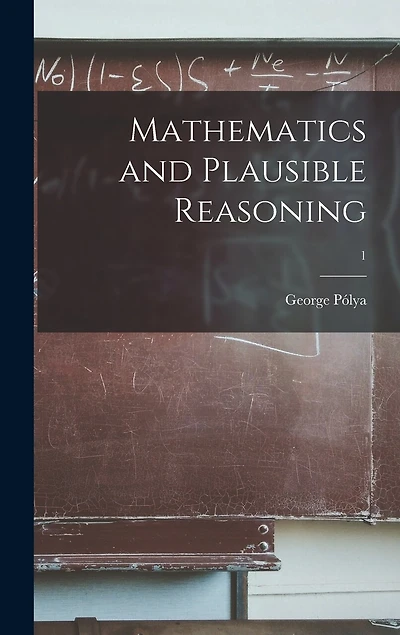
This two volume classic comprises two titles: "Patterns of Plausible Inference" and "Induction and Analogy in Mathematics". This is a guide to the practical art of plausible reasoning, particularly in mathematics, but also in every field of human activity. Using mathematics as the example par excellence, Polya shows how even the most rigorous deductive discipline is heavily dependent on techniques of guessing, inductive reasoning, and reasoning by analogy. In solving a problem, the answer must be guessed at before a proof can be given, and guesses are usually made from a knowledge of facts, experience, and hunches. The truly creative mathematician must be a good guesser first and a good prover afterward; many important theorems have been guessed but no proved until much later. In the same way, solutions to problems can be guessed, and a god guesser is much more likely to find a correct solution. This work might have been called "How to Become a Good Guesser."-From the Dust Jacket.
This two volume classic comprises two titles: "Patterns of Plausible Inference" and "Induction and Analogy in Mathematics". This is a guide to the practical art of plausible reasoning, particularly in mathematics, but also in every field of human activity. Using mathematics as the example par excellence, Polya shows how even the most rigorous deductive discipline is heavily dependent on techniques of guessing, inductive reasoning, and reasoning by analogy. In solving a problem, the answer must be guessed at before a proof can be given, and guesses are usually made from a knowledge of facts, experience, and hunches. The truly creative mathematician must be a good guesser first and a good prover afterward; many important theorems have been guessed but no proved until much later. In the same way, solutions to problems can be guessed, and a god guesser is much more likely to find a correct solution. This work might have been called "How to Become a Good Guesser."-From the Dust Jacket.
You May Also Like









More About Indigo at Erin Mills Town Centre
The largest book retailer in Canada also offers toys, music, home décor, gifts and lifestyle products. What's Inside...Books, Magazines, CD’s and DVD’s, Toys and Gifts, Home Accents, Electronics, Baby’s and Children’s Section, Bath and Body, Kitchen and Bedroom, Stationary Located outside in the exterior plaza.
5015 Glen Erin Dr, Mississauga, ON L5M 0R7, Canada
Find Indigo at Erin Mills Town Centre in Mississauga ON
Visit Indigo at Erin Mills Town Centre in Mississauga ON