

GIVE THE PERFECT GIFT
Erin Mills Town Centre Gift Cards are the perfect choice for your gift giving needs.Purchase gift cards at kiosks near the food court or centre court, at Guest Services, or click below to purchase online.PURCHASE HEREHome
Mathematics is (mostly) Analytic
Indigo
Loading Inventory...
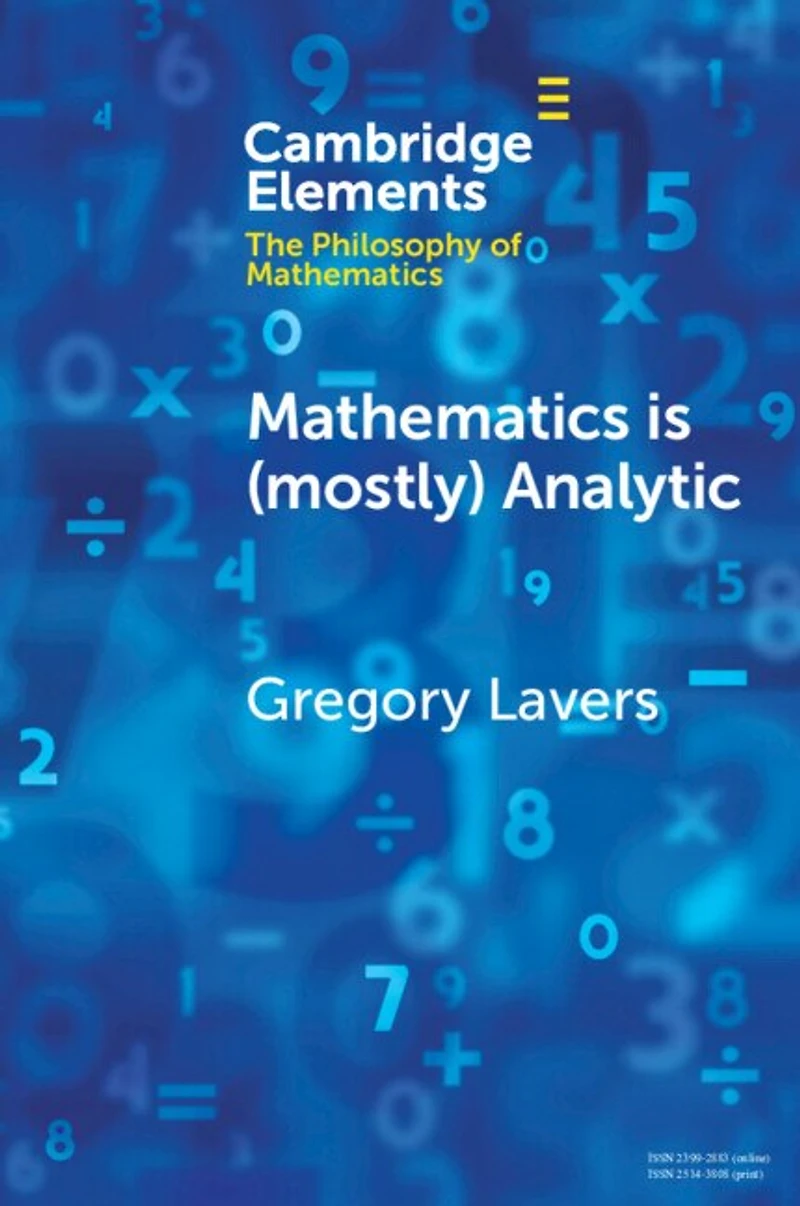
Mathematics is (mostly) Analytic
Current price: $29.54

Mathematics is (mostly) Analytic
Current price: $29.54
Loading Inventory...
Size: Paperback
*Product information may vary - to confirm product availability, pricing, shipping and return information please contact Indigo
This Element outlines and defends an account of analyticity according to which mathematics is, for the most part, analytic. The author begins by looking at Quine's arguments against the concepts of analyticity. He shows how Quine's position on analyticity is related to his view on explication and shows how this suggests a way of defining analyticity that would meet Quine's own standards for explication. The author then looks at Boghossian and his distinction between epistemic and metaphysical accounts of analyticity. Here he argues that there is a straightforward way of eliminating the confusion Boghossian sees with what he calls metaphysical accounts. The author demonstrates that the epistemic dimension of his epistemic account is almost entirely superfluous. The author then discusses how analyticity is related to truth, necessity, and questions of ontology. Finally, he discusses the vagueness of analyticity and also the relation of analyticity to the axiomatic method in mathematics.
This Element outlines and defends an account of analyticity according to which mathematics is, for the most part, analytic. The author begins by looking at Quine's arguments against the concepts of analyticity. He shows how Quine's position on analyticity is related to his view on explication and shows how this suggests a way of defining analyticity that would meet Quine's own standards for explication. The author then looks at Boghossian and his distinction between epistemic and metaphysical accounts of analyticity. Here he argues that there is a straightforward way of eliminating the confusion Boghossian sees with what he calls metaphysical accounts. The author demonstrates that the epistemic dimension of his epistemic account is almost entirely superfluous. The author then discusses how analyticity is related to truth, necessity, and questions of ontology. Finally, he discusses the vagueness of analyticity and also the relation of analyticity to the axiomatic method in mathematics.
You May Also Like













More About Indigo at Erin Mills Town Centre
The largest book retailer in Canada also offers toys, music, home décor, gifts and lifestyle products. What's Inside...Books, Magazines, CD’s and DVD’s, Toys and Gifts, Home Accents, Electronics, Baby’s and Children’s Section, Bath and Body, Kitchen and Bedroom, Stationary Located outside in the exterior plaza.
5015 Glen Erin Dr, Mississauga, ON L5M 0R7, Canada
Find Indigo at Erin Mills Town Centre in Mississauga ON
Visit Indigo at Erin Mills Town Centre in Mississauga ON