

GIVE THE PERFECT GIFT
Erin Mills Town Centre Gift Cards are the perfect choice for your gift giving needs.Purchase gift cards at kiosks near the food court or centre court, at Guest Services, or click below to purchase online.PURCHASE HEREHome
M.C. Escher: Graphic Work
Indigo
Loading Inventory...
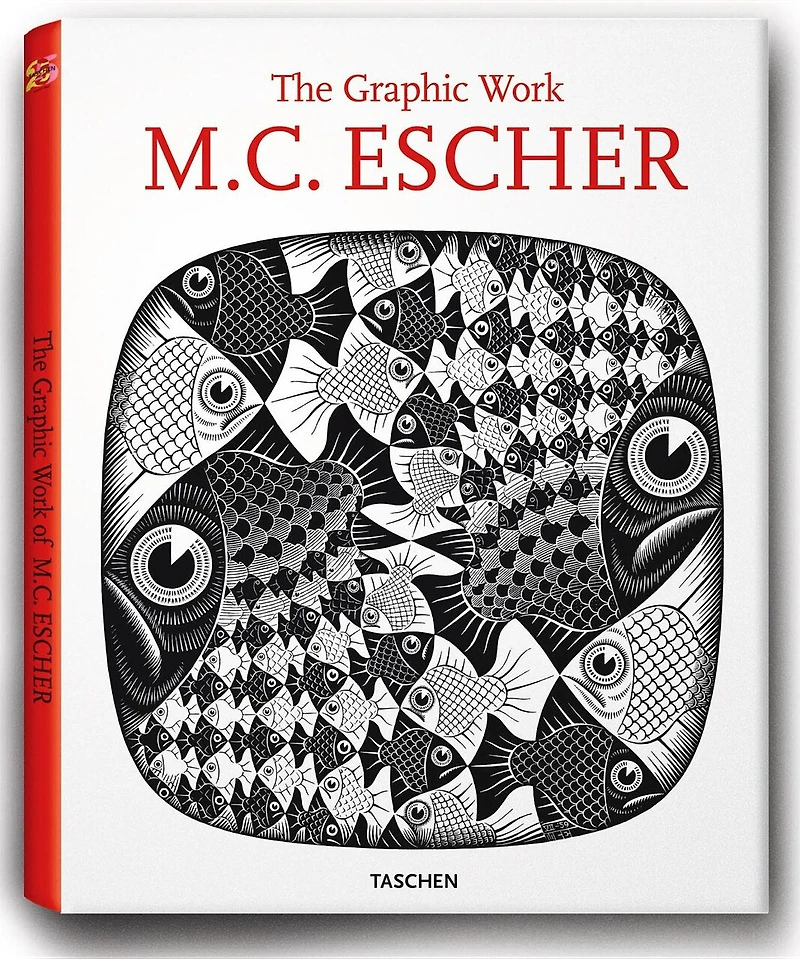
M.C. Escher: Graphic Work
Current price: $19.00

M.C. Escher: Graphic Work
Current price: $19.00
Loading Inventory...
Size: Hardcover
*Product information may vary - to confirm product availability, pricing, shipping and return information please contact Indigo
Presenting the structurally unthinkable as though it were a law of nature
M.C. Escher was born in 1898 in Leeuwarden (Netherlands). He received his first drawing lessons during secondary school from F.W. van der Haagen, who also taught him the block printing, thus fostering Escher’s innate graphic talents.
From 1912 to 1922 he studied at the School of Architecture and Ornamental Design in Haarlem, where he was instructed in graphic techniques by S. Jessurun de Mesquita, who greatly influenced Escher’s further artistic development. Between 1922 and 1934 the artist lived and worked in Italy. Afterwards Escher spent two years in Switzerland and five in Brussels before finally moving back to Barn in Holland, where he died in 1972.
M.C. Escher is not a surrealist drawing us into his dream world, but an architect of perfectly impossible worlds who presents the structurally unthinkable as though it were a law of nature. The resulting dimensional and perspectival illusions bring us into confrontation with the limitations of our sensory perception.
Presenting the structurally unthinkable as though it were a law of nature
M.C. Escher was born in 1898 in Leeuwarden (Netherlands). He received his first drawing lessons during secondary school from F.W. van der Haagen, who also taught him the block printing, thus fostering Escher’s innate graphic talents.
From 1912 to 1922 he studied at the School of Architecture and Ornamental Design in Haarlem, where he was instructed in graphic techniques by S. Jessurun de Mesquita, who greatly influenced Escher’s further artistic development. Between 1922 and 1934 the artist lived and worked in Italy. Afterwards Escher spent two years in Switzerland and five in Brussels before finally moving back to Barn in Holland, where he died in 1972.
M.C. Escher is not a surrealist drawing us into his dream world, but an architect of perfectly impossible worlds who presents the structurally unthinkable as though it were a law of nature. The resulting dimensional and perspectival illusions bring us into confrontation with the limitations of our sensory perception.
You May Also Like













More About Indigo at Erin Mills Town Centre
The largest book retailer in Canada also offers toys, music, home décor, gifts and lifestyle products. What's Inside...Books, Magazines, CD’s and DVD’s, Toys and Gifts, Home Accents, Electronics, Baby’s and Children’s Section, Bath and Body, Kitchen and Bedroom, Stationary Located outside in the exterior plaza.
5015 Glen Erin Dr, Mississauga, ON L5M 0R7, Canada
Find Indigo at Erin Mills Town Centre in Mississauga ON
Visit Indigo at Erin Mills Town Centre in Mississauga ON