

GIVE THE PERFECT GIFT
Erin Mills Town Centre Gift Cards are the perfect choice for your gift giving needs.Purchase gift cards at kiosks near the food court or centre court, at Guest Services, or click below to purchase online.PURCHASE HEREHome
Meaning, Identity, and Interaction: Sociolinguistic Variation and Change in Game-Theoretic Pragmatics
Indigo
Loading Inventory...
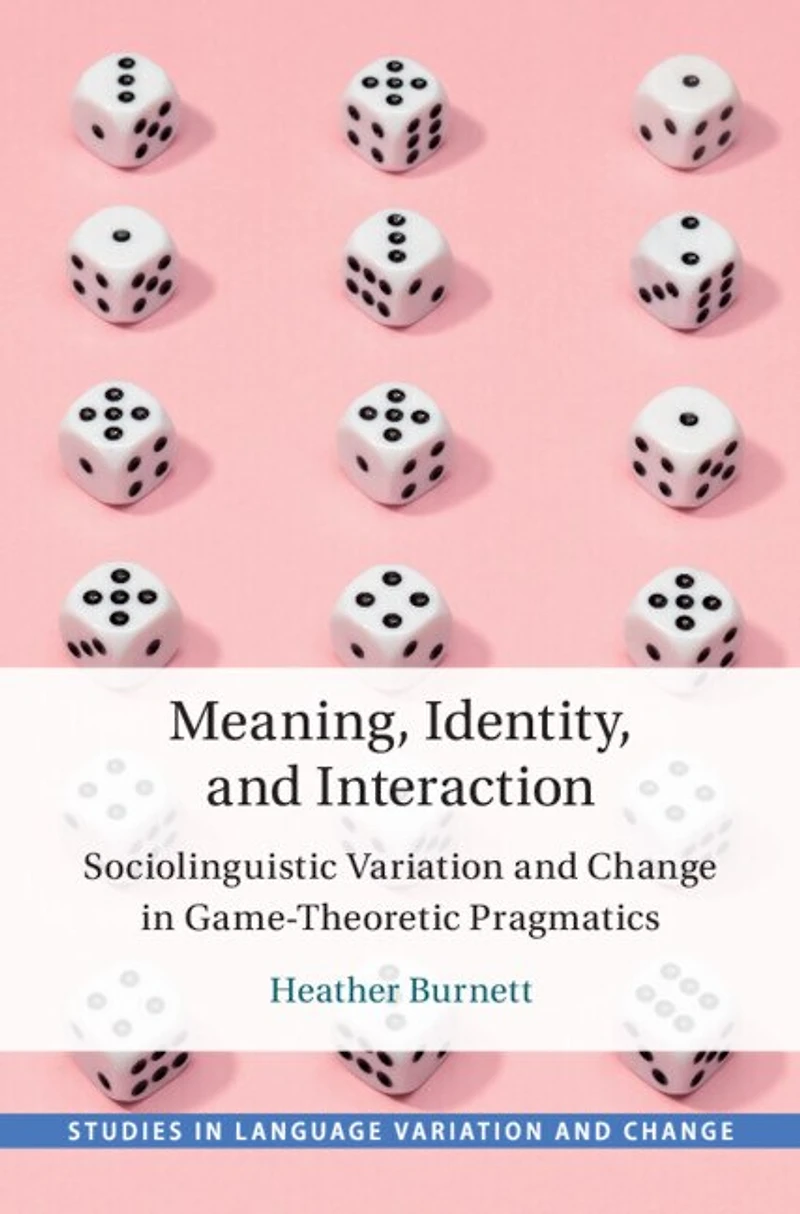
Meaning, Identity, and Interaction: Sociolinguistic Variation and Change in Game-Theoretic Pragmatics
Current price: $150.95

Meaning, Identity, and Interaction: Sociolinguistic Variation and Change in Game-Theoretic Pragmatics
Current price: $150.95
Loading Inventory...
Size: Hardcover
*Product information may vary - to confirm product availability, pricing, shipping and return information please contact Indigo
Exciting parallel developments have been made in sociolinguistics and formal semantics, yet these two subfields have had very little contact in the past. This pioneering book bridges this gap, bringing together research and methodologies from both areas of study into a new framework for studying the relation between language, ideologies and the social world. It demonstrates how tools from semantics can be used to formalize theories from sociolinguistics, linguistic anthropology and gender studies, and also shows how tools from epistemic game theory can be used to bring those theories in closer line with empirical studies of sociolinguistic variation and identity construction through language. Engaging and accessible, it highlights how a cross-pollination of ideas in sociolinguistics and semantics can open up a completely new empirical domain of research. It is essential reading for sociolinguists interested in meaning, and semanticists and philosophers interested in language in its social context.
Exciting parallel developments have been made in sociolinguistics and formal semantics, yet these two subfields have had very little contact in the past. This pioneering book bridges this gap, bringing together research and methodologies from both areas of study into a new framework for studying the relation between language, ideologies and the social world. It demonstrates how tools from semantics can be used to formalize theories from sociolinguistics, linguistic anthropology and gender studies, and also shows how tools from epistemic game theory can be used to bring those theories in closer line with empirical studies of sociolinguistic variation and identity construction through language. Engaging and accessible, it highlights how a cross-pollination of ideas in sociolinguistics and semantics can open up a completely new empirical domain of research. It is essential reading for sociolinguists interested in meaning, and semanticists and philosophers interested in language in its social context.
You May Also Like








More About Indigo at Erin Mills Town Centre
The largest book retailer in Canada also offers toys, music, home décor, gifts and lifestyle products. What's Inside...Books, Magazines, CD’s and DVD’s, Toys and Gifts, Home Accents, Electronics, Baby’s and Children’s Section, Bath and Body, Kitchen and Bedroom, Stationary Located outside in the exterior plaza.
5015 Glen Erin Dr, Mississauga, ON L5M 0R7, Canada
Find Indigo at Erin Mills Town Centre in Mississauga ON
Visit Indigo at Erin Mills Town Centre in Mississauga ON