

GIVE THE PERFECT GIFT
Erin Mills Town Centre Gift Cards are the perfect choice for your gift giving needs.Purchase gift cards at kiosks near the food court or centre court, at Guest Services, or click below to purchase online.PURCHASE HEREHome
Measuring Shadows: Kepler’s Optics of Invisibility
Indigo
Loading Inventory...
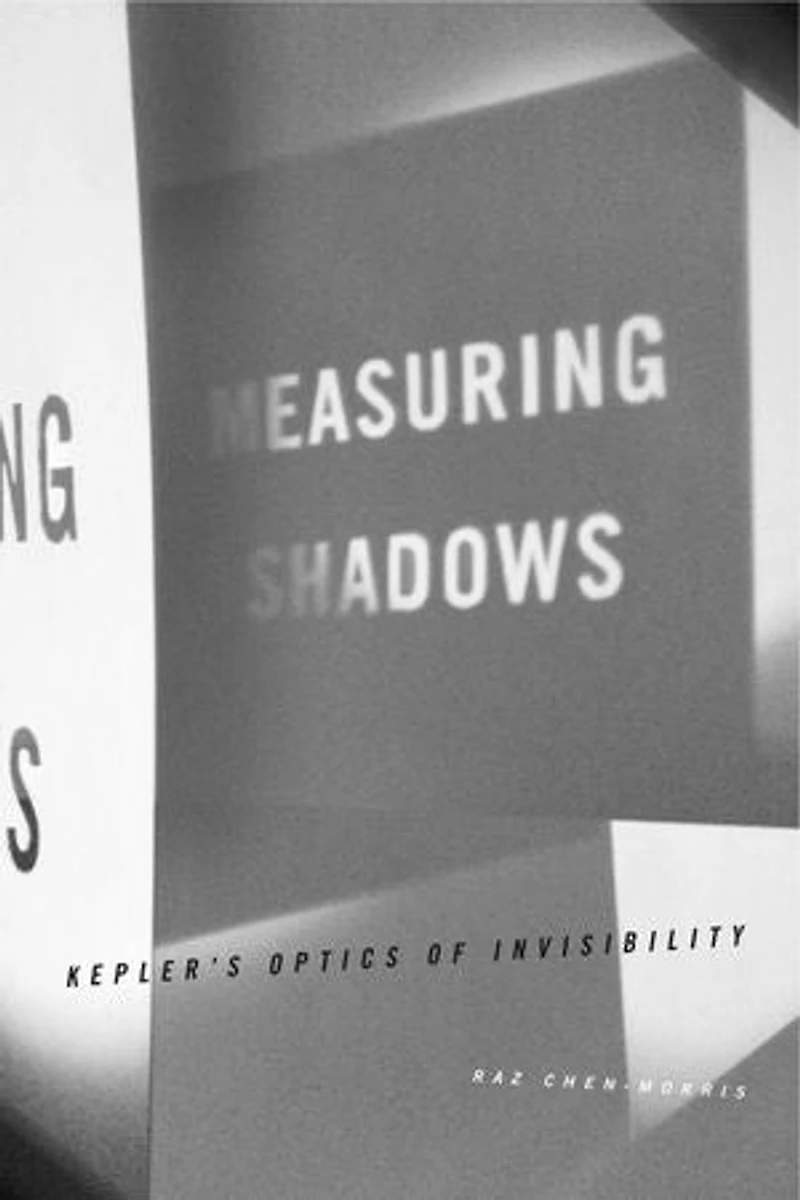
Measuring Shadows: Kepler’s Optics of Invisibility
Current price: $36.79
Original price: $45.99

Measuring Shadows: Kepler’s Optics of Invisibility
Current price: $36.79
Original price: $45.99
Loading Inventory...
Size: Kobo eBook
*Product information may vary - to confirm product availability, pricing, shipping and return information please contact Indigo
In Measuring Shadows , Raz Chen-Morris demonstrates that a close study of Kepler’s Optics is essential to understanding his astronomical work and his scientific epistemology. He explores Kepler’s radical break from scientific and epistemological traditions and shows how the seventeenth-century astronomer posited new ways to view scientific truth and knowledge. Chen-Morris reveals how Kepler’s ideas about the formation of images on the retina and the geometrics of the camera obscura, as well as his astronomical observations, advanced the argument that physical reality could only be described through artificially produced shadows, reflections, and refractions.
Breaking from medieval and Renaissance traditions that insisted upon direct sensory perception, Kepler advocated for instruments as mediators between the eye and physical reality, and for mathematical language to describe motion. It was only through this kind of knowledge, he argued, that observation could produce certainty about the heavens. Not only was this conception of visibility crucial to advancing the early modern understanding of vision and the retina, but it affected how people during that period approached and understood the world around them.
In Measuring Shadows , Raz Chen-Morris demonstrates that a close study of Kepler’s Optics is essential to understanding his astronomical work and his scientific epistemology. He explores Kepler’s radical break from scientific and epistemological traditions and shows how the seventeenth-century astronomer posited new ways to view scientific truth and knowledge. Chen-Morris reveals how Kepler’s ideas about the formation of images on the retina and the geometrics of the camera obscura, as well as his astronomical observations, advanced the argument that physical reality could only be described through artificially produced shadows, reflections, and refractions.
Breaking from medieval and Renaissance traditions that insisted upon direct sensory perception, Kepler advocated for instruments as mediators between the eye and physical reality, and for mathematical language to describe motion. It was only through this kind of knowledge, he argued, that observation could produce certainty about the heavens. Not only was this conception of visibility crucial to advancing the early modern understanding of vision and the retina, but it affected how people during that period approached and understood the world around them.
You May Also Like













More About Indigo at Erin Mills Town Centre
The largest book retailer in Canada also offers toys, music, home décor, gifts and lifestyle products. What's Inside...Books, Magazines, CD’s and DVD’s, Toys and Gifts, Home Accents, Electronics, Baby’s and Children’s Section, Bath and Body, Kitchen and Bedroom, Stationary Located outside in the exterior plaza.
5015 Glen Erin Dr, Mississauga, ON L5M 0R7, Canada
Find Indigo at Erin Mills Town Centre in Mississauga ON
Visit Indigo at Erin Mills Town Centre in Mississauga ON