

GIVE THE PERFECT GIFT
Erin Mills Town Centre Gift Cards are the perfect choice for your gift giving needs.Purchase gift cards at kiosks near the food court or centre court, at Guest Services, or click below to purchase online.PURCHASE HEREHome
Merleau-Ponty Contemporary Context: Philosophy and Politics the Twenty-First Century
Indigo
Loading Inventory...
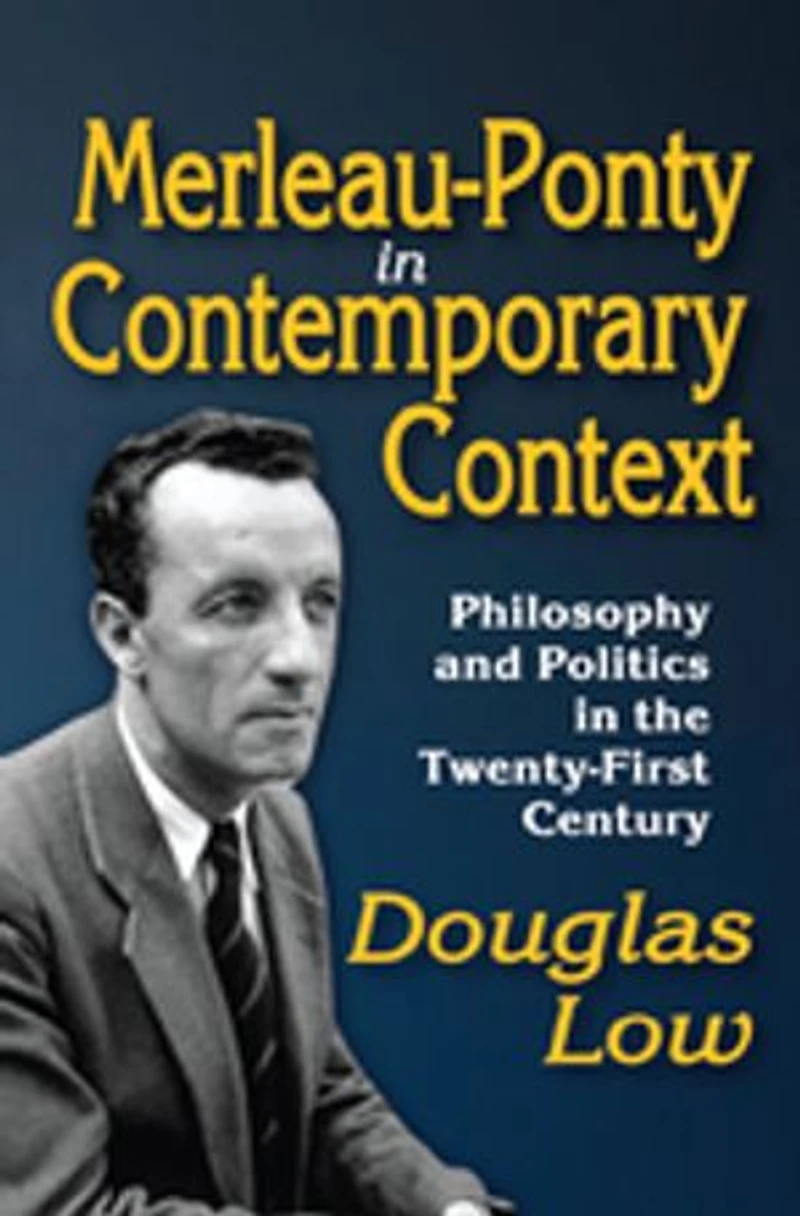
Merleau-Ponty Contemporary Context: Philosophy and Politics the Twenty-First Century
Current price: $90.92

Merleau-Ponty Contemporary Context: Philosophy and Politics the Twenty-First Century
Current price: $90.92
Loading Inventory...
Size: Kobo eBook
*Product information may vary - to confirm product availability, pricing, shipping and return information please contact Indigo
This volume presents the work of Maurice Merleau-Ponty, a great philosopher and social theorist of mid-twentieth century, as a viable alternative to both modernism and postmodernism. Douglas Low argues that Merleau-Ponty's philosophy offers explanations and solves problems that other philosophies grapple with, but do not resolve, given their respective theoretical presuppositions and assumptions. Low brings the work of Merleau-Ponty into critical contact with important thinkers, including Sartre, Heidegger, Derrida, and Marx. He highlights Merleau-Ponty's connection to the early Hegel, especially with regard to the criticism of modernism's "representational consciousness" and its subsequent skepticism with regard to our being in the world. Merleau-Ponty made a concerted effort to solve the problems that come about due to a wide variety of Western dualisms: body and mind, perception and conception, self and other, etc. He frequently does so by demonstrating the connection between these disparate terms, the connection of perception with affect and interest, fact with value, and a broadened view of science with moral and philosophical judgment. Merleau-Ponty's unique contribution is his focus on the lived-through perceiving body and its relationship to abstract thought and language. In his detailed analysis of the work of Merleau-Ponty, Low brings attention to a twentieth-century master capable of altering the landscape of modern and social philosophy in the twenty-first century.
This volume presents the work of Maurice Merleau-Ponty, a great philosopher and social theorist of mid-twentieth century, as a viable alternative to both modernism and postmodernism. Douglas Low argues that Merleau-Ponty's philosophy offers explanations and solves problems that other philosophies grapple with, but do not resolve, given their respective theoretical presuppositions and assumptions. Low brings the work of Merleau-Ponty into critical contact with important thinkers, including Sartre, Heidegger, Derrida, and Marx. He highlights Merleau-Ponty's connection to the early Hegel, especially with regard to the criticism of modernism's "representational consciousness" and its subsequent skepticism with regard to our being in the world. Merleau-Ponty made a concerted effort to solve the problems that come about due to a wide variety of Western dualisms: body and mind, perception and conception, self and other, etc. He frequently does so by demonstrating the connection between these disparate terms, the connection of perception with affect and interest, fact with value, and a broadened view of science with moral and philosophical judgment. Merleau-Ponty's unique contribution is his focus on the lived-through perceiving body and its relationship to abstract thought and language. In his detailed analysis of the work of Merleau-Ponty, Low brings attention to a twentieth-century master capable of altering the landscape of modern and social philosophy in the twenty-first century.
You May Also Like












More About Indigo at Erin Mills Town Centre
The largest book retailer in Canada also offers toys, music, home décor, gifts and lifestyle products. What's Inside...Books, Magazines, CD’s and DVD’s, Toys and Gifts, Home Accents, Electronics, Baby’s and Children’s Section, Bath and Body, Kitchen and Bedroom, Stationary Located outside in the exterior plaza.
5015 Glen Erin Dr, Mississauga, ON L5M 0R7, Canada
Find Indigo at Erin Mills Town Centre in Mississauga ON
Visit Indigo at Erin Mills Town Centre in Mississauga ON