

GIVE THE PERFECT GIFT
Erin Mills Town Centre Gift Cards are the perfect choice for your gift giving needs.Purchase gift cards at kiosks near the food court or centre court, at Guest Services, or click below to purchase online.PURCHASE HEREHome
Mesozoic Mammals from South America and Their Forerunners
Indigo
Loading Inventory...
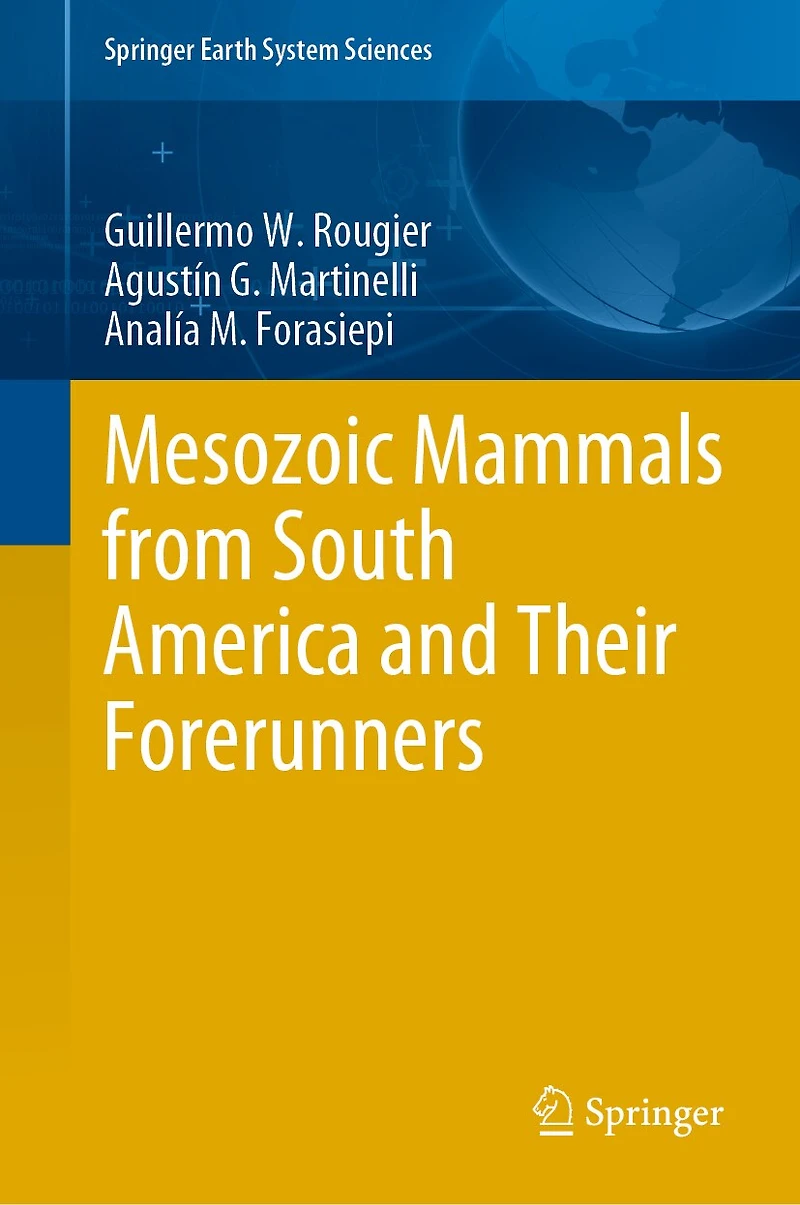
Mesozoic Mammals from South America and Their Forerunners
Current price: $248.50

Mesozoic Mammals from South America and Their Forerunners
Current price: $248.50
Loading Inventory...
Size: Hardcover
*Product information may vary - to confirm product availability, pricing, shipping and return information please contact Indigo
This book summarizes the most relevant published paleontological information, supplemented by our own original work, on the record of Mesozoic mammals' evolution, their close ancestors and their immediate descendants. Mammals evolved in a systematically diverse world, amidst a dynamic geography that is at the root of the 6,500 species living today. Fossils of Mesozoic mammals, while rare and often incomplete, are key to understanding how mammals have evolved over more than 200 million years. Mesozoic mammals and their close relatives occur in a few dozen localities from Argentina, Brazil, Chile, Bolivia, and Peru spanning from the Mid- Triassic to the Late Cretaceous, with some lineages surviving the cataclysmic end of the Cretaceous period, into the Cenozoic of Argentina. There are roughly 25 recognized mammalian species distributed in several distinctive lineages, including australosphenidans, multituberculates, gondwanatherians, eutriconodonts, amphilestids and dryolestoids, among others. With its focus on diversity, systematics, phylogeny, and their impact on the evolution of mammals, there is no similar book currently available.
This book summarizes the most relevant published paleontological information, supplemented by our own original work, on the record of Mesozoic mammals' evolution, their close ancestors and their immediate descendants. Mammals evolved in a systematically diverse world, amidst a dynamic geography that is at the root of the 6,500 species living today. Fossils of Mesozoic mammals, while rare and often incomplete, are key to understanding how mammals have evolved over more than 200 million years. Mesozoic mammals and their close relatives occur in a few dozen localities from Argentina, Brazil, Chile, Bolivia, and Peru spanning from the Mid- Triassic to the Late Cretaceous, with some lineages surviving the cataclysmic end of the Cretaceous period, into the Cenozoic of Argentina. There are roughly 25 recognized mammalian species distributed in several distinctive lineages, including australosphenidans, multituberculates, gondwanatherians, eutriconodonts, amphilestids and dryolestoids, among others. With its focus on diversity, systematics, phylogeny, and their impact on the evolution of mammals, there is no similar book currently available.
You May Also Like











More About Indigo at Erin Mills Town Centre
The largest book retailer in Canada also offers toys, music, home décor, gifts and lifestyle products. What's Inside...Books, Magazines, CD’s and DVD’s, Toys and Gifts, Home Accents, Electronics, Baby’s and Children’s Section, Bath and Body, Kitchen and Bedroom, Stationary Located outside in the exterior plaza.
5015 Glen Erin Dr, Mississauga, ON L5M 0R7, Canada
Find Indigo at Erin Mills Town Centre in Mississauga ON
Visit Indigo at Erin Mills Town Centre in Mississauga ON