

GIVE THE PERFECT GIFT
Erin Mills Town Centre Gift Cards are the perfect choice for your gift giving needs.Purchase gift cards at kiosks near the food court or centre court, at Guest Services, or click below to purchase online.PURCHASE HEREHome
Minimization Problems for the Witness Beam Relativistic Plasma Cavities
Indigo
Loading Inventory...
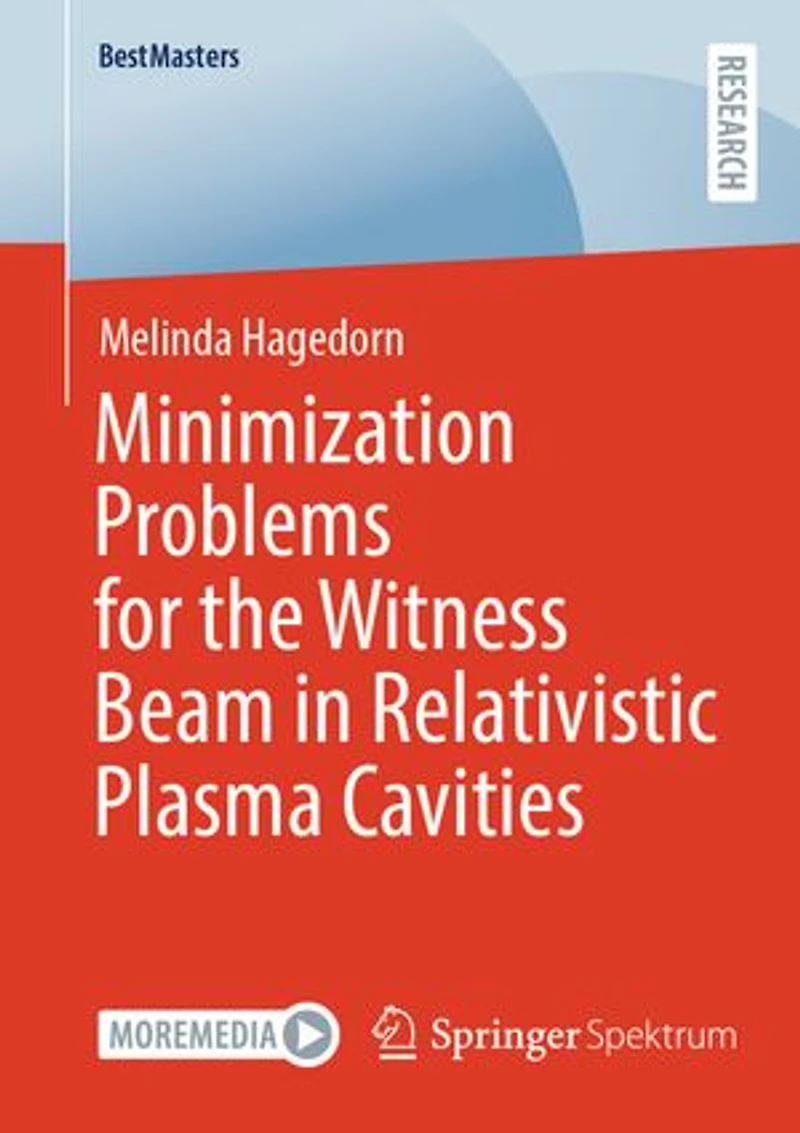
Minimization Problems for the Witness Beam Relativistic Plasma Cavities
Current price: $96.79
Original price: $120.93

Minimization Problems for the Witness Beam Relativistic Plasma Cavities
Current price: $96.79
Original price: $120.93
Loading Inventory...
Size: Kobo eBook
*Product information may vary - to confirm product availability, pricing, shipping and return information please contact Indigo
This thesis deals with an optimization problem from the field of theoretical plasma physics. Specifically, it deals with the question of how the accelerated electrons are spatially arranged in a plasma wave generated by a laser pulse. An internal structure of this so-called witness beam is of interest for the radiation characteristics of such electron beams, in particular with regard to the coherence of the generated radiation. The resulting internal structure of the electron beam is a result of the interaction of the electrons with each other and the electric fields of the wakefield, therefore it is determined by solving a minimization problem. The thesis builds on previous results in this field and aims to find suggestions for improved algorithms to determine the minimum sought.
This thesis deals with an optimization problem from the field of theoretical plasma physics. Specifically, it deals with the question of how the accelerated electrons are spatially arranged in a plasma wave generated by a laser pulse. An internal structure of this so-called witness beam is of interest for the radiation characteristics of such electron beams, in particular with regard to the coherence of the generated radiation. The resulting internal structure of the electron beam is a result of the interaction of the electrons with each other and the electric fields of the wakefield, therefore it is determined by solving a minimization problem. The thesis builds on previous results in this field and aims to find suggestions for improved algorithms to determine the minimum sought.
You May Also Like












More About Indigo at Erin Mills Town Centre
The largest book retailer in Canada also offers toys, music, home décor, gifts and lifestyle products. What's Inside...Books, Magazines, CD’s and DVD’s, Toys and Gifts, Home Accents, Electronics, Baby’s and Children’s Section, Bath and Body, Kitchen and Bedroom, Stationary Located outside in the exterior plaza.
5015 Glen Erin Dr, Mississauga, ON L5M 0R7, Canada
Find Indigo at Erin Mills Town Centre in Mississauga ON
Visit Indigo at Erin Mills Town Centre in Mississauga ON