

GIVE THE PERFECT GIFT
Erin Mills Town Centre Gift Cards are the perfect choice for your gift giving needs.Purchase gift cards at kiosks near the food court or centre court, at Guest Services, or click below to purchase online.PURCHASE HEREHome
Model-Driven Dependability Assessment of Software Systems
Indigo
Loading Inventory...
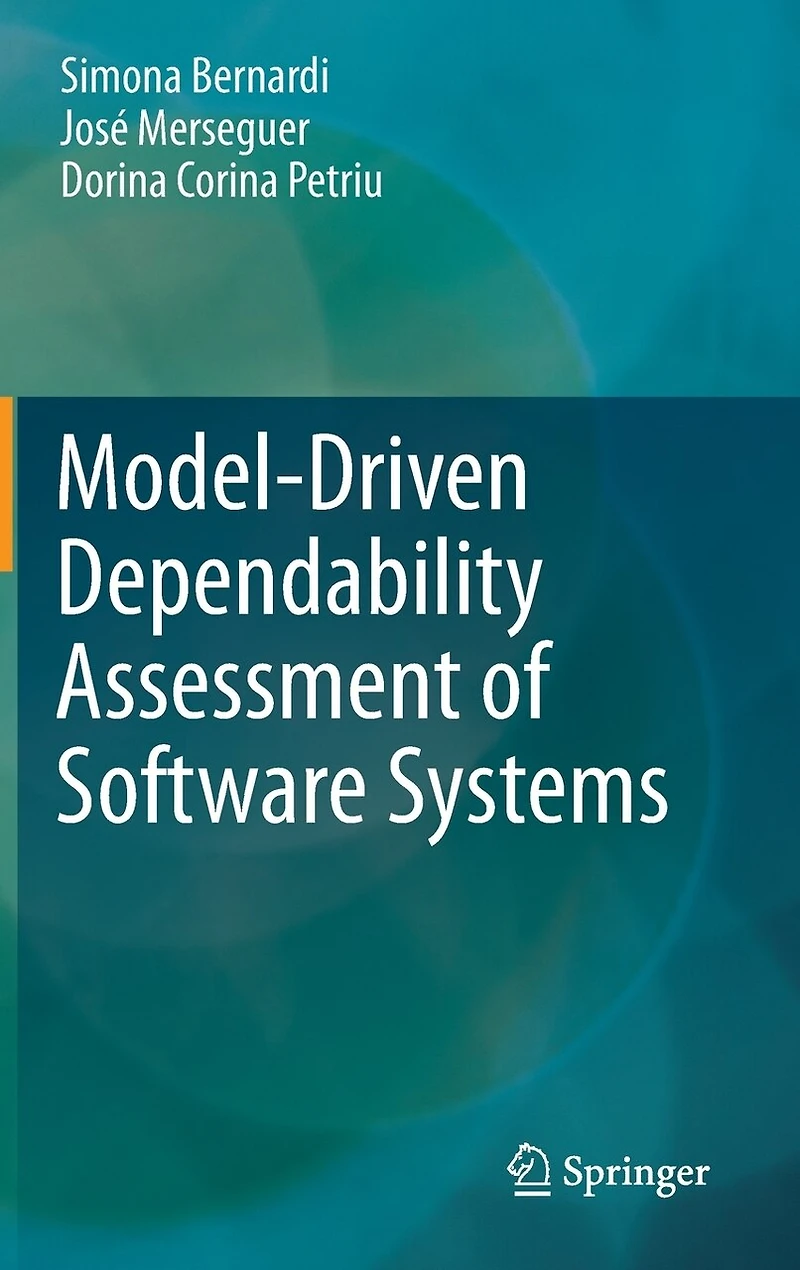
Model-Driven Dependability Assessment of Software Systems
Current price: $160.95

Model-Driven Dependability Assessment of Software Systems
Current price: $160.95
Loading Inventory...
Size: Hardcover
*Product information may vary - to confirm product availability, pricing, shipping and return information please contact Indigo
Over the last two decades, a major challenge for researchers working on modeling and evaluation of computer-based systems has been the assessment of system Non Functional Properties (NFP) such as performance, scalability, dependability and security. In this book, the authors present cutting-edge model-driven techniques for modeling and analysis of software dependability. Most of them are based on the use of UML as software specification language. From the software system specification point of view, such techniques exploit the standard extension mechanisms of UML (i.e., UML profiling). UML profiles enable software engineers to add non-functional properties to the software model, in addition to the functional ones. The authors detail the state of the art on UML profile proposals for dependability specification and rigorously describe the trade-off they accomplish. The focus is mainly on RAMS (reliability, availability, maintainability and safety) properties. Among the existing profiles, they emphasize the DAM (Dependability Analysis and Modeling) profile, which attempts to unify, under a common umbrella, the previous UML profiles from literature, providing capabilities for dependability specification and analysis. In addition, they describe two prominent model-to-model transformation techniques, which support the generation of the analysis model and allow for further assessment of different RAMS properties. Case studies from different domains are also presented, in order to provide practitioners with examples of how to apply the aforementioned techniques. Researchers and students will learn basic dependability concepts and how to model them using UML and its extensions. They will also gain insights into dependability analysis techniques through the use of appropriate modeling formalisms as well as of model-to-model transformation techniques for deriving dependability analysis models from UML specifications. Moreover, software practitioners willfind a unified framework for the specification of dependability requirements and properties of UML, and will benefit from the detailed case studies.
Over the last two decades, a major challenge for researchers working on modeling and evaluation of computer-based systems has been the assessment of system Non Functional Properties (NFP) such as performance, scalability, dependability and security. In this book, the authors present cutting-edge model-driven techniques for modeling and analysis of software dependability. Most of them are based on the use of UML as software specification language. From the software system specification point of view, such techniques exploit the standard extension mechanisms of UML (i.e., UML profiling). UML profiles enable software engineers to add non-functional properties to the software model, in addition to the functional ones. The authors detail the state of the art on UML profile proposals for dependability specification and rigorously describe the trade-off they accomplish. The focus is mainly on RAMS (reliability, availability, maintainability and safety) properties. Among the existing profiles, they emphasize the DAM (Dependability Analysis and Modeling) profile, which attempts to unify, under a common umbrella, the previous UML profiles from literature, providing capabilities for dependability specification and analysis. In addition, they describe two prominent model-to-model transformation techniques, which support the generation of the analysis model and allow for further assessment of different RAMS properties. Case studies from different domains are also presented, in order to provide practitioners with examples of how to apply the aforementioned techniques. Researchers and students will learn basic dependability concepts and how to model them using UML and its extensions. They will also gain insights into dependability analysis techniques through the use of appropriate modeling formalisms as well as of model-to-model transformation techniques for deriving dependability analysis models from UML specifications. Moreover, software practitioners willfind a unified framework for the specification of dependability requirements and properties of UML, and will benefit from the detailed case studies.
You May Also Like









More About Indigo at Erin Mills Town Centre
The largest book retailer in Canada also offers toys, music, home décor, gifts and lifestyle products. What's Inside...Books, Magazines, CD’s and DVD’s, Toys and Gifts, Home Accents, Electronics, Baby’s and Children’s Section, Bath and Body, Kitchen and Bedroom, Stationary Located outside in the exterior plaza.
5015 Glen Erin Dr, Mississauga, ON L5M 0R7, Canada
Find Indigo at Erin Mills Town Centre in Mississauga ON
Visit Indigo at Erin Mills Town Centre in Mississauga ON