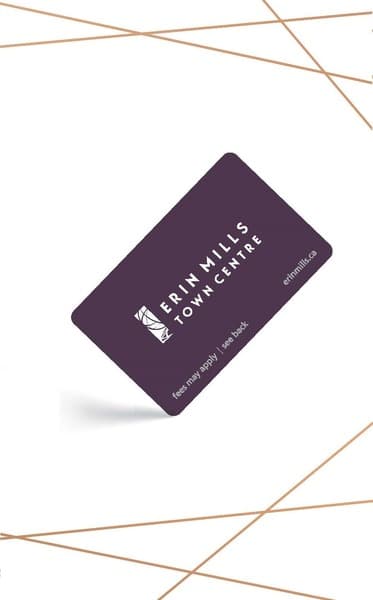
Erin Mills Town Centre Gift Cards are the perfect choice for your gift giving needs.Purchase gift cards at kiosks near the food court or centre court, at Guest Services, or click below to purchase online.PURCHASE HERE
Indigo Modelling Spark Ignition Combustion | Erin Mills Town Centre
*Product information may vary - to confirm product availability, pricing, shipping and return information please contact Indigo
The book provides a comprehensive overview of combustion models used in different types of spark ignition engines. In the first generation of spark ignition (SI) engines, the turbulence is created by the shear flow passing through the intake valves, and significantly decays during the intake and compression strokes. The residual turbulence enhances the laminar flame velocity, which is characteristic of the fuel and increases the relative effectiveness of the engine. In this simple two-zone model, the turbulence is estimated empirically; the spherical flame propagation model considers ignition delay, thermodynamics, heat transfer and chemical equilibrium, to obtain the performance and emissions of an SI engine. The model is used extensively by designers and research engineers to handle the fuel-air mixture prepared in the inlet and different geometries of open combustion chambers. The empiricism of the combustion model was progressively dismantled over the years. New 3D models for ignition considering the flow near a spark plug and flame propagation in the bulk gases were developed by incorporating solutions to Reynolds-averaged Navier-Stokes (RANS) equations for the turbulent flow with chemical reactions in the intense computational fluid dynamics. The models became far less empirical and enabled treating new generation direct-injection spark-ignition (DISI) gasoline and gas engines. The more complex layout of DISI engines with passive or active prechamber is successfully handled by them. This book presents details of models of SI engine combustion progressively increasing in complexity, making them accessible to designers, researchers, and even mechanical engineers who are curious to explore the field. This book is a valuable resource for anyone interested in spark ignition combustion.
The book provides a comprehensive overview of combustion models used in different types of spark ignition engines. In the first generation of spark ignition (SI) engines, the turbulence is created by the shear flow passing through the intake valves, and significantly decays during the intake and compression strokes. The residual turbulence enhances the laminar flame velocity, which is characteristic of the fuel and increases the relative effectiveness of the engine. In this simple two-zone model, the turbulence is estimated empirically; the spherical flame propagation model considers ignition delay, thermodynamics, heat transfer and chemical equilibrium, to obtain the performance and emissions of an SI engine. The model is used extensively by designers and research engineers to handle the fuel-air mixture prepared in the inlet and different geometries of open combustion chambers. The empiricism of the combustion model was progressively dismantled over the years. New 3D models for ignition considering the flow near a spark plug and flame propagation in the bulk gases were developed by incorporating solutions to Reynolds-averaged Navier-Stokes (RANS) equations for the turbulent flow with chemical reactions in the intense computational fluid dynamics. The models became far less empirical and enabled treating new generation direct-injection spark-ignition (DISI) gasoline and gas engines. The more complex layout of DISI engines with passive or active prechamber is successfully handled by them. This book presents details of models of SI engine combustion progressively increasing in complexity, making them accessible to designers, researchers, and even mechanical engineers who are curious to explore the field. This book is a valuable resource for anyone interested in spark ignition combustion.
The largest book retailer in Canada also offers toys, music, home décor, gifts and lifestyle products. What's Inside...Books, Magazines, CD’s and DVD’s, Toys and Gifts, Home Accents, Electronics, Baby’s and Children’s Section, Bath and Body, Kitchen and Bedroom, Stationary Located outside in the exterior plaza.