

GIVE THE PERFECT GIFT
Erin Mills Town Centre Gift Cards are the perfect choice for your gift giving needs.Purchase gift cards at kiosks near the food court or centre court, at Guest Services, or click below to purchase online.PURCHASE HEREHome
Modification of a Modulation Recognition Algorithm to Enable Multi-Carrier Recognition
Indigo
Loading Inventory...
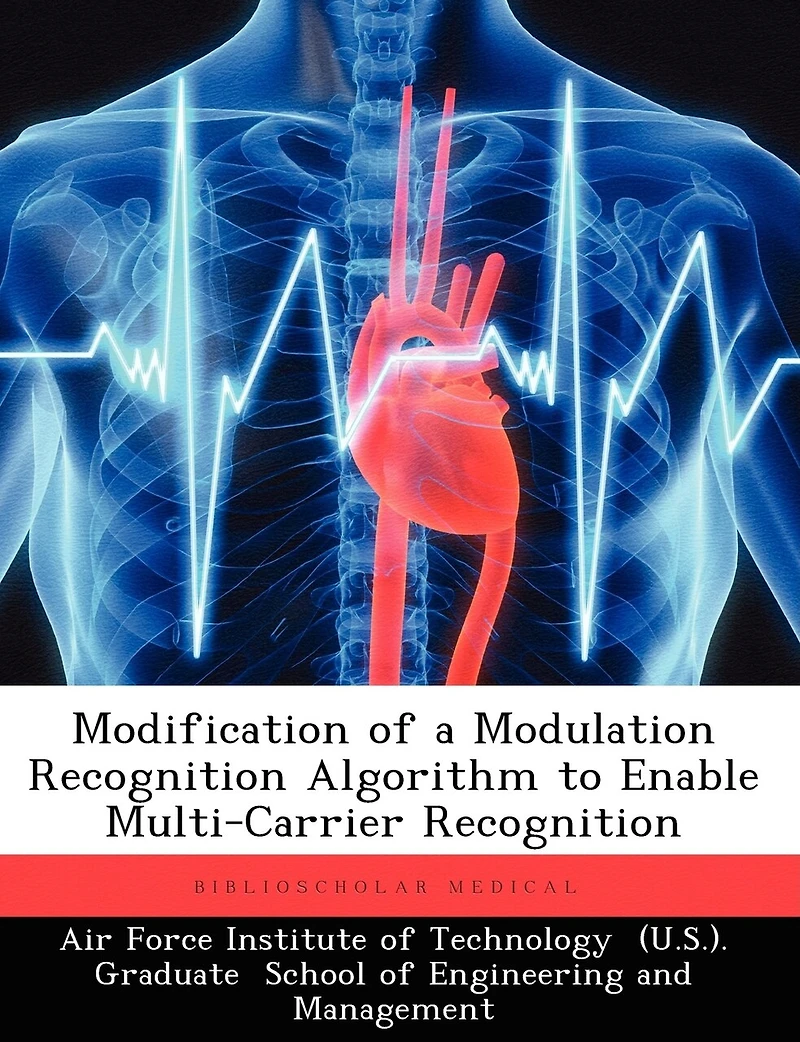
Modification of a Modulation Recognition Algorithm to Enable Multi-Carrier Recognition
Current price: $59.00

Modification of a Modulation Recognition Algorithm to Enable Multi-Carrier Recognition
Current price: $59.00
Loading Inventory...
Size: Paperback
*Product information may vary - to confirm product availability, pricing, shipping and return information please contact Indigo
Modulation recognition is important for both military and commercial communication applications, particularly in cases where enhanced situation awareness and/or channel assessment is required to mitigate intentional or collateral interference. Modulation recognition via statistical analysis is a key aspect of non-cooperative signal interception, classification, and exploitation. This research concerns the evaluation and modification of a conventional Digitally Modulated Signal Recognition Algorithm (DMRA) to enable multi-carrier, OFDM, waveform recognition. The original DMRA architecture was developed to classify communication signals for three fundamental data modulations, i.e., ASK, PSK, and FSK. By adding an additional key feature and threshold to the original DMRA architecture, a modified DMRA architecture is developed to enable the reliable recognition of OFDM waveforms. Simulation results for the modified DMRA architecture show a 95.25% success rate for OFDM waveform recognition at a signal-to-noise ratio (SNR) of 11:0 dB. When operated under scenarios where FSK signals are neither present nor considered an alternative, the modified DMRA architecture yields a success rate of 98.25% for classifying OFDM at a SNR of 5:0 dB.
Modulation recognition is important for both military and commercial communication applications, particularly in cases where enhanced situation awareness and/or channel assessment is required to mitigate intentional or collateral interference. Modulation recognition via statistical analysis is a key aspect of non-cooperative signal interception, classification, and exploitation. This research concerns the evaluation and modification of a conventional Digitally Modulated Signal Recognition Algorithm (DMRA) to enable multi-carrier, OFDM, waveform recognition. The original DMRA architecture was developed to classify communication signals for three fundamental data modulations, i.e., ASK, PSK, and FSK. By adding an additional key feature and threshold to the original DMRA architecture, a modified DMRA architecture is developed to enable the reliable recognition of OFDM waveforms. Simulation results for the modified DMRA architecture show a 95.25% success rate for OFDM waveform recognition at a signal-to-noise ratio (SNR) of 11:0 dB. When operated under scenarios where FSK signals are neither present nor considered an alternative, the modified DMRA architecture yields a success rate of 98.25% for classifying OFDM at a SNR of 5:0 dB.
You May Also Like















More About Indigo at Erin Mills Town Centre
The largest book retailer in Canada also offers toys, music, home décor, gifts and lifestyle products. What's Inside...Books, Magazines, CD’s and DVD’s, Toys and Gifts, Home Accents, Electronics, Baby’s and Children’s Section, Bath and Body, Kitchen and Bedroom, Stationary Located outside in the exterior plaza.
5015 Glen Erin Dr, Mississauga, ON L5M 0R7, Canada
Find Indigo at Erin Mills Town Centre in Mississauga ON
Visit Indigo at Erin Mills Town Centre in Mississauga ON