

GIVE THE PERFECT GIFT
Erin Mills Town Centre Gift Cards are the perfect choice for your gift giving needs.Purchase gift cards at kiosks near the food court or centre court, at Guest Services, or click below to purchase online.PURCHASE HEREHome
Money and Totality: A Macro-Monetary Interpretation of Marx's Logic in Capital and the End of the 'Transformation Problem'
Indigo
Loading Inventory...
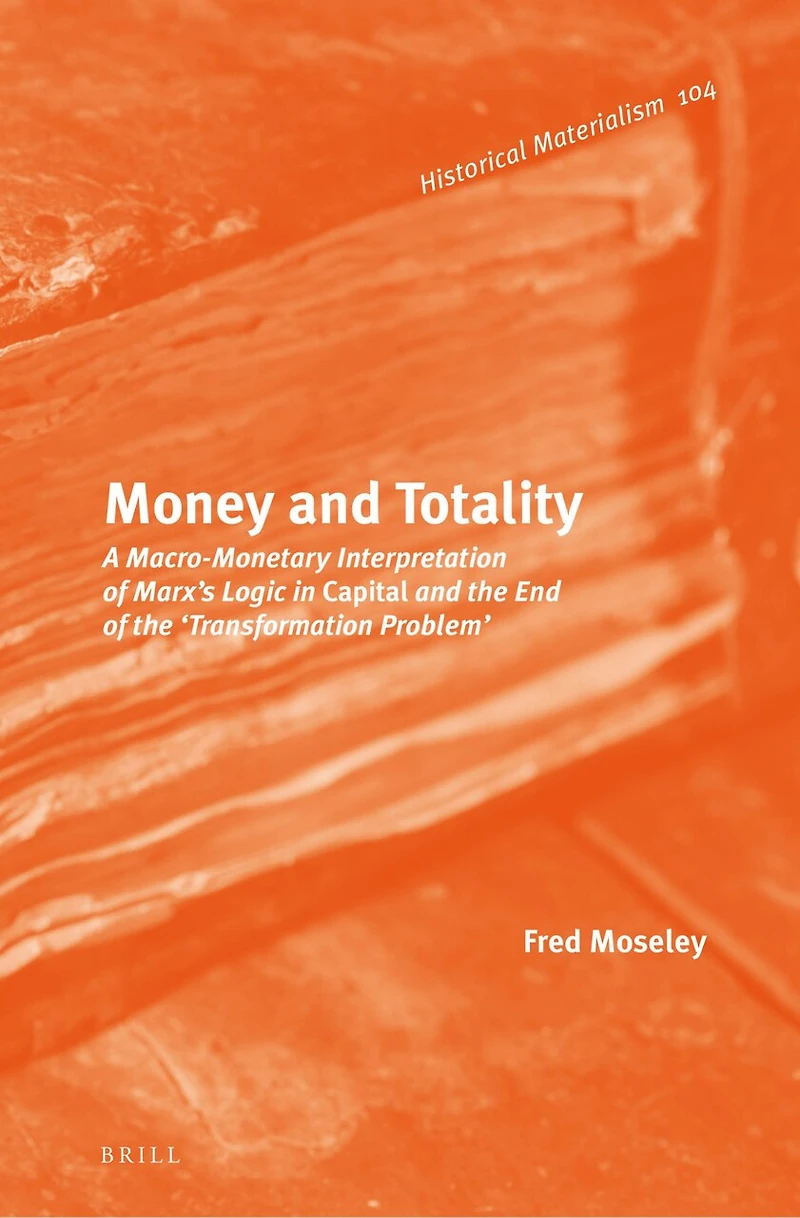
Money and Totality: A Macro-Monetary Interpretation of Marx's Logic in Capital and the End of the 'Transformation Problem'
Current price: $281.99

Money and Totality: A Macro-Monetary Interpretation of Marx's Logic in Capital and the End of the 'Transformation Problem'
Current price: $281.99
Loading Inventory...
Size: Hardcover
*Product information may vary - to confirm product availability, pricing, shipping and return information please contact Indigo
This ambitious book presents a comprehensive new 'macro-monetary' interpretation of Marx’s logical method in Capital , based on substantial textual evidence, which emphasises two main points: (1) Marx’s theory is primarily a macroeconomic theory of the total surplus-value produced in the economy as a whole; and (2) Marx’s theory is a monetary theory from beginning to end and the circuit of money capital – M - C - M’ – is the logical framework of Marx’s theory. It follows from this 'macro-monetary' interpretation that, contrary to the prevailing view, there is no 'transformation problem' in Marx’s theory; i.e., Marx did not 'fail to transform the inputs of constant capital and variable capital' in his theory of prices of production in Part 2 of Volume III.
This ambitious book presents a comprehensive new 'macro-monetary' interpretation of Marx’s logical method in Capital , based on substantial textual evidence, which emphasises two main points: (1) Marx’s theory is primarily a macroeconomic theory of the total surplus-value produced in the economy as a whole; and (2) Marx’s theory is a monetary theory from beginning to end and the circuit of money capital – M - C - M’ – is the logical framework of Marx’s theory. It follows from this 'macro-monetary' interpretation that, contrary to the prevailing view, there is no 'transformation problem' in Marx’s theory; i.e., Marx did not 'fail to transform the inputs of constant capital and variable capital' in his theory of prices of production in Part 2 of Volume III.
You May Also Like

















More About Indigo at Erin Mills Town Centre
The largest book retailer in Canada also offers toys, music, home décor, gifts and lifestyle products. What's Inside...Books, Magazines, CD’s and DVD’s, Toys and Gifts, Home Accents, Electronics, Baby’s and Children’s Section, Bath and Body, Kitchen and Bedroom, Stationary Located outside in the exterior plaza.
5015 Glen Erin Dr, Mississauga, ON L5M 0R7, Canada
Find Indigo at Erin Mills Town Centre in Mississauga ON
Visit Indigo at Erin Mills Town Centre in Mississauga ON