

GIVE THE PERFECT GIFT
Erin Mills Town Centre Gift Cards are the perfect choice for your gift giving needs.Purchase gift cards at kiosks near the food court or centre court, at Guest Services, or click below to purchase online.PURCHASE HEREHome
Multidisciplinary Approaches for the Investigation of Textiles and Fibres Archaeological Field
Indigo
Loading Inventory...
Multidisciplinary Approaches for the Investigation of Textiles and Fibres Archaeological Field
Current price: $204.50

Multidisciplinary Approaches for the Investigation of Textiles and Fibres Archaeological Field
Current price: $204.50
Loading Inventory...
Size: Hardcover
*Product information may vary - to confirm product availability, pricing, shipping and return information please contact Indigo
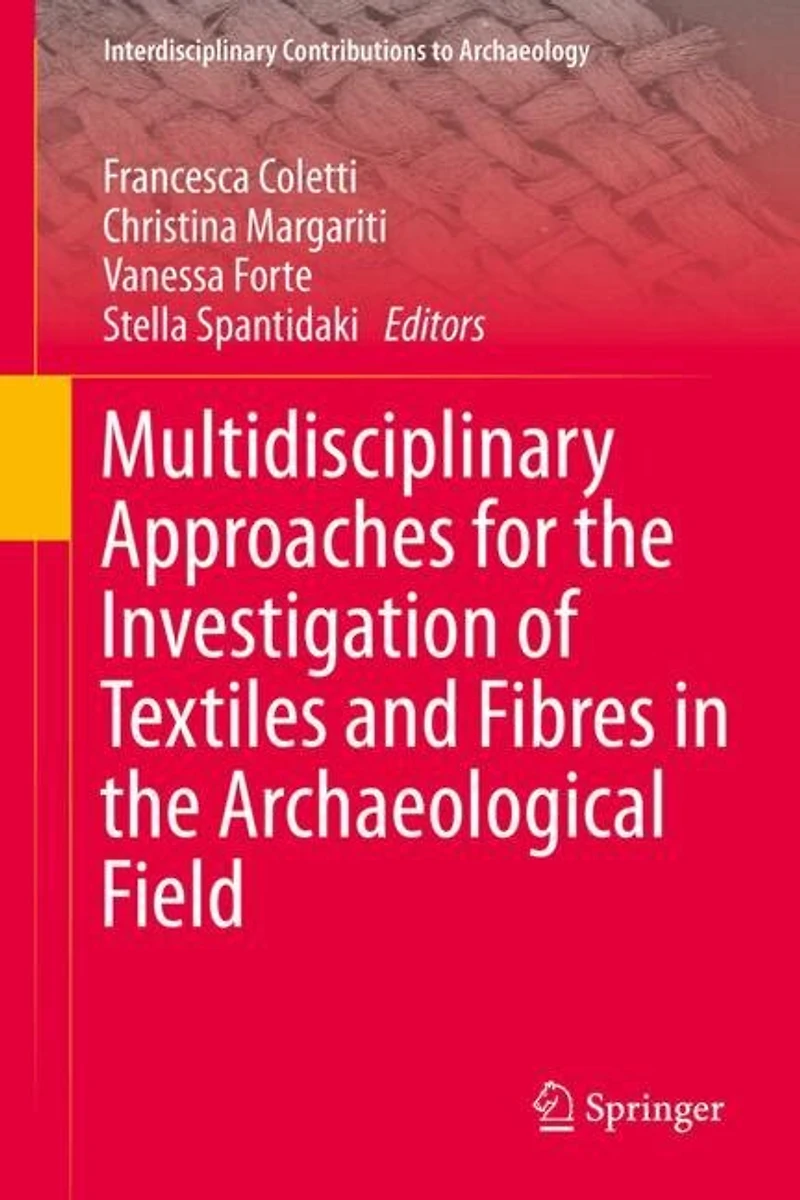
This book is dedicated to the analytical methods and approaches applied to ancient textiles and fibres. It offers an overview of textile archaeology as an archaeological discipline, presenting its history and developments up to state of the art approaches in the study of textiles fibres. It demonstrates how various fields of research have contributed to the development and growth of the discipline. It establishes that fibre identification is a key element in ancient textile studies, showing its importance in understanding a large variety of economic and social aspects of human societies. However, fibre identification in archaeological textiles is not a straightforward task, mainly due to the vast variety of fibres people used in antiquity to make textiles and the more often than not poor condition of preservation of excavated textiles. Currently, comprehensive studies on more traditional fibre identification techniques, such as Scanning Electron and Optical microscopy, spectroscopic techniques (e.g. Fourier Transform Infrared spectroscopy - FTIR, Raman) and recent advances in αDNA and paleoproteomics, along with experiments on artificial ageing and deterioration of textiles, constitute a promising path down the exploration and analysis of archaeological textiles. This book shows how these techniques have advanced the discipline of textile archaeology and contributed to our understanding of the past. This volume brings together scholars investigating fibres in a holistic way, by the incorporation of a variety of methods, in order to improve the current methodological approaches in the study and conservation of textiles and related material. Chapter 6 is available open access under a Creative Commons Attribution 4.0 International License via link.springer.com.
This book is dedicated to the analytical methods and approaches applied to ancient textiles and fibres. It offers an overview of textile archaeology as an archaeological discipline, presenting its history and developments up to state of the art approaches in the study of textiles fibres. It demonstrates how various fields of research have contributed to the development and growth of the discipline. It establishes that fibre identification is a key element in ancient textile studies, showing its importance in understanding a large variety of economic and social aspects of human societies. However, fibre identification in archaeological textiles is not a straightforward task, mainly due to the vast variety of fibres people used in antiquity to make textiles and the more often than not poor condition of preservation of excavated textiles. Currently, comprehensive studies on more traditional fibre identification techniques, such as Scanning Electron and Optical microscopy, spectroscopic techniques (e.g. Fourier Transform Infrared spectroscopy - FTIR, Raman) and recent advances in αDNA and paleoproteomics, along with experiments on artificial ageing and deterioration of textiles, constitute a promising path down the exploration and analysis of archaeological textiles. This book shows how these techniques have advanced the discipline of textile archaeology and contributed to our understanding of the past. This volume brings together scholars investigating fibres in a holistic way, by the incorporation of a variety of methods, in order to improve the current methodological approaches in the study and conservation of textiles and related material. Chapter 6 is available open access under a Creative Commons Attribution 4.0 International License via link.springer.com.
You May Also Like








More About Indigo at Erin Mills Town Centre
The largest book retailer in Canada also offers toys, music, home décor, gifts and lifestyle products. What's Inside...Books, Magazines, CD’s and DVD’s, Toys and Gifts, Home Accents, Electronics, Baby’s and Children’s Section, Bath and Body, Kitchen and Bedroom, Stationary Located outside in the exterior plaza.
5015 Glen Erin Dr, Mississauga, ON L5M 0R7, Canada
Find Indigo at Erin Mills Town Centre in Mississauga ON
Visit Indigo at Erin Mills Town Centre in Mississauga ON