

GIVE THE PERFECT GIFT
Erin Mills Town Centre Gift Cards are the perfect choice for your gift giving needs.Purchase gift cards at kiosks near the food court or centre court, at Guest Services, or click below to purchase online.PURCHASE HEREHome
Negotiation Processes: Modeling Frameworks and Information Technology
Indigo
Loading Inventory...
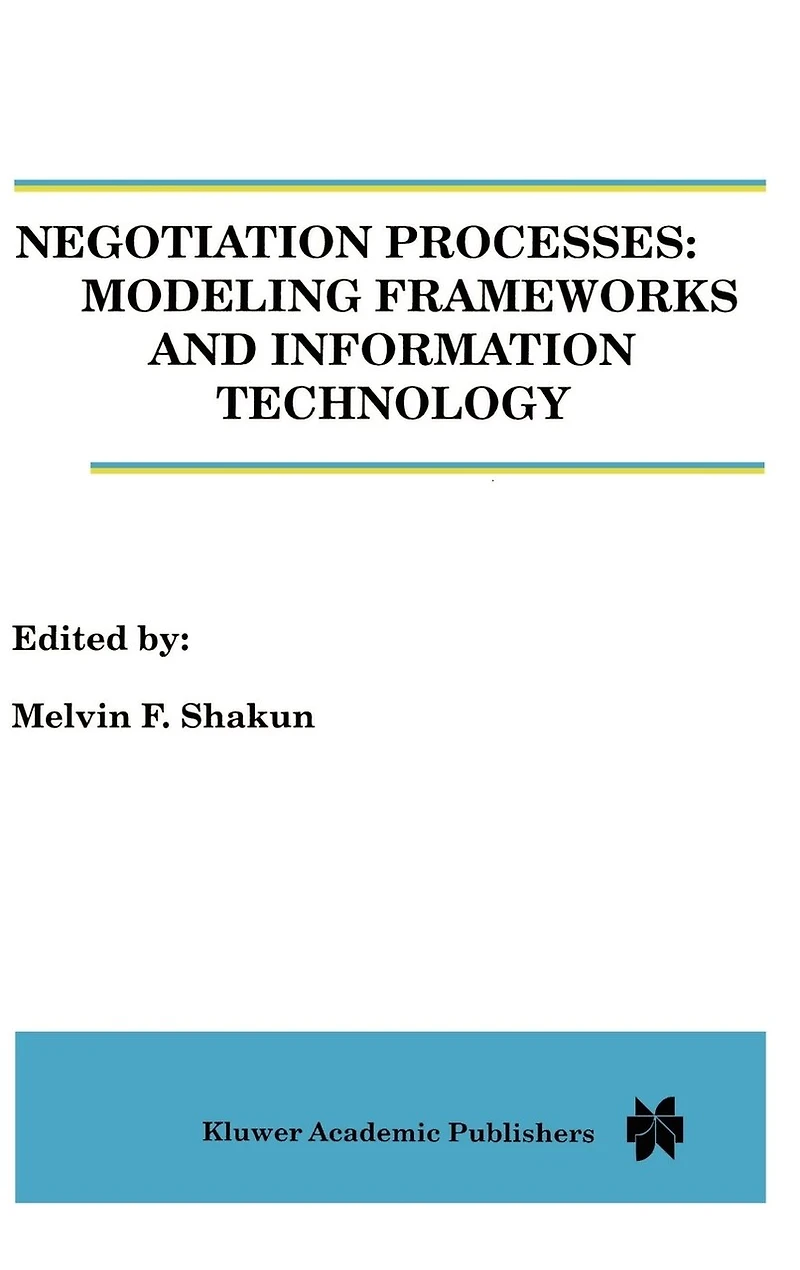
Negotiation Processes: Modeling Frameworks and Information Technology
Current price: $220.95

Negotiation Processes: Modeling Frameworks and Information Technology
Current price: $220.95
Loading Inventory...
Size: Hardcover
*Product information may vary - to confirm product availability, pricing, shipping and return information please contact Indigo
This book focuses on negotiation processes and how negotiation modeling frameworks and information technology can support these. A modeling framework for negotiation as a purposeful complex adaptive process is presented and computer-implemented in the first three chapters. Two game-theoretic contributions use non-cooperative games in extensive form and a computer-implemented graph model for conflict resolution, respectively. Two chapters use the negotiators' joint utility distribution to provide problem structure and computer support.
A chapter on cognitive support uses restructurable modeling as a framework. One chapter matches information technologies with negotiation tasks. Another develops computer support based on preference programming. Two final chapters develop a stakeholder approach to support system evaluation, and a research framework for them, respectively.
Negotiation Processes: Modeling Frameworks and Information Technology will be of interest to researchers and students in the areas of negotiation, group decision/negotiation support systems and management science, as well as to practising negotiators interested in this technology.
This book focuses on negotiation processes and how negotiation modeling frameworks and information technology can support these. A modeling framework for negotiation as a purposeful complex adaptive process is presented and computer-implemented in the first three chapters. Two game-theoretic contributions use non-cooperative games in extensive form and a computer-implemented graph model for conflict resolution, respectively. Two chapters use the negotiators' joint utility distribution to provide problem structure and computer support.
A chapter on cognitive support uses restructurable modeling as a framework. One chapter matches information technologies with negotiation tasks. Another develops computer support based on preference programming. Two final chapters develop a stakeholder approach to support system evaluation, and a research framework for them, respectively.
Negotiation Processes: Modeling Frameworks and Information Technology will be of interest to researchers and students in the areas of negotiation, group decision/negotiation support systems and management science, as well as to practising negotiators interested in this technology.
You May Also Like







More About Indigo at Erin Mills Town Centre
The largest book retailer in Canada also offers toys, music, home décor, gifts and lifestyle products. What's Inside...Books, Magazines, CD’s and DVD’s, Toys and Gifts, Home Accents, Electronics, Baby’s and Children’s Section, Bath and Body, Kitchen and Bedroom, Stationary Located outside in the exterior plaza.
5015 Glen Erin Dr, Mississauga, ON L5M 0R7, Canada
Find Indigo at Erin Mills Town Centre in Mississauga ON
Visit Indigo at Erin Mills Town Centre in Mississauga ON