

GIVE THE PERFECT GIFT
Erin Mills Town Centre Gift Cards are the perfect choice for your gift giving needs.Purchase gift cards at kiosks near the food court or centre court, at Guest Services, or click below to purchase online.PURCHASE HEREHome
Offender Care and Support by Families Contemporary Japan: The Nexus of Gender, Shame, Ambivalence
Indigo
Loading Inventory...
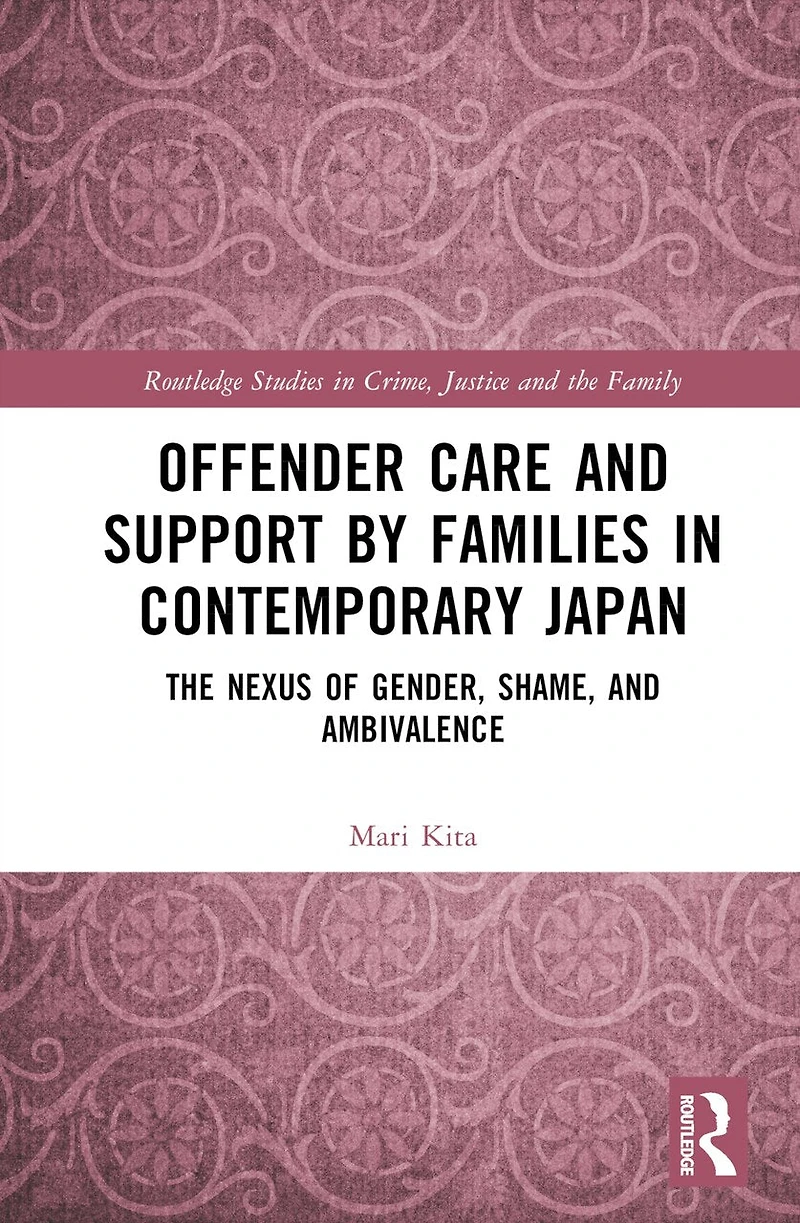
Offender Care and Support by Families Contemporary Japan: The Nexus of Gender, Shame, Ambivalence
Current price: $296.50

Offender Care and Support by Families Contemporary Japan: The Nexus of Gender, Shame, Ambivalence
Current price: $296.50
Loading Inventory...
Size: Hardcover
*Product information may vary - to confirm product availability, pricing, shipping and return information please contact Indigo
Because people's contact with the criminal justice system comes in different shapes and forms, scholars are now broadening their analytical scope and examining the overall repercussions of criminal justice contact on families of offenders. Compared to Western societies, Japan is known for its lower crime rates and more pronounced use of informal social control. Thus, it offers a useful research site for examining how families in a low-crime society experience criminal justice contact and how they function as an integral part of the nation's crime control mechanism. This book considers the role of the family in the lives of offenders and the criminal justice system in Japan. Looking particularly at gender and patriarchal power relations, it reveals how cultural notions of femininity prompt the criminal justice system to rely on women as its proxy. This book explores how families of offenders often step in to fill the voids left by criminal justice institutions and social services to provide offenders with all-inclusive care. The burden of supervising and rehabilitating offenders on top of the expectation to atone for the crimes also renders families ambivalent and ashamed. Whereas the state and criminal justice authorities tend to see offenders' families as a crucial resource for prisoner reentry, this book highlights the necessity for addressing families' needs before automatically assuming their support. It also pushes the boundaries of feminist criminology by showing how women can be affected by male criminality and male-dominated criminal justice institutions, other than as victims and offenders. An accessible and compelling read, this book will appeal to students and scholars of criminology, sociology, gender studies, Japanese culture and all those interested in learning more about the criminal justice system in Japan.
Because people's contact with the criminal justice system comes in different shapes and forms, scholars are now broadening their analytical scope and examining the overall repercussions of criminal justice contact on families of offenders. Compared to Western societies, Japan is known for its lower crime rates and more pronounced use of informal social control. Thus, it offers a useful research site for examining how families in a low-crime society experience criminal justice contact and how they function as an integral part of the nation's crime control mechanism. This book considers the role of the family in the lives of offenders and the criminal justice system in Japan. Looking particularly at gender and patriarchal power relations, it reveals how cultural notions of femininity prompt the criminal justice system to rely on women as its proxy. This book explores how families of offenders often step in to fill the voids left by criminal justice institutions and social services to provide offenders with all-inclusive care. The burden of supervising and rehabilitating offenders on top of the expectation to atone for the crimes also renders families ambivalent and ashamed. Whereas the state and criminal justice authorities tend to see offenders' families as a crucial resource for prisoner reentry, this book highlights the necessity for addressing families' needs before automatically assuming their support. It also pushes the boundaries of feminist criminology by showing how women can be affected by male criminality and male-dominated criminal justice institutions, other than as victims and offenders. An accessible and compelling read, this book will appeal to students and scholars of criminology, sociology, gender studies, Japanese culture and all those interested in learning more about the criminal justice system in Japan.
You May Also Like
















More About Indigo at Erin Mills Town Centre
The largest book retailer in Canada also offers toys, music, home décor, gifts and lifestyle products. What's Inside...Books, Magazines, CD’s and DVD’s, Toys and Gifts, Home Accents, Electronics, Baby’s and Children’s Section, Bath and Body, Kitchen and Bedroom, Stationary Located outside in the exterior plaza.
5015 Glen Erin Dr, Mississauga, ON L5M 0R7, Canada
Find Indigo at Erin Mills Town Centre in Mississauga ON
Visit Indigo at Erin Mills Town Centre in Mississauga ON