

GIVE THE PERFECT GIFT
Erin Mills Town Centre Gift Cards are the perfect choice for your gift giving needs.Purchase gift cards at kiosks near the food court or centre court, at Guest Services, or click below to purchase online.PURCHASE HEREHome
On Spacetime as a Damped Oscillator and The Dark Universe
Indigo
Loading Inventory...
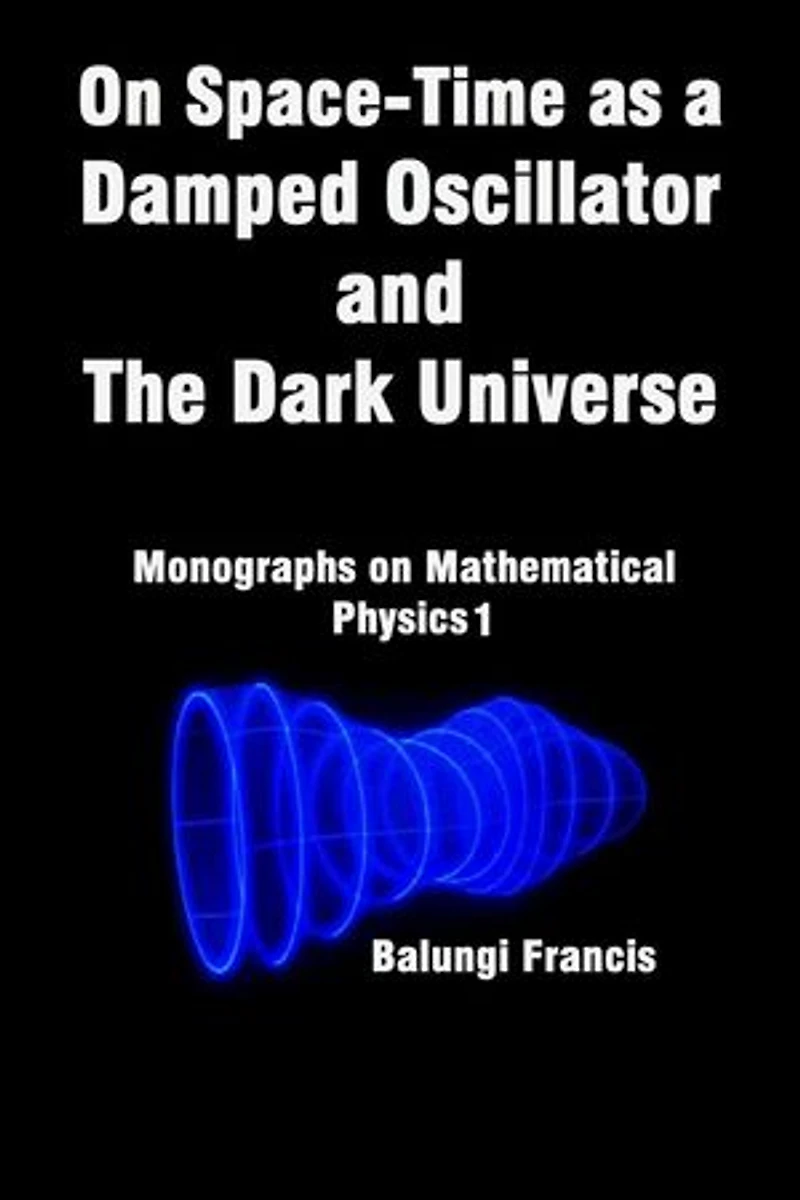
On Spacetime as a Damped Oscillator and The Dark Universe
Current price: $0.99

On Spacetime as a Damped Oscillator and The Dark Universe
Current price: $0.99
Loading Inventory...
Size: Kobo eBook
*Product information may vary - to confirm product availability, pricing, shipping and return information please contact Indigo
The universe is full of matter and the attractive force of gravity pulls all matter together.
The expansion of the universe has not been slowing due to gravity, as everyone thought, it has been accelerating.
Maybe it was a result of a long-discarded version of Einstein's theory of gravity, one that contained what was called a "cosmological constant." Maybe there was some strange kind of energy-fluid that filled space. Maybe there is something wrong with Einstein's theory of gravity and a new theory could include some kind of field that creates this cosmic acceleration.
It turns out that roughly 68% of the universe is dark energy. Dark matter makes up about 27%. The rest - everything on Earth, everything ever observed with all of our instruments, all normal matter - adds up to less than 5% of the universe. Come to think of it, maybe it shouldn't be called "normal" matter at all, since it is such a small fraction of the universe.
Balungi Francis explains this major conundrum in modern science, modifies General relativity and gives a solution to the cause of an accelearting expansion of the Universe.
This book provides solutions to the following major questions In Physics:
What is the cause of the observed accelerating expansion of the universe (the de Sitter phase)? Are the observations rightly interpreted as the accelerating expansion of the universe, or are they evidence that the cosmological principle is false?
Is the universe homogeneous and isotropic at large enough scales, as claimed by the cosmological principle and assumed by all models that use the Friedmann–Lemaître–Robertson–Walker metric, including the current version of the ΛCDM model, or is the universe inhomogeneous or anisotropic?
Is the Friedmann–Lemaître–Robertson–Walker metric the right metric to use for our universe?
Why does the zero-point energy of the vacuum not cause a large cosmological constant? What cancels it out?
Is dark energy a pure cosmological constant or are models of quintessence such as phantom energy applicable?
Not since James Clerk Maxwell celebrated best-seller a Dynamical Theory of the Electromagnetic Field and Carlo Rovelli Reality Is Not What It Seems: The Journey to Quantum Gravity has physics been so vividly, intelligently, mathematically and entertainingly revealed. This is a First Edition to the study of spacetime and dark energy .
The universe is full of matter and the attractive force of gravity pulls all matter together.
The expansion of the universe has not been slowing due to gravity, as everyone thought, it has been accelerating.
Maybe it was a result of a long-discarded version of Einstein's theory of gravity, one that contained what was called a "cosmological constant." Maybe there was some strange kind of energy-fluid that filled space. Maybe there is something wrong with Einstein's theory of gravity and a new theory could include some kind of field that creates this cosmic acceleration.
It turns out that roughly 68% of the universe is dark energy. Dark matter makes up about 27%. The rest - everything on Earth, everything ever observed with all of our instruments, all normal matter - adds up to less than 5% of the universe. Come to think of it, maybe it shouldn't be called "normal" matter at all, since it is such a small fraction of the universe.
Balungi Francis explains this major conundrum in modern science, modifies General relativity and gives a solution to the cause of an accelearting expansion of the Universe.
This book provides solutions to the following major questions In Physics:
What is the cause of the observed accelerating expansion of the universe (the de Sitter phase)? Are the observations rightly interpreted as the accelerating expansion of the universe, or are they evidence that the cosmological principle is false?
Is the universe homogeneous and isotropic at large enough scales, as claimed by the cosmological principle and assumed by all models that use the Friedmann–Lemaître–Robertson–Walker metric, including the current version of the ΛCDM model, or is the universe inhomogeneous or anisotropic?
Is the Friedmann–Lemaître–Robertson–Walker metric the right metric to use for our universe?
Why does the zero-point energy of the vacuum not cause a large cosmological constant? What cancels it out?
Is dark energy a pure cosmological constant or are models of quintessence such as phantom energy applicable?
Not since James Clerk Maxwell celebrated best-seller a Dynamical Theory of the Electromagnetic Field and Carlo Rovelli Reality Is Not What It Seems: The Journey to Quantum Gravity has physics been so vividly, intelligently, mathematically and entertainingly revealed. This is a First Edition to the study of spacetime and dark energy .
You May Also Like










More About Indigo at Erin Mills Town Centre
The largest book retailer in Canada also offers toys, music, home décor, gifts and lifestyle products. What's Inside...Books, Magazines, CD’s and DVD’s, Toys and Gifts, Home Accents, Electronics, Baby’s and Children’s Section, Bath and Body, Kitchen and Bedroom, Stationary Located outside in the exterior plaza.
5015 Glen Erin Dr, Mississauga, ON L5M 0R7, Canada
Find Indigo at Erin Mills Town Centre in Mississauga ON
Visit Indigo at Erin Mills Town Centre in Mississauga ON