

GIVE THE PERFECT GIFT
Erin Mills Town Centre Gift Cards are the perfect choice for your gift giving needs.Purchase gift cards at kiosks near the food court or centre court, at Guest Services, or click below to purchase online.PURCHASE HEREHome
On the Gods and World: Orpheus Presocratics Derveni Papyrus
Indigo
Loading Inventory...
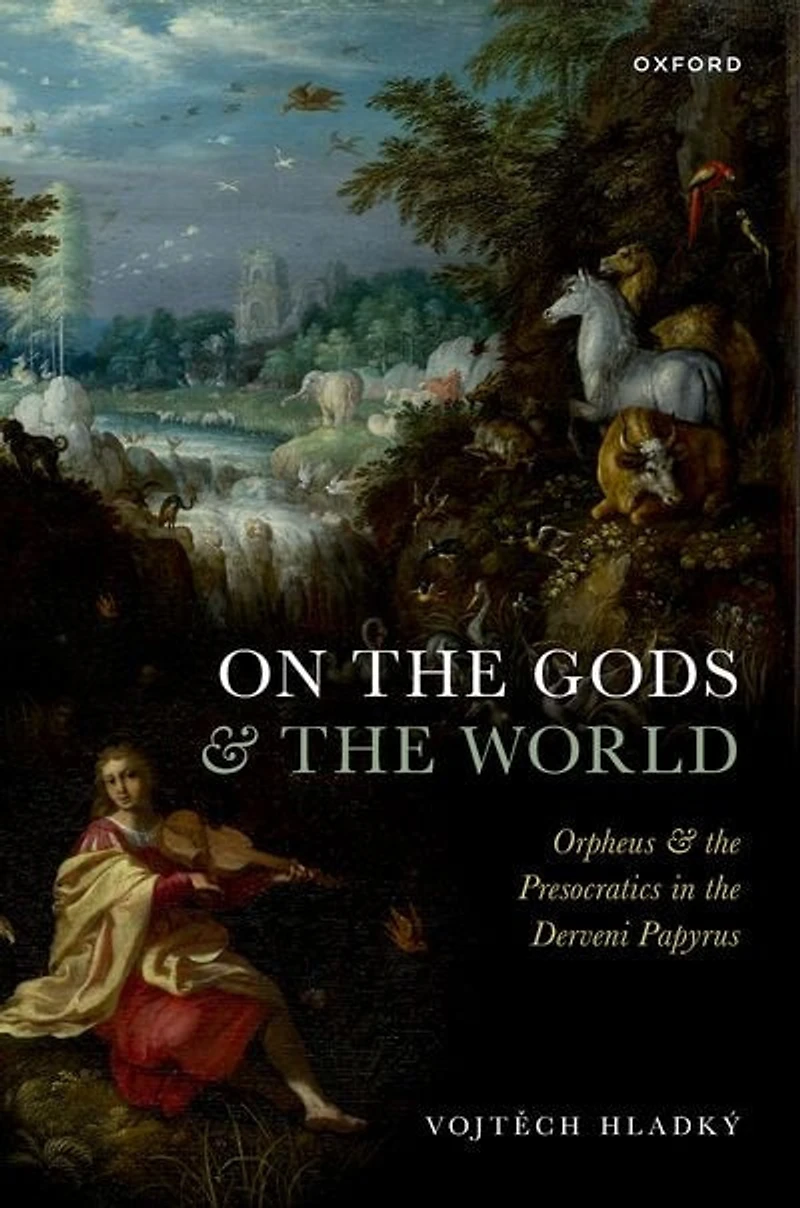
On the Gods and World: Orpheus Presocratics Derveni Papyrus
Current price: $240.00

On the Gods and World: Orpheus Presocratics Derveni Papyrus
Current price: $240.00
Loading Inventory...
Size: Hardcover
*Product information may vary - to confirm product availability, pricing, shipping and return information please contact Indigo
The Derveni papyrus is a multi-layered and intricate philosophical and religious treatise written in Greek, probably just before 400 BCE. Since its discovery in 1962, the papyrus has attracted the attention of scholars in several areas of Classical studies, mostly ancient philosophy and religion, but also literary studies. The anonymous author of the text quotes a previously unknown Orphic poem and comments on it using philosophical motifs and concepts borrowed from various Presocratic thinkers but especially Heraclitus and the Anaxagoreans. The book presents a new interpretation of various aspects of this complex text: situating the treatise within the tradition of allegorical interpretation; providing an interpretation of the opening columns, which describe a peculiar ritual and contain some Heraclitean material, including, as the study argues, some previously unknown fragments; reconstructing the contents of the Orphic poem upon which the Derveni author comments; examining various allegorical devices employed by the Derveni author in his explanation of the Orphic poem, following his commentary in detail; and finally, discussing the likely intellectual background in which the Derveni treatise originated. In general, the study argues that rather than being the work of a philosophising Orphic initiate, the Derveni treatise is a philosophical text whose aim was to explain a nonstandard religious poem. The commentary explains the Orphic poem from a perspective influenced by discussions among the followers of philosophy of Anaxagoras and Heraclitus, and employs reflections on the use and function of language found in the writings of some contemporary thinkers. Based on an analysis of sources upon which the Derveni papyrus is based, it is concluded that its author was probably active in Athens in late fifth century BCE and may have been a person close to Socrates' teacher Archelaus.
The Derveni papyrus is a multi-layered and intricate philosophical and religious treatise written in Greek, probably just before 400 BCE. Since its discovery in 1962, the papyrus has attracted the attention of scholars in several areas of Classical studies, mostly ancient philosophy and religion, but also literary studies. The anonymous author of the text quotes a previously unknown Orphic poem and comments on it using philosophical motifs and concepts borrowed from various Presocratic thinkers but especially Heraclitus and the Anaxagoreans. The book presents a new interpretation of various aspects of this complex text: situating the treatise within the tradition of allegorical interpretation; providing an interpretation of the opening columns, which describe a peculiar ritual and contain some Heraclitean material, including, as the study argues, some previously unknown fragments; reconstructing the contents of the Orphic poem upon which the Derveni author comments; examining various allegorical devices employed by the Derveni author in his explanation of the Orphic poem, following his commentary in detail; and finally, discussing the likely intellectual background in which the Derveni treatise originated. In general, the study argues that rather than being the work of a philosophising Orphic initiate, the Derveni treatise is a philosophical text whose aim was to explain a nonstandard religious poem. The commentary explains the Orphic poem from a perspective influenced by discussions among the followers of philosophy of Anaxagoras and Heraclitus, and employs reflections on the use and function of language found in the writings of some contemporary thinkers. Based on an analysis of sources upon which the Derveni papyrus is based, it is concluded that its author was probably active in Athens in late fifth century BCE and may have been a person close to Socrates' teacher Archelaus.
You May Also Like







More About Indigo at Erin Mills Town Centre
The largest book retailer in Canada also offers toys, music, home décor, gifts and lifestyle products. What's Inside...Books, Magazines, CD’s and DVD’s, Toys and Gifts, Home Accents, Electronics, Baby’s and Children’s Section, Bath and Body, Kitchen and Bedroom, Stationary Located outside in the exterior plaza.
5015 Glen Erin Dr, Mississauga, ON L5M 0R7, Canada
Find Indigo at Erin Mills Town Centre in Mississauga ON
Visit Indigo at Erin Mills Town Centre in Mississauga ON