

GIVE THE PERFECT GIFT
Erin Mills Town Centre Gift Cards are the perfect choice for your gift giving needs.Purchase gift cards at kiosks near the food court or centre court, at Guest Services, or click below to purchase online.PURCHASE HEREHome
Ordinary Differential Equations: Basic Methods, Qualitative Theory, And Fun Models
Indigo
Loading Inventory...
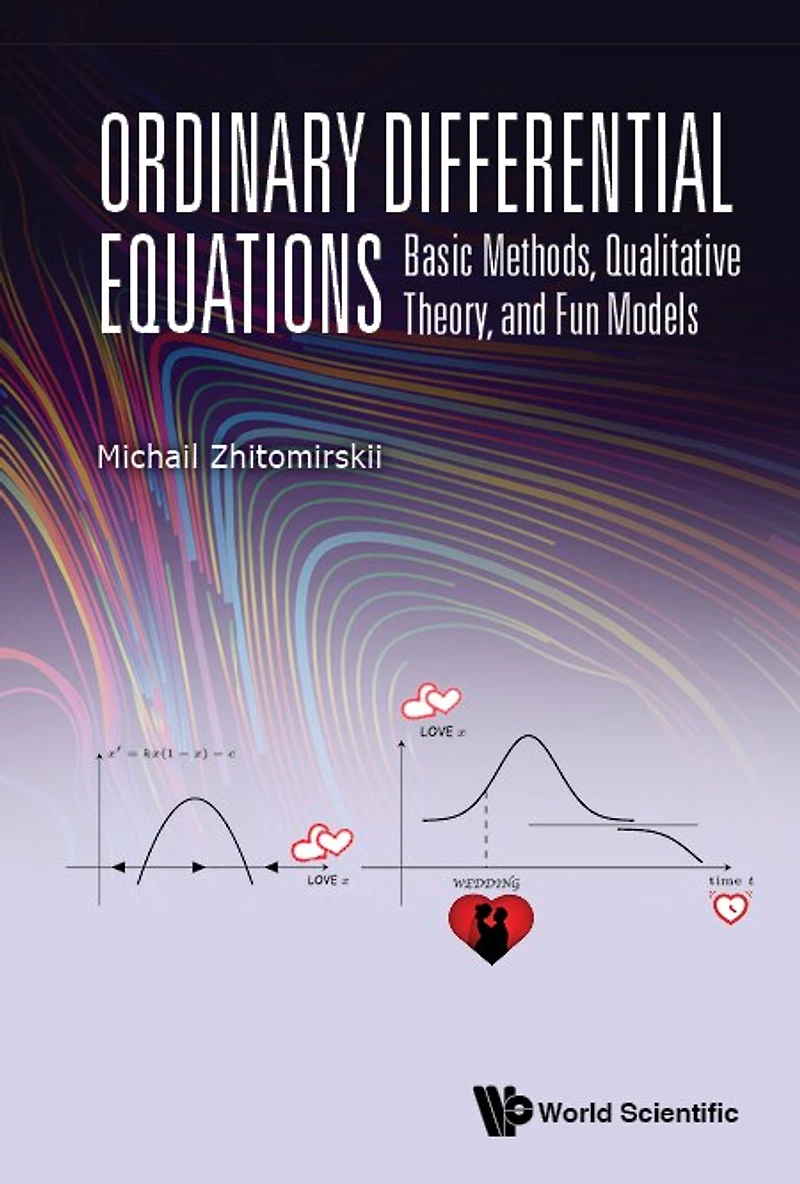
Ordinary Differential Equations: Basic Methods, Qualitative Theory, And Fun Models
Current price: $99.50

Ordinary Differential Equations: Basic Methods, Qualitative Theory, And Fun Models
Current price: $99.50
Loading Inventory...
Size: Hardcover
*Product information may vary - to confirm product availability, pricing, shipping and return information please contact Indigo
One of the few books on Ordinary Differential Equations (ODEs), this book contains both qualitative theory, allowing students to analyze the solutions without obtaining formulas, and methods and techniques for obtaining formulas. It features friendly explanations of theorems on top of their formal proofs, expressed in examples, questions, figures, exercises, fun models related to various aspects of life, and even Math Theater explaining, using ODEs, the advantage of optimization by feedback versus a rigid plan. Exercises, both simple and more advanced levels, can be found within.This will allow students to deal with ODEs with a full understanding of what they are doing rather than manipulating with symbols, and even to extend themselves some theorems and techniques. The book is designed for students, teachers, and researchers. It can be used straightforwardly for a one-semester course on ODEs; alternatively, teachers might find it worthwhile to include some of the chapters in their course.
One of the few books on Ordinary Differential Equations (ODEs), this book contains both qualitative theory, allowing students to analyze the solutions without obtaining formulas, and methods and techniques for obtaining formulas. It features friendly explanations of theorems on top of their formal proofs, expressed in examples, questions, figures, exercises, fun models related to various aspects of life, and even Math Theater explaining, using ODEs, the advantage of optimization by feedback versus a rigid plan. Exercises, both simple and more advanced levels, can be found within.This will allow students to deal with ODEs with a full understanding of what they are doing rather than manipulating with symbols, and even to extend themselves some theorems and techniques. The book is designed for students, teachers, and researchers. It can be used straightforwardly for a one-semester course on ODEs; alternatively, teachers might find it worthwhile to include some of the chapters in their course.
You May Also Like








More About Indigo at Erin Mills Town Centre
The largest book retailer in Canada also offers toys, music, home décor, gifts and lifestyle products. What's Inside...Books, Magazines, CD’s and DVD’s, Toys and Gifts, Home Accents, Electronics, Baby’s and Children’s Section, Bath and Body, Kitchen and Bedroom, Stationary Located outside in the exterior plaza.
5015 Glen Erin Dr, Mississauga, ON L5M 0R7, Canada
Find Indigo at Erin Mills Town Centre in Mississauga ON
Visit Indigo at Erin Mills Town Centre in Mississauga ON