

GIVE THE PERFECT GIFT
Erin Mills Town Centre Gift Cards are the perfect choice for your gift giving needs.Purchase gift cards at kiosks near the food court or centre court, at Guest Services, or click below to purchase online.PURCHASE HEREHome
Our Ocean Backyard: Collected Essays
Indigo
Loading Inventory...
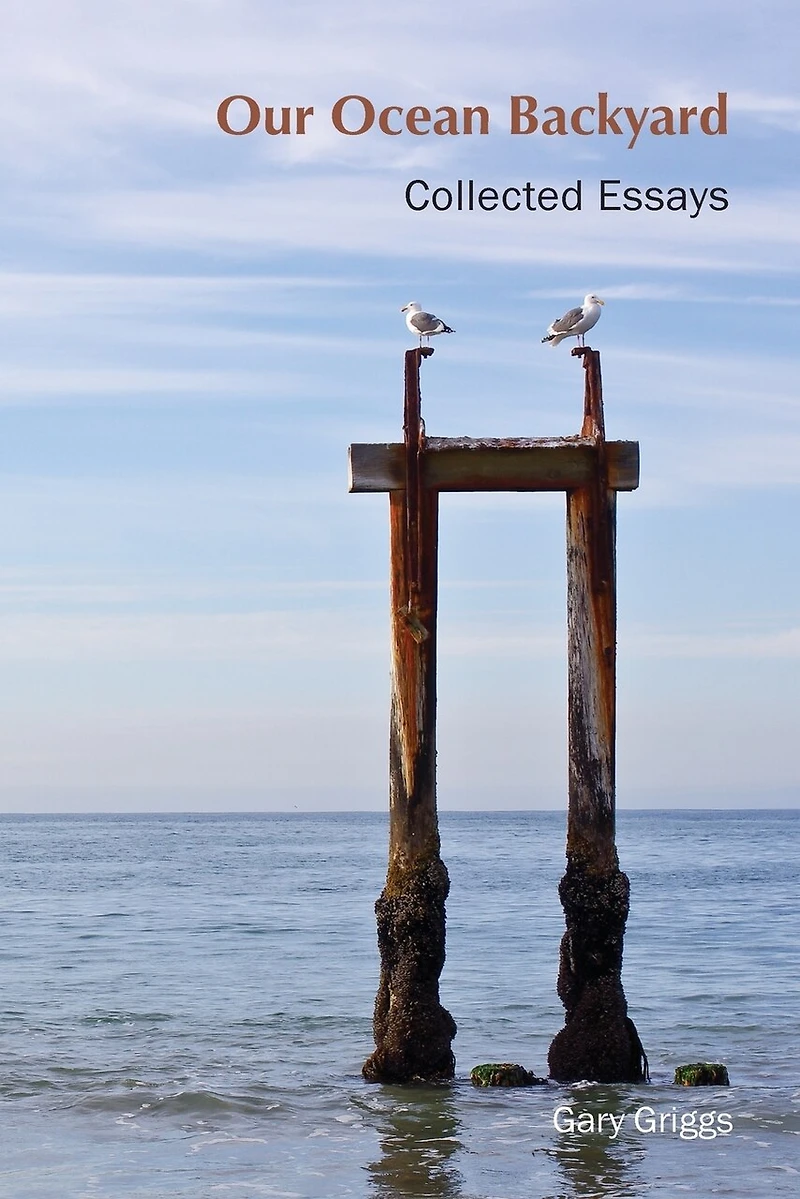
Our Ocean Backyard: Collected Essays
Current price: $32.50

Our Ocean Backyard: Collected Essays
Current price: $32.50
Loading Inventory...
Size: Paperback
*Product information may vary - to confirm product availability, pricing, shipping and return information please contact Indigo
For the three billion people on Earth who live in coastal regions, the ocean is figuratively, if not literally, "our backyard." Many of us have sought out ocean areas in which to live, work, or vacation. The oceans enrich our lives in countless ways, but our interactions with them have not always been positive. In April 2008, Gary Griggs, a coastal geologist and oceanographer who has studied the oceans for over forty-six years and is known for making science understandable, enjoyable, and accessible to non-scientists, was asked to write a bi-weekly column, "Our Ocean Backyard" for the Santa Cruz Sentinel. Santa Cruz sits smack on the ocean. California is in many ways defined by its coast, so it isn't surprising that so many people are drawn towards our ocean edge. Whether it is our weather and climate, or any number of recreational pursuits: fishing, surfing, sailing, jogging or walking, or just observing and exploring, the ocean provides something for all of us. In turn, engaging in each of these different pursuits gener¬ates a healthy curiosity - historical, geological, biological - as does simply living, day-to-day, in a community facing the sea. This collection of 170 columns explores several of these curious ocean questions. Should we worry about tsunamis here on the central coast? How did Yellow Bank Beach, Davenport Landing, Greyhound Rock, Castle Beach and Black Point get their names? Gary explains why the sea behaves as it does, while bringing our coastal history and landscape into perspective. Our climate is changing and the ocean is responding. Many of us are eager to learn more about our oceans and coast, particularly the science behind it all, but we don't often understand that science very well. And to make matters worse, many scientists who write about their particular specialized area, don't do so in way that is understandable or relevant to the non-scientist. Gary's stories, which draw upon our rich history of ocean exploration and discovery, are written for anyone with an interest in the oceans - not just in Monterey Bay or the central coast - and shed much needed light on what we can expect in the years and decades to come. Gary writes not to advocate, but rather to illuminate. His goal is always to explain the science, which in turn enhances our enjoyment of this beautiful resource, and also empowers us to make considered, informed decisions - whether it is in our daily lives, or in the voting booth.
For the three billion people on Earth who live in coastal regions, the ocean is figuratively, if not literally, "our backyard." Many of us have sought out ocean areas in which to live, work, or vacation. The oceans enrich our lives in countless ways, but our interactions with them have not always been positive. In April 2008, Gary Griggs, a coastal geologist and oceanographer who has studied the oceans for over forty-six years and is known for making science understandable, enjoyable, and accessible to non-scientists, was asked to write a bi-weekly column, "Our Ocean Backyard" for the Santa Cruz Sentinel. Santa Cruz sits smack on the ocean. California is in many ways defined by its coast, so it isn't surprising that so many people are drawn towards our ocean edge. Whether it is our weather and climate, or any number of recreational pursuits: fishing, surfing, sailing, jogging or walking, or just observing and exploring, the ocean provides something for all of us. In turn, engaging in each of these different pursuits gener¬ates a healthy curiosity - historical, geological, biological - as does simply living, day-to-day, in a community facing the sea. This collection of 170 columns explores several of these curious ocean questions. Should we worry about tsunamis here on the central coast? How did Yellow Bank Beach, Davenport Landing, Greyhound Rock, Castle Beach and Black Point get their names? Gary explains why the sea behaves as it does, while bringing our coastal history and landscape into perspective. Our climate is changing and the ocean is responding. Many of us are eager to learn more about our oceans and coast, particularly the science behind it all, but we don't often understand that science very well. And to make matters worse, many scientists who write about their particular specialized area, don't do so in way that is understandable or relevant to the non-scientist. Gary's stories, which draw upon our rich history of ocean exploration and discovery, are written for anyone with an interest in the oceans - not just in Monterey Bay or the central coast - and shed much needed light on what we can expect in the years and decades to come. Gary writes not to advocate, but rather to illuminate. His goal is always to explain the science, which in turn enhances our enjoyment of this beautiful resource, and also empowers us to make considered, informed decisions - whether it is in our daily lives, or in the voting booth.
You May Also Like
















More About Indigo at Erin Mills Town Centre
The largest book retailer in Canada also offers toys, music, home décor, gifts and lifestyle products. What's Inside...Books, Magazines, CD’s and DVD’s, Toys and Gifts, Home Accents, Electronics, Baby’s and Children’s Section, Bath and Body, Kitchen and Bedroom, Stationary Located outside in the exterior plaza.
5015 Glen Erin Dr, Mississauga, ON L5M 0R7, Canada
Find Indigo at Erin Mills Town Centre in Mississauga ON
Visit Indigo at Erin Mills Town Centre in Mississauga ON