

GIVE THE PERFECT GIFT
Erin Mills Town Centre Gift Cards are the perfect choice for your gift giving needs.Purchase gift cards at kiosks near the food court or centre court, at Guest Services, or click below to purchase online.PURCHASE HEREHome
Petrarchan Beauty Ideals and the Theme of Love in William Shakespeare's Sonnet 130 and Sonnet 144
Indigo
Loading Inventory...
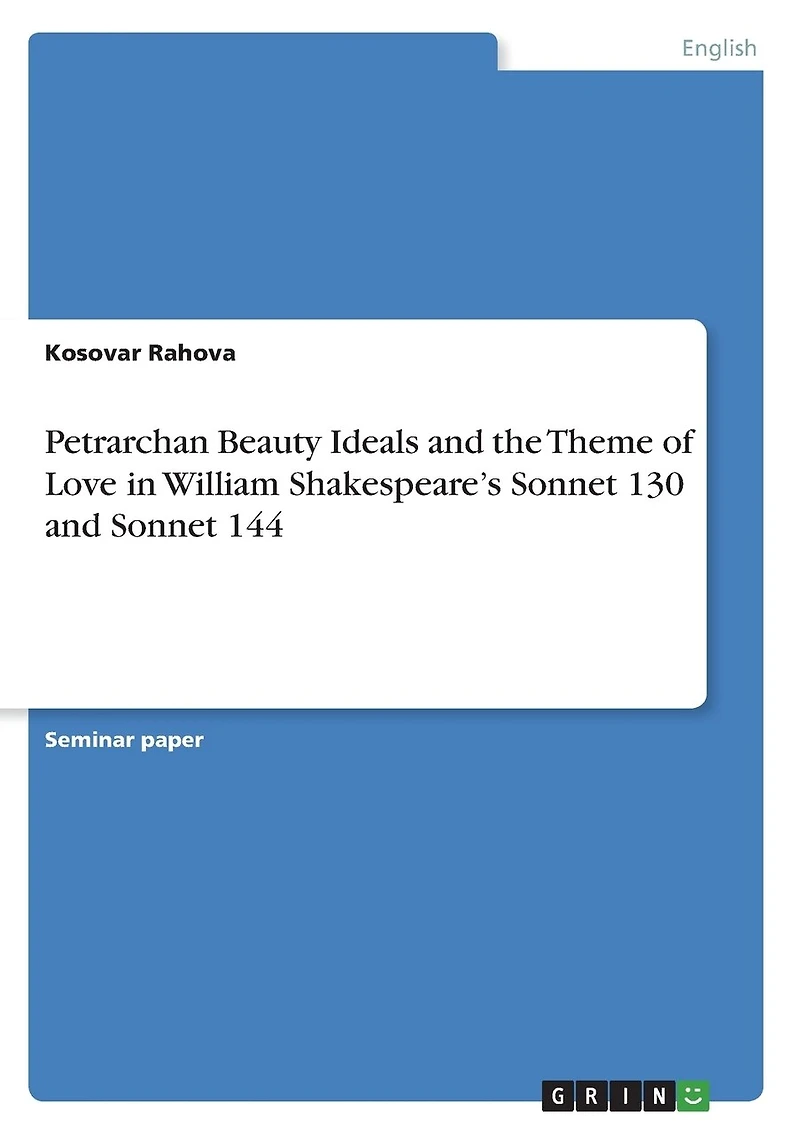
Petrarchan Beauty Ideals and the Theme of Love in William Shakespeare's Sonnet 130 and Sonnet 144
Current price: $29.50

Petrarchan Beauty Ideals and the Theme of Love in William Shakespeare's Sonnet 130 and Sonnet 144
Current price: $29.50
Loading Inventory...
Size: Paperback
*Product information may vary - to confirm product availability, pricing, shipping and return information please contact Indigo
Seminar paper from the year 2022 in the subject English Language and Literature Studies - Literature, grade: 1,0, University of Kassel, language: English, abstract: The research paper deals with Shakespeare's Sonnet 130, as well as Sonnet 144. Both sonnets were published in the 1609 quarto edition and depict a rather unusual form of an English Sonnet of the 16th century. Shakespeare's sonnets are seen as timeless works of literary history because they deal with certain approaches that still apply to society's way of thinking like criticism of gender stereotypes. In doing so, Sonnet 130 and Sonnet 144 question the expectations readers have towards conventional sonnets, in which women are worshipped for their appearance and depicted positively. They "contradict() an accepted norm of love poetry" by presenting a negative blazon.
Seminar paper from the year 2022 in the subject English Language and Literature Studies - Literature, grade: 1,0, University of Kassel, language: English, abstract: The research paper deals with Shakespeare's Sonnet 130, as well as Sonnet 144. Both sonnets were published in the 1609 quarto edition and depict a rather unusual form of an English Sonnet of the 16th century. Shakespeare's sonnets are seen as timeless works of literary history because they deal with certain approaches that still apply to society's way of thinking like criticism of gender stereotypes. In doing so, Sonnet 130 and Sonnet 144 question the expectations readers have towards conventional sonnets, in which women are worshipped for their appearance and depicted positively. They "contradict() an accepted norm of love poetry" by presenting a negative blazon.
You May Also Like















More About Indigo at Erin Mills Town Centre
The largest book retailer in Canada also offers toys, music, home décor, gifts and lifestyle products. What's Inside...Books, Magazines, CD’s and DVD’s, Toys and Gifts, Home Accents, Electronics, Baby’s and Children’s Section, Bath and Body, Kitchen and Bedroom, Stationary Located outside in the exterior plaza.
5015 Glen Erin Dr, Mississauga, ON L5M 0R7, Canada
Find Indigo at Erin Mills Town Centre in Mississauga ON
Visit Indigo at Erin Mills Town Centre in Mississauga ON