

GIVE THE PERFECT GIFT
Erin Mills Town Centre Gift Cards are the perfect choice for your gift giving needs.Purchase gift cards at kiosks near the food court or centre court, at Guest Services, or click below to purchase online.PURCHASE HEREHome
Philosophical Melancholy and Delirium: Hume's Pathology of Philosophy
Indigo
Loading Inventory...
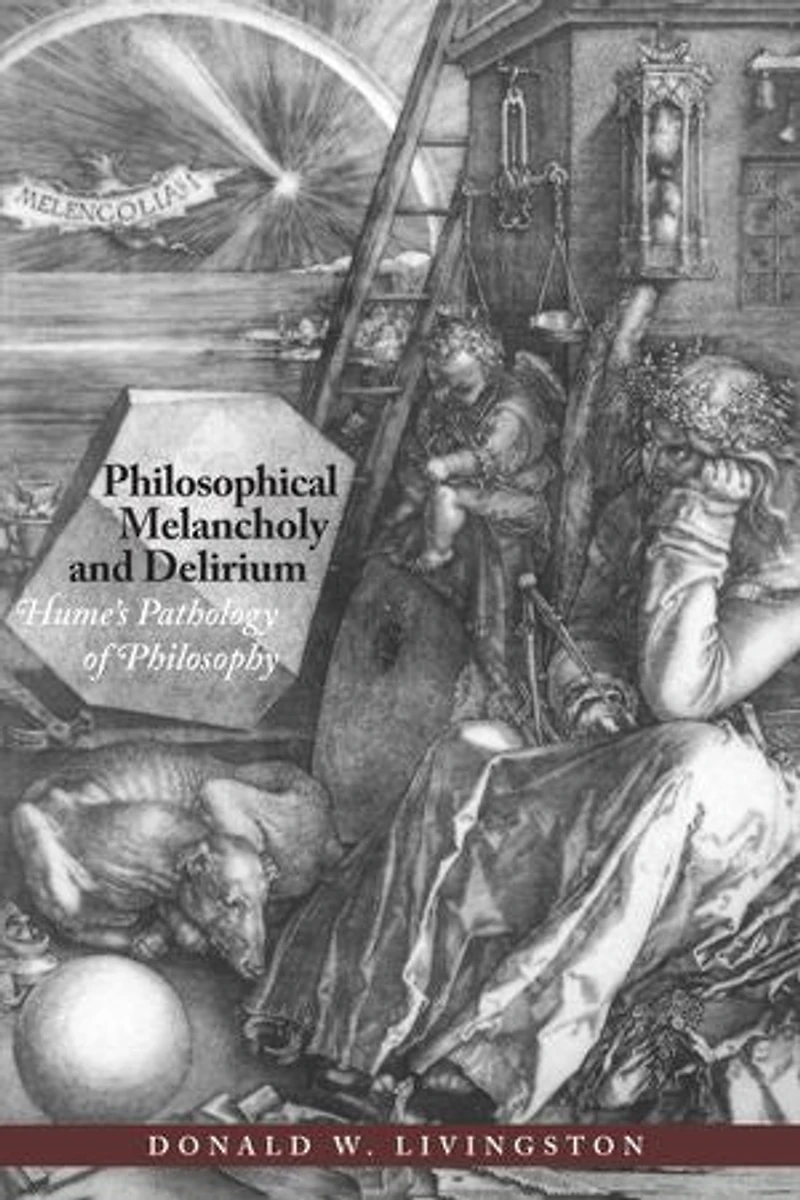
Philosophical Melancholy and Delirium: Hume's Pathology of Philosophy
Current price: $19.19
Original price: $23.99

Philosophical Melancholy and Delirium: Hume's Pathology of Philosophy
Current price: $19.19
Original price: $23.99
Loading Inventory...
Size: Kobo eBook
*Product information may vary - to confirm product availability, pricing, shipping and return information please contact Indigo
The Scottish philosopher David Hume is commonly understood as the original proponent of the "end of philosophy." In this powerful new study, Donald Livingston completely revises our understanding of Hume's thought through his investigation of Hume's distinction between "true" and "false" philosophy. For Hume, false philosophy leads either to melancholy over the groundlessness of common opinion or delirium over transcending it, while true philosophy leads to wisdom. Livingston traces this distinction through all of Hume's writings, providing a systematic pathology of the corrupt philosophical consciousness in history, politics, philosophy, and literature that characterized Hume's own time as well as ours.
By demonstrating how a philosophical method can be used to expose the political motivations behind intellectual positions, historical events, and their subsequent interpretations, Livingston revitalizes Hume's thought and reveals its relevance for contemporary dicussions of politics, nationalism, and ideology for the first time.
The Scottish philosopher David Hume is commonly understood as the original proponent of the "end of philosophy." In this powerful new study, Donald Livingston completely revises our understanding of Hume's thought through his investigation of Hume's distinction between "true" and "false" philosophy. For Hume, false philosophy leads either to melancholy over the groundlessness of common opinion or delirium over transcending it, while true philosophy leads to wisdom. Livingston traces this distinction through all of Hume's writings, providing a systematic pathology of the corrupt philosophical consciousness in history, politics, philosophy, and literature that characterized Hume's own time as well as ours.
By demonstrating how a philosophical method can be used to expose the political motivations behind intellectual positions, historical events, and their subsequent interpretations, Livingston revitalizes Hume's thought and reveals its relevance for contemporary dicussions of politics, nationalism, and ideology for the first time.
You May Also Like







More About Indigo at Erin Mills Town Centre
The largest book retailer in Canada also offers toys, music, home décor, gifts and lifestyle products. What's Inside...Books, Magazines, CD’s and DVD’s, Toys and Gifts, Home Accents, Electronics, Baby’s and Children’s Section, Bath and Body, Kitchen and Bedroom, Stationary Located outside in the exterior plaza.
5015 Glen Erin Dr, Mississauga, ON L5M 0R7, Canada
Find Indigo at Erin Mills Town Centre in Mississauga ON
Visit Indigo at Erin Mills Town Centre in Mississauga ON