

GIVE THE PERFECT GIFT
Erin Mills Town Centre Gift Cards are the perfect choice for your gift giving needs.Purchase gift cards at kiosks near the food court or centre court, at Guest Services, or click below to purchase online.PURCHASE HEREHome
Plasmonics Chemistry and Biology
Indigo
Loading Inventory...

Plasmonics Chemistry and Biology
Current price: $221.95

Plasmonics Chemistry and Biology
Current price: $221.95
Loading Inventory...
Size: Hardcover
*Product information may vary - to confirm product availability, pricing, shipping and return information please contact Indigo
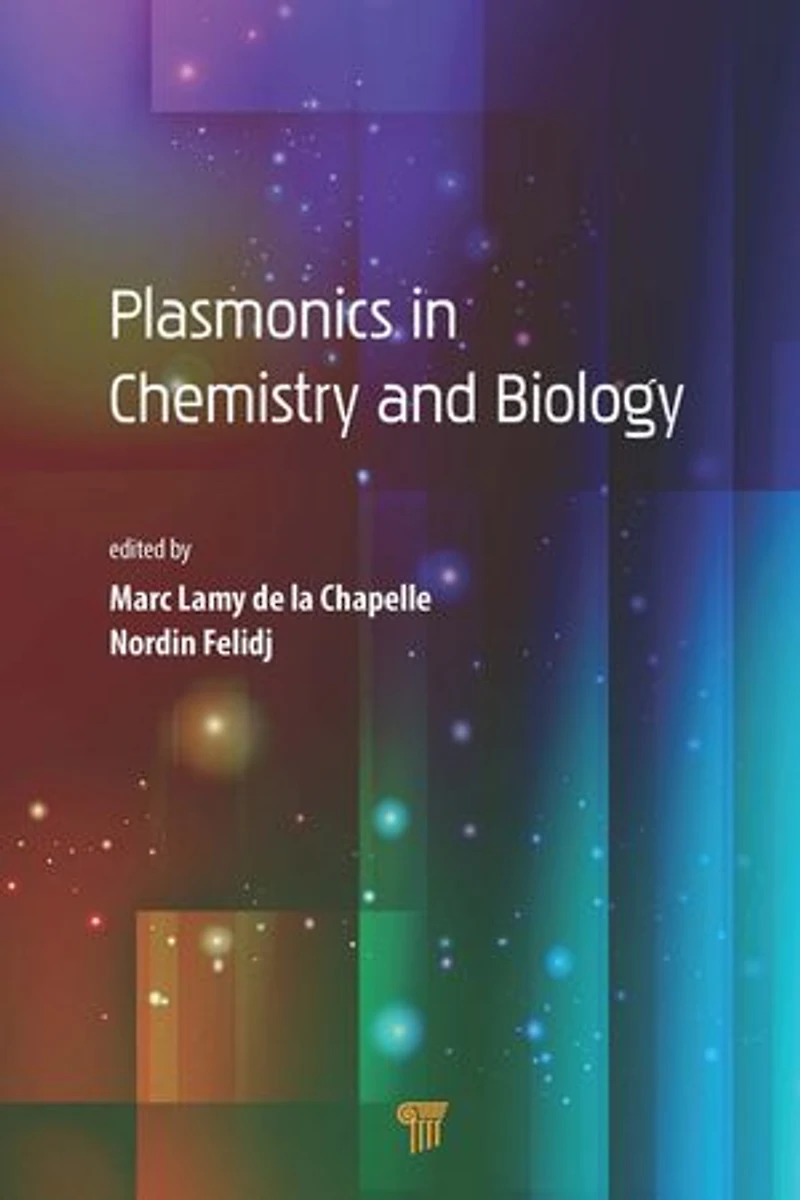
Over the past decade, plasmonic nanoparticles have been the subject of extensive research, owing to their remarkable optical properties. These properties arise from a collective oscillation of the conductive electrons at the nanoparticle surface under light irradiation, known as localized surface plasmon (LSP). LSP is characterized by (i) a strong absorption and scattering of the light depending on the geometrical parameters of the nanoparticles and (ii) a strong amplification of the local field in the vicinity of the nanoparticles. Quite recently, it was shown that the activation and the initiation of chemical reactions or physical processes can be facilitated using LSP excitation. Such exploitation presents two main advantages: an enhanced yield and a fine control of chemical reactions at the nanoscale. These topics have become very active and are in line with molecular plasmonics. This book explores this new field and provides a broad view on the exploitation of plasmonics in chemical and biological fields.
Over the past decade, plasmonic nanoparticles have been the subject of extensive research, owing to their remarkable optical properties. These properties arise from a collective oscillation of the conductive electrons at the nanoparticle surface under light irradiation, known as localized surface plasmon (LSP). LSP is characterized by (i) a strong absorption and scattering of the light depending on the geometrical parameters of the nanoparticles and (ii) a strong amplification of the local field in the vicinity of the nanoparticles. Quite recently, it was shown that the activation and the initiation of chemical reactions or physical processes can be facilitated using LSP excitation. Such exploitation presents two main advantages: an enhanced yield and a fine control of chemical reactions at the nanoscale. These topics have become very active and are in line with molecular plasmonics. This book explores this new field and provides a broad view on the exploitation of plasmonics in chemical and biological fields.
You May Also Like










More About Indigo at Erin Mills Town Centre
The largest book retailer in Canada also offers toys, music, home décor, gifts and lifestyle products. What's Inside...Books, Magazines, CD’s and DVD’s, Toys and Gifts, Home Accents, Electronics, Baby’s and Children’s Section, Bath and Body, Kitchen and Bedroom, Stationary Located outside in the exterior plaza.
5015 Glen Erin Dr, Mississauga, ON L5M 0R7, Canada
Find Indigo at Erin Mills Town Centre in Mississauga ON
Visit Indigo at Erin Mills Town Centre in Mississauga ON