

GIVE THE PERFECT GIFT
Erin Mills Town Centre Gift Cards are the perfect choice for your gift giving needs.Purchase gift cards at kiosks near the food court or centre court, at Guest Services, or click below to purchase online.PURCHASE HEREHome
Polarity-Sensitive Expressions: Comparisons Between Japanese and Other Languages
Indigo
Loading Inventory...
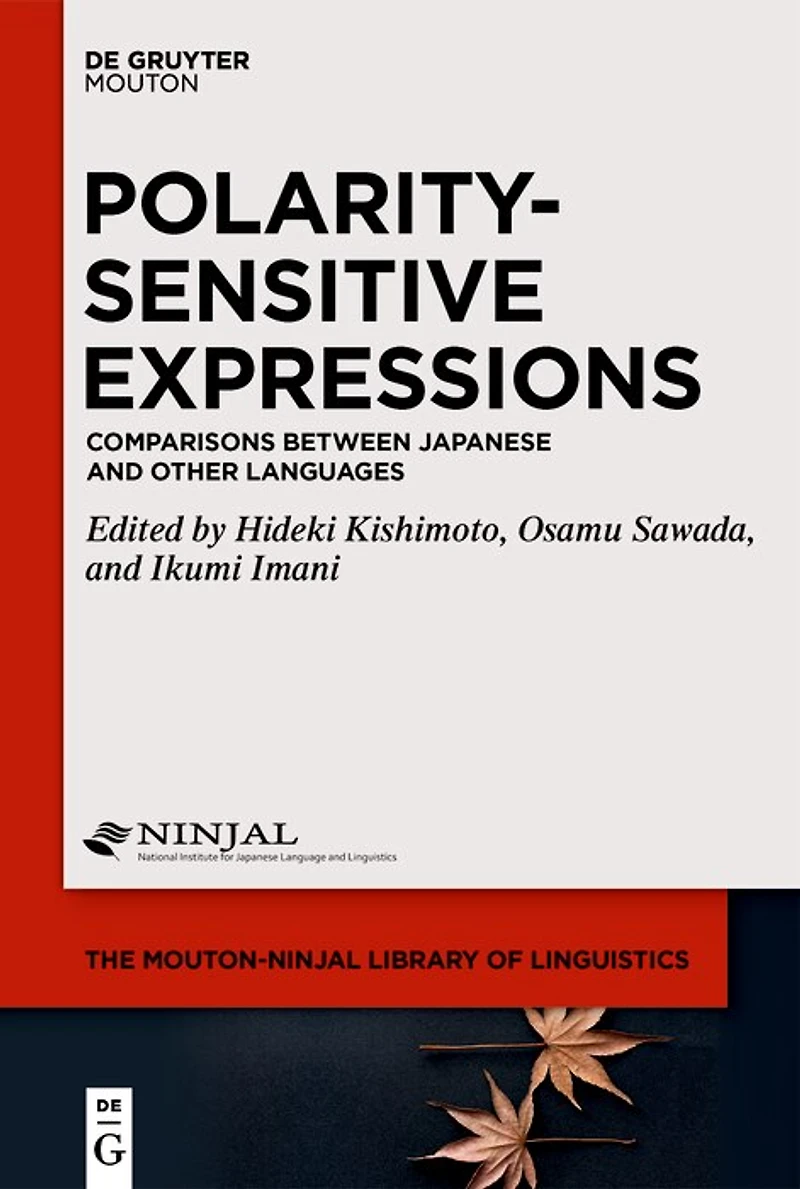
Polarity-Sensitive Expressions: Comparisons Between Japanese and Other Languages
Current price: $198.99

Polarity-Sensitive Expressions: Comparisons Between Japanese and Other Languages
Current price: $198.99
Loading Inventory...
Size: Hardcover
*Product information may vary - to confirm product availability, pricing, shipping and return information please contact Indigo
Polarity (positive, negative) is one of the most fundamental concepts in the system of language and there are many expressions that are sensitive to polarity. For example, any in English and wh-mo in Japanese appear in negative contexts, but not in positive contexts. While previous studies have shown that polarity-sensitive expressions are a general phenomenon in languages, it has also become clear that there are variations in polarity-sensitive expressions. This volume explores the variations in polarity-sensitive expressions through comparisons between Japanese and other languages, such as English, German, Spanish, and Old Japanese, and examines the environments and contexts in which polarity-sensitive expressions occur, as well as the types of (cross-linguistic) variation allowed. The value of the present volume lies in its inclusion of research papers inquiring into various types of polarity-sensitive expressions, such as negative-, positive-, and discourse-sensitive polarity items as well as their variations. The research indicates new directions for the study of polarity-sensitive expressions in the fields of syntax, semantics, pragmatics, historical linguistics, corpus linguistics and psycholinguistics.
Polarity (positive, negative) is one of the most fundamental concepts in the system of language and there are many expressions that are sensitive to polarity. For example, any in English and wh-mo in Japanese appear in negative contexts, but not in positive contexts. While previous studies have shown that polarity-sensitive expressions are a general phenomenon in languages, it has also become clear that there are variations in polarity-sensitive expressions. This volume explores the variations in polarity-sensitive expressions through comparisons between Japanese and other languages, such as English, German, Spanish, and Old Japanese, and examines the environments and contexts in which polarity-sensitive expressions occur, as well as the types of (cross-linguistic) variation allowed. The value of the present volume lies in its inclusion of research papers inquiring into various types of polarity-sensitive expressions, such as negative-, positive-, and discourse-sensitive polarity items as well as their variations. The research indicates new directions for the study of polarity-sensitive expressions in the fields of syntax, semantics, pragmatics, historical linguistics, corpus linguistics and psycholinguistics.
You May Also Like













More About Indigo at Erin Mills Town Centre
The largest book retailer in Canada also offers toys, music, home décor, gifts and lifestyle products. What's Inside...Books, Magazines, CD’s and DVD’s, Toys and Gifts, Home Accents, Electronics, Baby’s and Children’s Section, Bath and Body, Kitchen and Bedroom, Stationary Located outside in the exterior plaza.
5015 Glen Erin Dr, Mississauga, ON L5M 0R7, Canada
Find Indigo at Erin Mills Town Centre in Mississauga ON
Visit Indigo at Erin Mills Town Centre in Mississauga ON