

GIVE THE PERFECT GIFT
Erin Mills Town Centre Gift Cards are the perfect choice for your gift giving needs.Purchase gift cards at kiosks near the food court or centre court, at Guest Services, or click below to purchase online.PURCHASE HEREHome
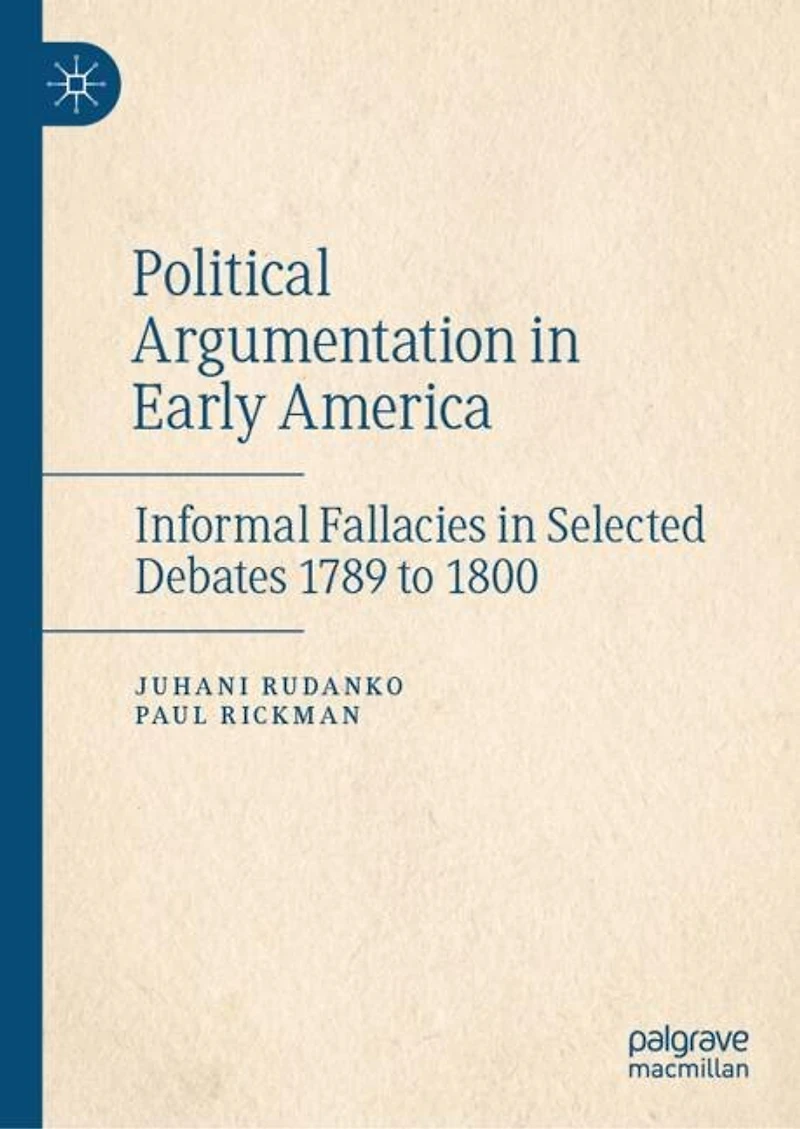
Political Argumentation Early America: Informal Fallacies Selected Debates 1789 to 1800
Indigo
Loading Inventory...
Political Argumentation Early America: Informal Fallacies Selected Debates 1789 to 1800
Current price: $175.50

Political Argumentation Early America: Informal Fallacies Selected Debates 1789 to 1800
Current price: $175.50
Loading Inventory...
Size: Hardcover
*Product information may vary - to confirm product availability, pricing, shipping and return information please contact Indigo
This book investigates the language used by protagonists in four major political debates in the early history of the United States. The first of these concerns the controversy in the first United States House of Representatives in the summer of 1789 on whether a proposal for a bill of rights should be considered in an expeditious fashion or whether the issue should be left till much later. The second is the principal debate on whether a sedition act should be enacted in July 1798, and the third concerns the enactment of the Logan Act of 1799. The fourth investigates the elections for the Legislature of the State of New York in the spring of 1800, which was the key event affecting the outcome of the presidential election of 1800. In each case there was a sharp disagreement between groups of politicians representing different points of view, and each event was significant from the point of view of the political history of the United States. The authors introduce these four debates, as well as the notion of informal fallacy - taken to designate an argument that is unsatisfactory in some way - before analysing deceptive fallacies and demonstrating how fallacy theory can be used as a critical tool in the examination of political argumentation. This book will be of interest to students and scholars of political communication, rhetoric and argumentation, US history and politics, and diachronic linguistics, especially diachronic pragmatics.
This book investigates the language used by protagonists in four major political debates in the early history of the United States. The first of these concerns the controversy in the first United States House of Representatives in the summer of 1789 on whether a proposal for a bill of rights should be considered in an expeditious fashion or whether the issue should be left till much later. The second is the principal debate on whether a sedition act should be enacted in July 1798, and the third concerns the enactment of the Logan Act of 1799. The fourth investigates the elections for the Legislature of the State of New York in the spring of 1800, which was the key event affecting the outcome of the presidential election of 1800. In each case there was a sharp disagreement between groups of politicians representing different points of view, and each event was significant from the point of view of the political history of the United States. The authors introduce these four debates, as well as the notion of informal fallacy - taken to designate an argument that is unsatisfactory in some way - before analysing deceptive fallacies and demonstrating how fallacy theory can be used as a critical tool in the examination of political argumentation. This book will be of interest to students and scholars of political communication, rhetoric and argumentation, US history and politics, and diachronic linguistics, especially diachronic pragmatics.
You May Also Like









More About Indigo at Erin Mills Town Centre
The largest book retailer in Canada also offers toys, music, home décor, gifts and lifestyle products. What's Inside...Books, Magazines, CD’s and DVD’s, Toys and Gifts, Home Accents, Electronics, Baby’s and Children’s Section, Bath and Body, Kitchen and Bedroom, Stationary Located outside in the exterior plaza.
5015 Glen Erin Dr, Mississauga, ON L5M 0R7, Canada
Find Indigo at Erin Mills Town Centre in Mississauga ON
Visit Indigo at Erin Mills Town Centre in Mississauga ON