

GIVE THE PERFECT GIFT
Erin Mills Town Centre Gift Cards are the perfect choice for your gift giving needs.Purchase gift cards at kiosks near the food court or centre court, at Guest Services, or click below to purchase online.PURCHASE HEREHome
Political Geometry: Rethinking Redistricting In The Us With Math, Law, And Everything In Between
Indigo
Loading Inventory...
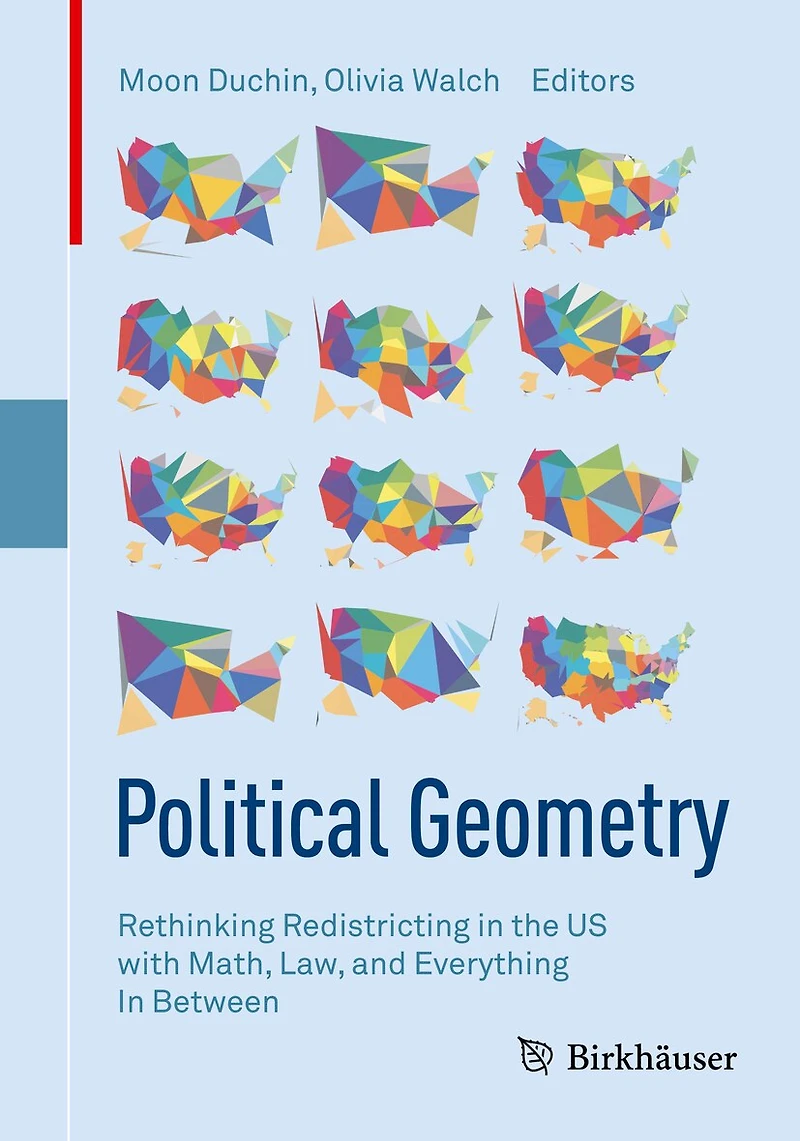
Political Geometry: Rethinking Redistricting In The Us With Math, Law, And Everything In Between
Current price: $55.50

Political Geometry: Rethinking Redistricting In The Us With Math, Law, And Everything In Between
Current price: $55.50
Loading Inventory...
Size: Hardcover
*Product information may vary - to confirm product availability, pricing, shipping and return information please contact Indigo
"Why does my congressional district look like a salamander?" Politically engaged citizens have been asking this question for far too long. This volume collects perspectives from a wide cross-section of disciplines to explain what drives gerrymandering, why it can be hard to stamp out, and how we might go about fixing it. With topics ranging from the Voting Rights Act to Markov chains to the geography of communities, this book serves as a 21st century toolkit for how we can better approach this corrosive phenomenon.
The volume editors gather experts from a variety of fields to provide as many different perspectives on gerrymandering as possible. Thanks to the breadth of expertise found across these chapters, ranging from lawyers to mathematicians to civil rights activists, readers will discover new ways of thinking about redistricting in the United States. Illustrations and helpful walkthroughs appear throughout to clearly explain otherwise complex ideas from these areas. Political Geometry is a must-have for anybody interested in political representation in the United States elections, and for anyone who's ever thought, "There must be a better way to do this."
"Why does my congressional district look like a salamander?" Politically engaged citizens have been asking this question for far too long. This volume collects perspectives from a wide cross-section of disciplines to explain what drives gerrymandering, why it can be hard to stamp out, and how we might go about fixing it. With topics ranging from the Voting Rights Act to Markov chains to the geography of communities, this book serves as a 21st century toolkit for how we can better approach this corrosive phenomenon.
The volume editors gather experts from a variety of fields to provide as many different perspectives on gerrymandering as possible. Thanks to the breadth of expertise found across these chapters, ranging from lawyers to mathematicians to civil rights activists, readers will discover new ways of thinking about redistricting in the United States. Illustrations and helpful walkthroughs appear throughout to clearly explain otherwise complex ideas from these areas. Political Geometry is a must-have for anybody interested in political representation in the United States elections, and for anyone who's ever thought, "There must be a better way to do this."
You May Also Like












More About Indigo at Erin Mills Town Centre
The largest book retailer in Canada also offers toys, music, home décor, gifts and lifestyle products. What's Inside...Books, Magazines, CD’s and DVD’s, Toys and Gifts, Home Accents, Electronics, Baby’s and Children’s Section, Bath and Body, Kitchen and Bedroom, Stationary Located outside in the exterior plaza.
5015 Glen Erin Dr, Mississauga, ON L5M 0R7, Canada
Find Indigo at Erin Mills Town Centre in Mississauga ON
Visit Indigo at Erin Mills Town Centre in Mississauga ON