

GIVE THE PERFECT GIFT
Erin Mills Town Centre Gift Cards are the perfect choice for your gift giving needs.Purchase gift cards at kiosks near the food court or centre court, at Guest Services, or click below to purchase online.PURCHASE HEREHome
Political Theory Science Fiction and Utopian Literature by Tony Burns, Paperback | Indigo Chapters
Indigo
Loading Inventory...
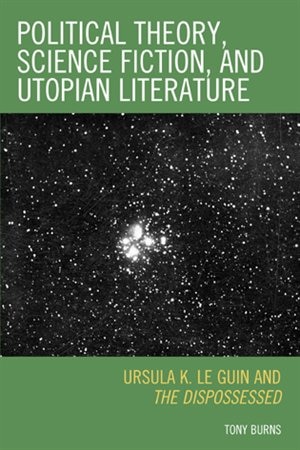
Political Theory Science Fiction and Utopian Literature by Tony Burns, Paperback | Indigo Chapters
By Tony Burns
Current price: $99.50

By Tony Burns
Political Theory Science Fiction and Utopian Literature by Tony Burns, Paperback | Indigo Chapters
Current price: $99.50
Loading Inventory...
Size: 0.94 x 9.11 x 1.07
*Product information may vary - to confirm product availability, pricing, shipping and return information please contact Indigo
Ursula K. Le Guin's The Dispossessed is of interest to political theorists partly because of its association with anarchism and partly because it is thought to represent a turning point in the history of utopian/dystopian political thought and literature and of science fiction. Published in 1974, it marked a revival of utopianism after decades of dystopian writing. According to this widely accepted view The Dispossessed represents a new kind of literary utopia, which Tom Moylan calls a 'critical utopia.' The present work challenges this reading of The Dispossessed and its place in the histories of utopian/dystopian literature and science fiction. It explores the difference between traditional literary utopia and novels and suggests that The Dispossessed is not a literary utopia but a novel about utopianism in politics. Le Guin's concerns have more to do with those of the novelists of the 19th century writing in the tradition of European Realism than they do with the science fiction or utopian literature. It also claims that her theory of the novel has an affinity with the ancient Greek tragedy. This implies that there is a conservatism in Le Guin's work as a creative writer, or as a novelist, which fits uneasily with her personal commitment to anarchism. | Political Theory Science Fiction and Utopian Literature by Tony Burns, Paperback | Indigo Chapters
Ursula K. Le Guin's The Dispossessed is of interest to political theorists partly because of its association with anarchism and partly because it is thought to represent a turning point in the history of utopian/dystopian political thought and literature and of science fiction. Published in 1974, it marked a revival of utopianism after decades of dystopian writing. According to this widely accepted view The Dispossessed represents a new kind of literary utopia, which Tom Moylan calls a 'critical utopia.' The present work challenges this reading of The Dispossessed and its place in the histories of utopian/dystopian literature and science fiction. It explores the difference between traditional literary utopia and novels and suggests that The Dispossessed is not a literary utopia but a novel about utopianism in politics. Le Guin's concerns have more to do with those of the novelists of the 19th century writing in the tradition of European Realism than they do with the science fiction or utopian literature. It also claims that her theory of the novel has an affinity with the ancient Greek tragedy. This implies that there is a conservatism in Le Guin's work as a creative writer, or as a novelist, which fits uneasily with her personal commitment to anarchism. | Political Theory Science Fiction and Utopian Literature by Tony Burns, Paperback | Indigo Chapters
You May Also Like








More About Indigo at Erin Mills Town Centre
The largest book retailer in Canada also offers toys, music, home décor, gifts and lifestyle products. What's Inside...Books, Magazines, CD’s and DVD’s, Toys and Gifts, Home Accents, Electronics, Baby’s and Children’s Section, Bath and Body, Kitchen and Bedroom, Stationary Located outside in the exterior plaza.
5015 Glen Erin Dr, Mississauga, ON L5M 0R7, Canada
Find Indigo at Erin Mills Town Centre in Mississauga ON
Visit Indigo at Erin Mills Town Centre in Mississauga ON