

GIVE THE PERFECT GIFT
Erin Mills Town Centre Gift Cards are the perfect choice for your gift giving needs.Purchase gift cards at kiosks near the food court or centre court, at Guest Services, or click below to purchase online.PURCHASE HEREHome
Polyampholytes: Synthesis, Characterization and Application
Indigo
Loading Inventory...

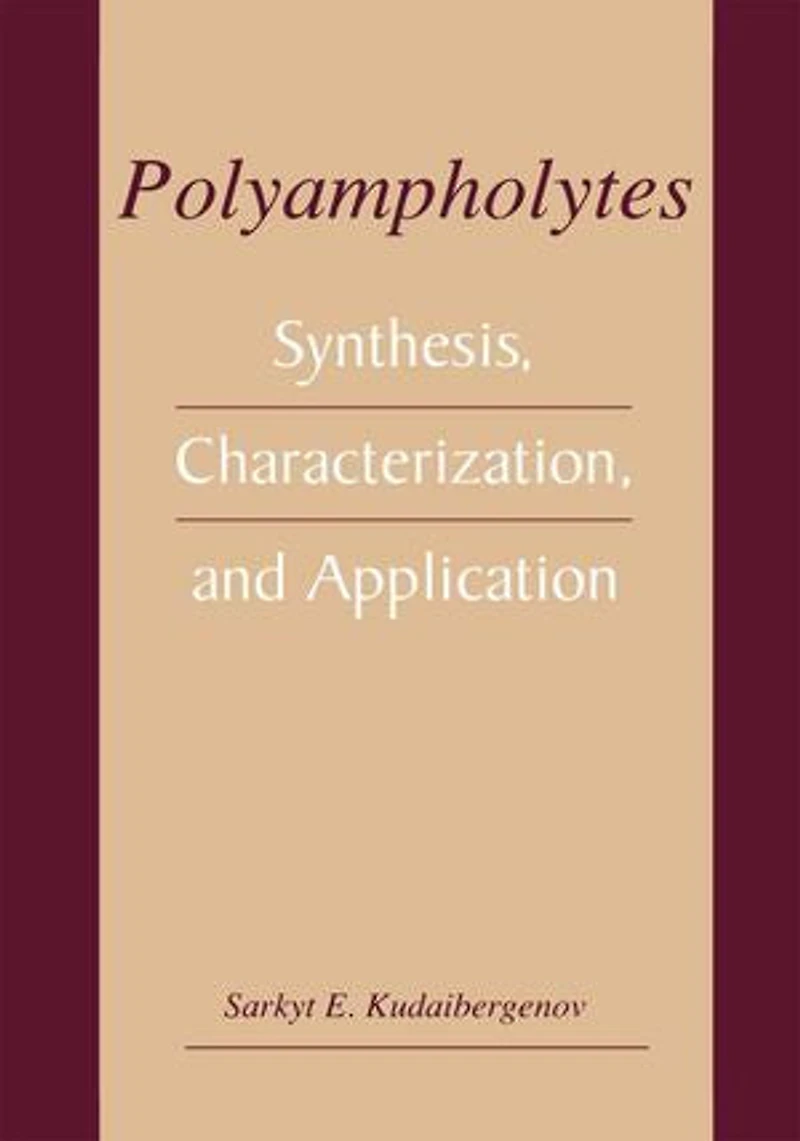
Polyampholytes: Synthesis, Characterization and Application
Current price: $142.95

Polyampholytes: Synthesis, Characterization and Application
Current price: $142.95
Loading Inventory...
Size: Hardcover
*Product information may vary - to confirm product availability, pricing, shipping and return information please contact Indigo
In order to adapt the properties of living materials to their biological functions, nature has developed unique polyelectrolytes with outstanding physical, chemical and mechanical behavior. Namely polyampholytes can be suitable substances to model protein folding phenomenon and enzymatic activity most of biological macromolecules due to the presence of acidic and basic groups. The ability of linear and crosslinked amphoteric macromolecules to adopt globular, coil, helix and stretched conformations and to demonstrate coil-globule, helix-coil phase transitions, and sol-gel, collapsed expanded volume changes in relation to internal (nature and distribution of acid and base substituents, copolymer composition, hydrophobicity etc. ) and external (pH, temperature, ionic strength of the solution, thermodynamic quality of solvents etc. ) factors is very important and constantly attracts the attention of theorists and experimentalists because the hierarchy of amphoteric macromolecules can repeat, more or less, the structural organization of proteins. That is why polyampholytes fall within eyeshot of several disciplines, at least polymer chemistry and physics, molecular biology, colloid chemistry, coordination chemistry and catalysis. The main purpose of this monograph is to bridge the gap between synthetic and natural polymers and to show a closer relationship between two fascinating worlds. The first chapter of the book acquaints the readers with synthetic strategy of "annealed", "quenched" and "zwitterionic" polyampholytes. Radical copolymerization, chemical modification and radiation-chemical polymerization methods are thoroughly considered. Kinetics and mechanism of formation of random, alternating, graft, di-block or tri-block sequences is discussed. The second chapterdeals with behavior of polyampholytes in solutions.
In order to adapt the properties of living materials to their biological functions, nature has developed unique polyelectrolytes with outstanding physical, chemical and mechanical behavior. Namely polyampholytes can be suitable substances to model protein folding phenomenon and enzymatic activity most of biological macromolecules due to the presence of acidic and basic groups. The ability of linear and crosslinked amphoteric macromolecules to adopt globular, coil, helix and stretched conformations and to demonstrate coil-globule, helix-coil phase transitions, and sol-gel, collapsed expanded volume changes in relation to internal (nature and distribution of acid and base substituents, copolymer composition, hydrophobicity etc. ) and external (pH, temperature, ionic strength of the solution, thermodynamic quality of solvents etc. ) factors is very important and constantly attracts the attention of theorists and experimentalists because the hierarchy of amphoteric macromolecules can repeat, more or less, the structural organization of proteins. That is why polyampholytes fall within eyeshot of several disciplines, at least polymer chemistry and physics, molecular biology, colloid chemistry, coordination chemistry and catalysis. The main purpose of this monograph is to bridge the gap between synthetic and natural polymers and to show a closer relationship between two fascinating worlds. The first chapter of the book acquaints the readers with synthetic strategy of "annealed", "quenched" and "zwitterionic" polyampholytes. Radical copolymerization, chemical modification and radiation-chemical polymerization methods are thoroughly considered. Kinetics and mechanism of formation of random, alternating, graft, di-block or tri-block sequences is discussed. The second chapterdeals with behavior of polyampholytes in solutions.
You May Also Like








More About Indigo at Erin Mills Town Centre
The largest book retailer in Canada also offers toys, music, home décor, gifts and lifestyle products. What's Inside...Books, Magazines, CD’s and DVD’s, Toys and Gifts, Home Accents, Electronics, Baby’s and Children’s Section, Bath and Body, Kitchen and Bedroom, Stationary Located outside in the exterior plaza.
5015 Glen Erin Dr, Mississauga, ON L5M 0R7, Canada
Find Indigo at Erin Mills Town Centre in Mississauga ON
Visit Indigo at Erin Mills Town Centre in Mississauga ON