

GIVE THE PERFECT GIFT
Erin Mills Town Centre Gift Cards are the perfect choice for your gift giving needs.Purchase gift cards at kiosks near the food court or centre court, at Guest Services, or click below to purchase online.PURCHASE HEREHome
Quantum Theory without Reduction
Indigo
Loading Inventory...
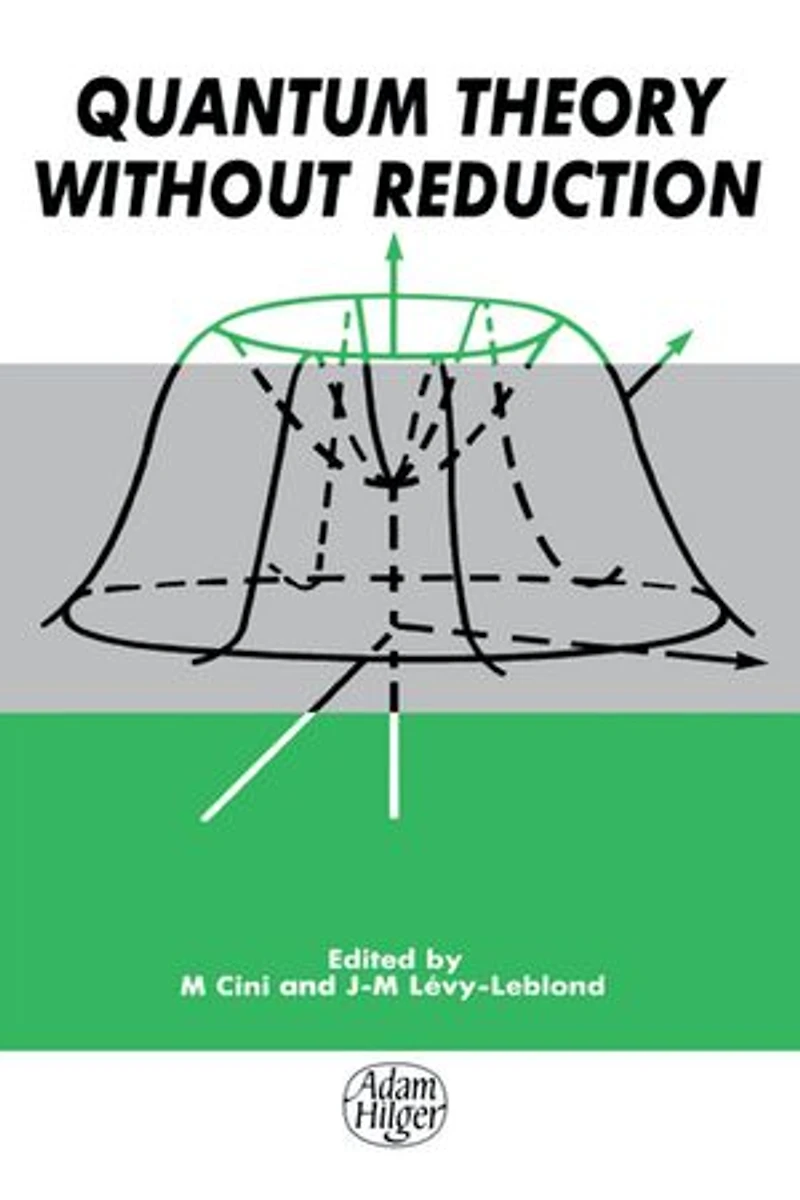

Quantum Theory without Reduction
Current price: $122.14

Quantum Theory without Reduction
Current price: $122.14
Loading Inventory...
Size: Kobo eBook
*Product information may vary - to confirm product availability, pricing, shipping and return information please contact Indigo
Quantum theory offers a strange, and perhaps unique, case in the history of science. Although research into its roots has provided important results in recent years, the debate goes on. Some theorists argue that quantum theory is weakened by the inclusion of the so called "reduction of the state vector" in its foundations. Quantum Theory without Reduction presents arguments in favor of quantum theory as a consistent and complete theory without this reduction and as a theory capable of explaining all known features of the measurement problem. This collection of invited contributions defines and explores different aspects of this issue, bringing an old debate into a new perspective and leading to a more satisfying consensus about quantum theory. The book will be of interest to researchers in theoretical physics and mathematical physics involved in the foundations of quantum theory. Scientists, engineers, and philosophers interested in the conceptual problems of quantum theory will also find this work stimulating.
Quantum theory offers a strange, and perhaps unique, case in the history of science. Although research into its roots has provided important results in recent years, the debate goes on. Some theorists argue that quantum theory is weakened by the inclusion of the so called "reduction of the state vector" in its foundations. Quantum Theory without Reduction presents arguments in favor of quantum theory as a consistent and complete theory without this reduction and as a theory capable of explaining all known features of the measurement problem. This collection of invited contributions defines and explores different aspects of this issue, bringing an old debate into a new perspective and leading to a more satisfying consensus about quantum theory. The book will be of interest to researchers in theoretical physics and mathematical physics involved in the foundations of quantum theory. Scientists, engineers, and philosophers interested in the conceptual problems of quantum theory will also find this work stimulating.
You May Also Like







More About Indigo at Erin Mills Town Centre
The largest book retailer in Canada also offers toys, music, home décor, gifts and lifestyle products. What's Inside...Books, Magazines, CD’s and DVD’s, Toys and Gifts, Home Accents, Electronics, Baby’s and Children’s Section, Bath and Body, Kitchen and Bedroom, Stationary Located outside in the exterior plaza.
5015 Glen Erin Dr, Mississauga, ON L5M 0R7, Canada
Find Indigo at Erin Mills Town Centre in Mississauga ON
Visit Indigo at Erin Mills Town Centre in Mississauga ON