

GIVE THE PERFECT GIFT
Erin Mills Town Centre Gift Cards are the perfect choice for your gift giving needs.Purchase gift cards at kiosks near the food court or centre court, at Guest Services, or click below to purchase online.PURCHASE HEREHome
Reconstruction Lib/E: A Concise History
Indigo
Loading Inventory...
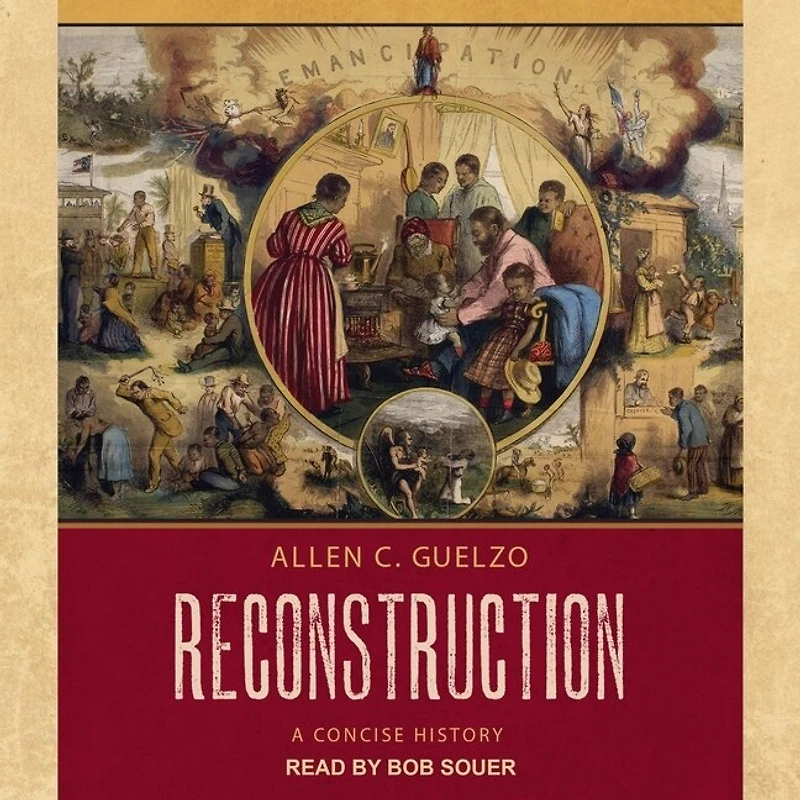
Reconstruction Lib/E: A Concise History
Current price: $16.95

Reconstruction Lib/E: A Concise History
Current price: $16.95
Loading Inventory...
Size: Audiobook (2018 A)
*Product information may vary - to confirm product availability, pricing, shipping and return information please contact Indigo
The era known as Reconstruction is one of the unhappiest times in American history. It succeeded in reuniting the nation politically after the Civil War but in little else. Conflict shifted from the battlefield to the Capitol as Congress warred with President Andrew Johnson over just what to do with the South. Johnson's plan of Presidential Reconstruction, which was sympathetic to the former Confederacy, would ultimately lead to his impeachment and the institution of Radical Reconstruction. While Reconstruction saw the ratification of the fourteenth and fifteenth Amendments, expanding the rights and suffrage of African Americans, it largely failed to chart a progressive course for race relations after the abolition of slavery and the rise of Jim Crow. It also struggled to manage the Southern resistance towards a Northern free-labor economy. However, these failures cannot obscure a number of accomplishments with long-term consequences for American life, among them the Civil Rights Act, the election of the first African American representatives to Congress, and the avoidance of renewed civil war. Reconstruction suffered from poor leadership and uncertainty of direction, but it also laid the groundwork for renewed struggles for racial equality during the civil rights movement.
The era known as Reconstruction is one of the unhappiest times in American history. It succeeded in reuniting the nation politically after the Civil War but in little else. Conflict shifted from the battlefield to the Capitol as Congress warred with President Andrew Johnson over just what to do with the South. Johnson's plan of Presidential Reconstruction, which was sympathetic to the former Confederacy, would ultimately lead to his impeachment and the institution of Radical Reconstruction. While Reconstruction saw the ratification of the fourteenth and fifteenth Amendments, expanding the rights and suffrage of African Americans, it largely failed to chart a progressive course for race relations after the abolition of slavery and the rise of Jim Crow. It also struggled to manage the Southern resistance towards a Northern free-labor economy. However, these failures cannot obscure a number of accomplishments with long-term consequences for American life, among them the Civil Rights Act, the election of the first African American representatives to Congress, and the avoidance of renewed civil war. Reconstruction suffered from poor leadership and uncertainty of direction, but it also laid the groundwork for renewed struggles for racial equality during the civil rights movement.
You May Also Like












More About Indigo at Erin Mills Town Centre
The largest book retailer in Canada also offers toys, music, home décor, gifts and lifestyle products. What's Inside...Books, Magazines, CD’s and DVD’s, Toys and Gifts, Home Accents, Electronics, Baby’s and Children’s Section, Bath and Body, Kitchen and Bedroom, Stationary Located outside in the exterior plaza.
5015 Glen Erin Dr, Mississauga, ON L5M 0R7, Canada
Find Indigo at Erin Mills Town Centre in Mississauga ON
Visit Indigo at Erin Mills Town Centre in Mississauga ON