

GIVE THE PERFECT GIFT
Erin Mills Town Centre Gift Cards are the perfect choice for your gift giving needs.Purchase gift cards at kiosks near the food court or centre court, at Guest Services, or click below to purchase online.PURCHASE HEREHome
Reluctant Warriors by Alexandra Sakaki, Paperback | Indigo Chapters
Indigo
Loading Inventory...
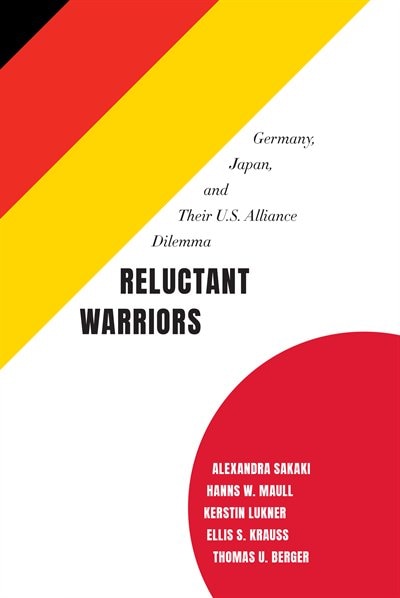
Reluctant Warriors by Alexandra Sakaki, Paperback | Indigo Chapters
By Alexandra Sakaki
Current price: $71.50

By Alexandra Sakaki
Reluctant Warriors by Alexandra Sakaki, Paperback | Indigo Chapters
Current price: $71.50
Loading Inventory...
Size: 0.72 x 9 x 0.94
*Product information may vary - to confirm product availability, pricing, shipping and return information please contact Indigo
Can Germany and Japan do more militarily to uphold the international order?Since the end of World War II, Germany and Japan have been the most reluctant of all major U. S. allies to take on military responsibilities. Given their histories, this reluctance certainly is understandable. But because of their size and economic importance, Germany and Japan are the most important U. S. allies in Europe and in East Asia, respectively, and their long-term reluctance to share the defense burden has become a perennial source of frustration for Washington. The potential security roles of Germany and Japan are becoming increasingly important given the uncertainty, indeed volatility, of today's international environment. Under President Trump, friction among allies over burden-sharing is more intense than ever before. Meanwhile, the security environments in Europe and Asia have deteriorated because of the resurgence of a belligerent Russia under Vladimir Putin, the steady rise of an increasingly assertive China, and North Korea's worrisome acquisition of nuclear weapons. Partly in response to these developments, Germany and Japan in recent years have boosted their security efforts, mainly by increasing defense spending and taking on a somewhat broader range of military missions. Even so, because of their cultures of anti-militarism resistance remains strong in both countries to rebuilding the military and assuming more responsibility for sustaining regional or even global peace. In Reluctant Warriors, a team of noted international experts critically examines how and why Germany and Japan have modified their military postures since 1990 so far, and assesses how far the countries still have to go and why. The contributors also highlight the risks the United States takes if it makes too simplistic a demand for the two countries to do more. | Reluctant Warriors by Alexandra Sakaki, Paperback | Indigo Chapters
Can Germany and Japan do more militarily to uphold the international order?Since the end of World War II, Germany and Japan have been the most reluctant of all major U. S. allies to take on military responsibilities. Given their histories, this reluctance certainly is understandable. But because of their size and economic importance, Germany and Japan are the most important U. S. allies in Europe and in East Asia, respectively, and their long-term reluctance to share the defense burden has become a perennial source of frustration for Washington. The potential security roles of Germany and Japan are becoming increasingly important given the uncertainty, indeed volatility, of today's international environment. Under President Trump, friction among allies over burden-sharing is more intense than ever before. Meanwhile, the security environments in Europe and Asia have deteriorated because of the resurgence of a belligerent Russia under Vladimir Putin, the steady rise of an increasingly assertive China, and North Korea's worrisome acquisition of nuclear weapons. Partly in response to these developments, Germany and Japan in recent years have boosted their security efforts, mainly by increasing defense spending and taking on a somewhat broader range of military missions. Even so, because of their cultures of anti-militarism resistance remains strong in both countries to rebuilding the military and assuming more responsibility for sustaining regional or even global peace. In Reluctant Warriors, a team of noted international experts critically examines how and why Germany and Japan have modified their military postures since 1990 so far, and assesses how far the countries still have to go and why. The contributors also highlight the risks the United States takes if it makes too simplistic a demand for the two countries to do more. | Reluctant Warriors by Alexandra Sakaki, Paperback | Indigo Chapters
You May Also Like

















More About Indigo at Erin Mills Town Centre
The largest book retailer in Canada also offers toys, music, home décor, gifts and lifestyle products. What's Inside...Books, Magazines, CD’s and DVD’s, Toys and Gifts, Home Accents, Electronics, Baby’s and Children’s Section, Bath and Body, Kitchen and Bedroom, Stationary Located outside in the exterior plaza.
5015 Glen Erin Dr, Mississauga, ON L5M 0R7, Canada
Find Indigo at Erin Mills Town Centre in Mississauga ON
Visit Indigo at Erin Mills Town Centre in Mississauga ON