

GIVE THE PERFECT GIFT
Erin Mills Town Centre Gift Cards are the perfect choice for your gift giving needs.Purchase gift cards at kiosks near the food court or centre court, at Guest Services, or click below to purchase online.PURCHASE HEREHome
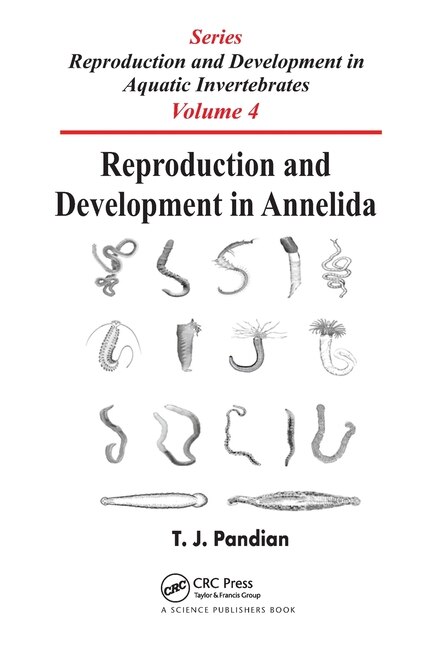
Reproduction and Development in Annelida by T. J. Pandian, Hardcover | Indigo Chapters
Indigo
Loading Inventory...
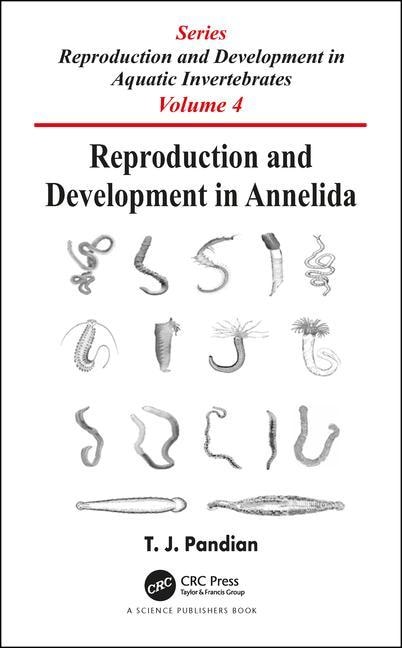
Reproduction and Development in Annelida by T. J. Pandian, Hardcover | Indigo Chapters
By T. J. Pandian
Current price: $362.95

By T. J. Pandian
Reproduction and Development in Annelida by T. J. Pandian, Hardcover | Indigo Chapters
Current price: $362.95
Loading Inventory...
Size: 1 x 9.19 x 1.2
*Product information may vary - to confirm product availability, pricing, shipping and return information please contact Indigo
This book is a concise informative elucidation of all aspects of reproduction and development in annelids covering from arenicola to tubifex. Annelids flourish between 4, 900 m depth to 2, 000 m altitude; some of them occur in unusual habitats like hydrothermal vents and subterranean aquatic system (stigobionts). A few have no gut and acquire adequate nutrients through osmotrophism and/or engaging symbiotic microbes. In the absence of exoskeleton to escape predation, the 17, 000 speciose annelids have explored bewildering modes of reproduction; not surprisingly, 42-47% of them are brooders. With 13, 000 species, polychaetes are gonochores but some 207 species of them are hermaphrodites. Clitellates are all hermaphrodites; of them, 76 species are parthenogens, of which 56 are earthworms. Regenerative potency of annelids ranges from an organ to an entire worm from a single 'seminal' segment. The head, tail and both together can be regenerated 21, 42 and 20 times, respectively. However, the potency is limited to | Reproduction and Development in Annelida by T. J. Pandian, Hardcover | Indigo Chapters
This book is a concise informative elucidation of all aspects of reproduction and development in annelids covering from arenicola to tubifex. Annelids flourish between 4, 900 m depth to 2, 000 m altitude; some of them occur in unusual habitats like hydrothermal vents and subterranean aquatic system (stigobionts). A few have no gut and acquire adequate nutrients through osmotrophism and/or engaging symbiotic microbes. In the absence of exoskeleton to escape predation, the 17, 000 speciose annelids have explored bewildering modes of reproduction; not surprisingly, 42-47% of them are brooders. With 13, 000 species, polychaetes are gonochores but some 207 species of them are hermaphrodites. Clitellates are all hermaphrodites; of them, 76 species are parthenogens, of which 56 are earthworms. Regenerative potency of annelids ranges from an organ to an entire worm from a single 'seminal' segment. The head, tail and both together can be regenerated 21, 42 and 20 times, respectively. However, the potency is limited to | Reproduction and Development in Annelida by T. J. Pandian, Hardcover | Indigo Chapters
You May Also Like









More About Indigo at Erin Mills Town Centre
The largest book retailer in Canada also offers toys, music, home décor, gifts and lifestyle products. What's Inside...Books, Magazines, CD’s and DVD’s, Toys and Gifts, Home Accents, Electronics, Baby’s and Children’s Section, Bath and Body, Kitchen and Bedroom, Stationary Located outside in the exterior plaza.
5015 Glen Erin Dr, Mississauga, ON L5M 0R7, Canada
Find Indigo at Erin Mills Town Centre in Mississauga ON
Visit Indigo at Erin Mills Town Centre in Mississauga ON