

GIVE THE PERFECT GIFT
Erin Mills Town Centre Gift Cards are the perfect choice for your gift giving needs.Purchase gift cards at kiosks near the food court or centre court, at Guest Services, or click below to purchase online.PURCHASE HEREHome
Residential Segregation and Neighborhood Change by Keith Stribley, Paperback | Indigo Chapters
Indigo
Loading Inventory...
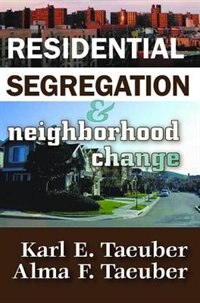
Residential Segregation and Neighborhood Change by Keith Stribley, Paperback | Indigo Chapters
From Keith Stribley
Current price: $80.95

From Keith Stribley
Residential Segregation and Neighborhood Change by Keith Stribley, Paperback | Indigo Chapters
Current price: $80.95
Loading Inventory...
Size: 0.64 x 9 x 0.91
*Product information may vary - to confirm product availability, pricing, shipping and return information please contact Indigo
This book is an invaluable reference. First published in 1965, it is at once a snapshot of a moment in history and a timeless conceptualization of the issues inherent in societal segregation. Residential segregation historically occupies a key position in patterns of race relations in the urban United States. It not only inhibits the development of informal, neighborly relations between white people and African Americans, but ensures the segregation of a variety of public and private facilities. The clientele of schools, hospitals, libraries, parks, and stores is determined in large part by the racial composition of the neighborhood in which they are located. Problems created by residential segregation are the focus of this of this work. African Americans in cities resemble whites in cities. Both racial groups are highly urbanized, and most of the immigrants of either race to a city are former residents of another city. Within cities, racial groups display similar patterns of residential behavior, with those of higher incomes seeking out newer and better housing. Both races respond similarly to national, social, and economic factors which set the context within which local changes occur. Karl E. and Alma F. Taeuber's main approach to the analysis of residential segregation and processes of neighborhood change is comparative and statistical. By quantitative comparison of the situation in many different cities, they attempt to assess those patterns and processes which are common to all communities and those which vary. Residential segregation is shown to be a prominent and enduring feature of American urban society. By bringing empirical data to bear on an important and timely social problem, this book will aid in the search for reasonable solutions. All types of cities, southern and northern, large and small, are beset with the difficulties that residential segregation imposes on harmonious race relations and on the solution of pressing city problems. Residential segregation is a real problem that must be faced directly, as it is in this important work. | Residential Segregation and Neighborhood Change by Keith Stribley, Paperback | Indigo Chapters
This book is an invaluable reference. First published in 1965, it is at once a snapshot of a moment in history and a timeless conceptualization of the issues inherent in societal segregation. Residential segregation historically occupies a key position in patterns of race relations in the urban United States. It not only inhibits the development of informal, neighborly relations between white people and African Americans, but ensures the segregation of a variety of public and private facilities. The clientele of schools, hospitals, libraries, parks, and stores is determined in large part by the racial composition of the neighborhood in which they are located. Problems created by residential segregation are the focus of this of this work. African Americans in cities resemble whites in cities. Both racial groups are highly urbanized, and most of the immigrants of either race to a city are former residents of another city. Within cities, racial groups display similar patterns of residential behavior, with those of higher incomes seeking out newer and better housing. Both races respond similarly to national, social, and economic factors which set the context within which local changes occur. Karl E. and Alma F. Taeuber's main approach to the analysis of residential segregation and processes of neighborhood change is comparative and statistical. By quantitative comparison of the situation in many different cities, they attempt to assess those patterns and processes which are common to all communities and those which vary. Residential segregation is shown to be a prominent and enduring feature of American urban society. By bringing empirical data to bear on an important and timely social problem, this book will aid in the search for reasonable solutions. All types of cities, southern and northern, large and small, are beset with the difficulties that residential segregation imposes on harmonious race relations and on the solution of pressing city problems. Residential segregation is a real problem that must be faced directly, as it is in this important work. | Residential Segregation and Neighborhood Change by Keith Stribley, Paperback | Indigo Chapters
You May Also Like














More About Indigo at Erin Mills Town Centre
The largest book retailer in Canada also offers toys, music, home décor, gifts and lifestyle products. What's Inside...Books, Magazines, CD’s and DVD’s, Toys and Gifts, Home Accents, Electronics, Baby’s and Children’s Section, Bath and Body, Kitchen and Bedroom, Stationary Located outside in the exterior plaza.
5015 Glen Erin Dr, Mississauga, ON L5M 0R7, Canada
Find Indigo at Erin Mills Town Centre in Mississauga ON
Visit Indigo at Erin Mills Town Centre in Mississauga ON