

GIVE THE PERFECT GIFT
Erin Mills Town Centre Gift Cards are the perfect choice for your gift giving needs.Purchase gift cards at kiosks near the food court or centre court, at Guest Services, or click below to purchase online.PURCHASE HEREHome
Room Temperature Photon Detectors
Indigo
Loading Inventory...
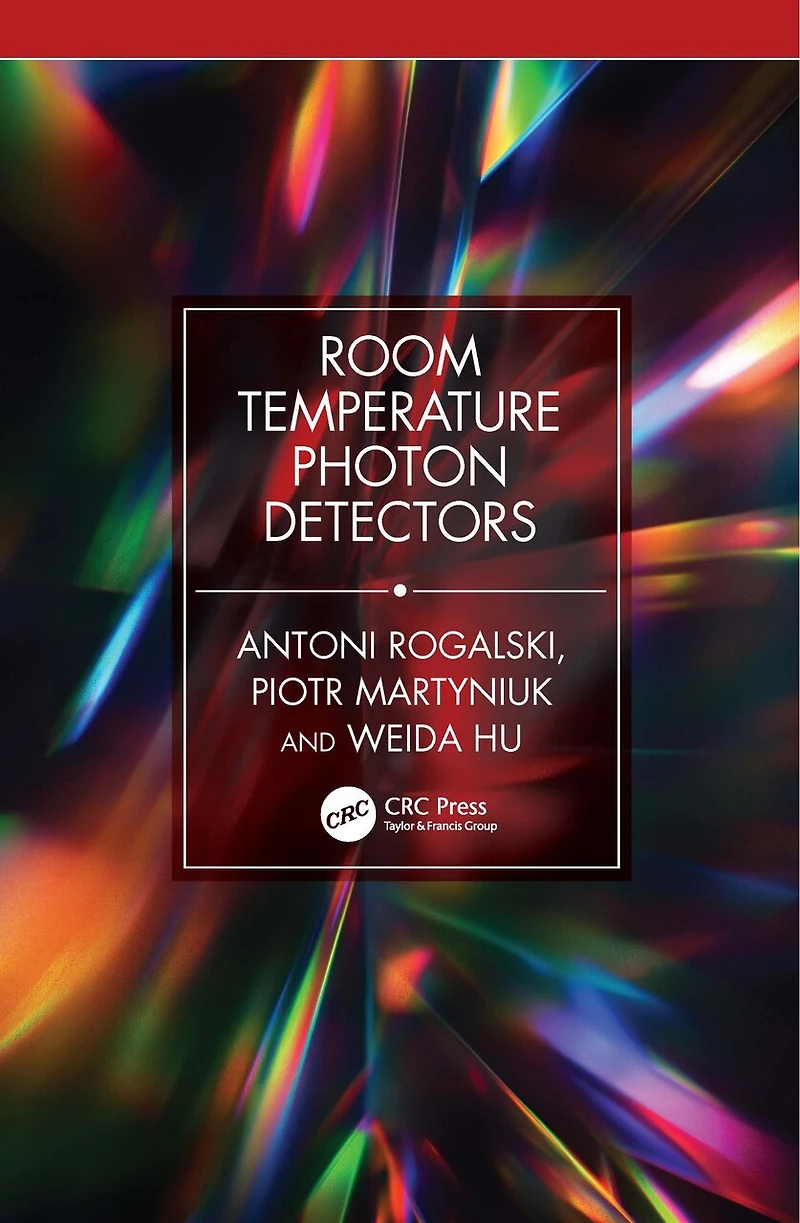
Room Temperature Photon Detectors
Current price: $458.95

Room Temperature Photon Detectors
Current price: $458.95
Loading Inventory...
Size: Hardcover
*Product information may vary - to confirm product availability, pricing, shipping and return information please contact Indigo
Room Temperature Photon Detectors provides an overview of the performance of emerging new generation of room temperature photodetectors generally called low-dimensional solid (LDS) photodetectors among which the most important are two-dimensional (2D) materials, perovskites, and quantum dots (QDs)/nanowires (NWs) operating in a wide spectral range from the ultraviolet (UV), visible (VIS), far infrared (FIR) to terahertz (THz). The LDS reported performance at room temperature is even better than that presented for standard commercial photodetectors. This book describes the peculiarities of the physical properties of LDS materials and their impact on the photodetectors' performance. It also undertakes a comprehensive analysis of these performances when confronted with the standard photodetectors dominating the global market. Currently, intensive efforts are being made to reduce the cost of imaging systems and, in particular in the infrared (IR) range, to increase their operating temperature by reducing size, weight and power consumption (SWaP). This raises the question of whether the emergence of a new generation of LDS photodetectors will result in their rapid commercialization and serious competition for the standardized bulk photodetectors. This book attempts to answer those issues/questions. Features • Defines the importance of LDS photodetectors in the broad group of standard UV, VIS, IR, and THz photodetectors, and includes their advantages/disadvantages • Covers different types of photodetectors, including the relevant aspects of theory, types of materials, their physical properties, and detector fabrication • Provides invaluable resource for graduate students in physics and engineering, as well as a guide for those already working with sensors and systems, thermal imaging, remote sensing, optical telecommunications, and light detection.
Room Temperature Photon Detectors provides an overview of the performance of emerging new generation of room temperature photodetectors generally called low-dimensional solid (LDS) photodetectors among which the most important are two-dimensional (2D) materials, perovskites, and quantum dots (QDs)/nanowires (NWs) operating in a wide spectral range from the ultraviolet (UV), visible (VIS), far infrared (FIR) to terahertz (THz). The LDS reported performance at room temperature is even better than that presented for standard commercial photodetectors. This book describes the peculiarities of the physical properties of LDS materials and their impact on the photodetectors' performance. It also undertakes a comprehensive analysis of these performances when confronted with the standard photodetectors dominating the global market. Currently, intensive efforts are being made to reduce the cost of imaging systems and, in particular in the infrared (IR) range, to increase their operating temperature by reducing size, weight and power consumption (SWaP). This raises the question of whether the emergence of a new generation of LDS photodetectors will result in their rapid commercialization and serious competition for the standardized bulk photodetectors. This book attempts to answer those issues/questions. Features • Defines the importance of LDS photodetectors in the broad group of standard UV, VIS, IR, and THz photodetectors, and includes their advantages/disadvantages • Covers different types of photodetectors, including the relevant aspects of theory, types of materials, their physical properties, and detector fabrication • Provides invaluable resource for graduate students in physics and engineering, as well as a guide for those already working with sensors and systems, thermal imaging, remote sensing, optical telecommunications, and light detection.
You May Also Like
















More About Indigo at Erin Mills Town Centre
The largest book retailer in Canada also offers toys, music, home décor, gifts and lifestyle products. What's Inside...Books, Magazines, CD’s and DVD’s, Toys and Gifts, Home Accents, Electronics, Baby’s and Children’s Section, Bath and Body, Kitchen and Bedroom, Stationary Located outside in the exterior plaza.
5015 Glen Erin Dr, Mississauga, ON L5M 0R7, Canada
Find Indigo at Erin Mills Town Centre in Mississauga ON
Visit Indigo at Erin Mills Town Centre in Mississauga ON